Jan 22: Cletus and Foetus
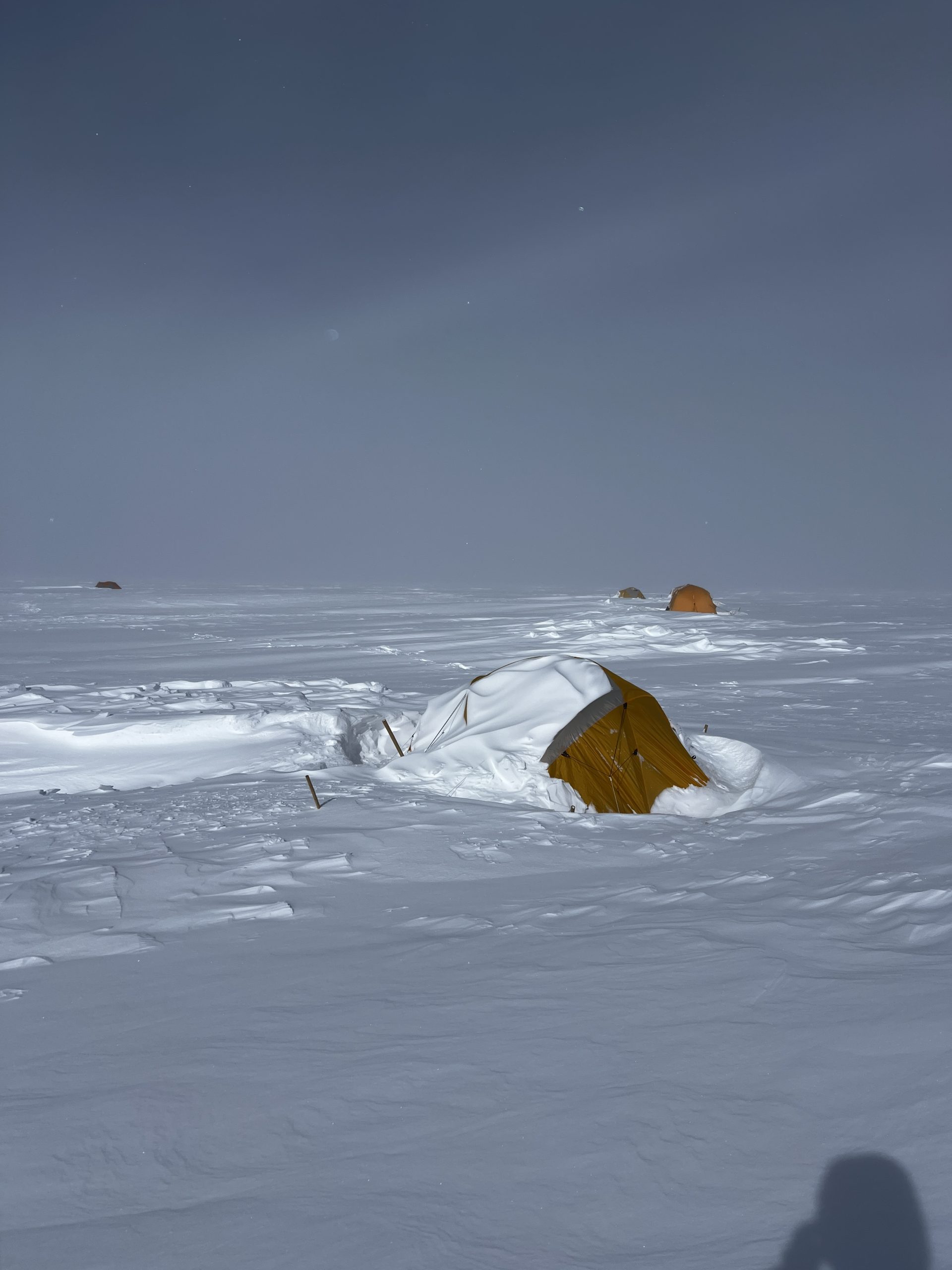
Today, the team woke up to whiteout conditions. It was blowing snow and windy enough to create a wall of snow that blocked visibility past 250 meters. Since it was our second to last day of science and our viz cutoff is below 250 m, we headed out.
The drillers finished their last Eclipse hole and packed up the enormous drill to bring it back to camp. E and Zoe helped pack things up and bring 800 lbs of drill equipment back to camp to send out on a flight on Saturday.
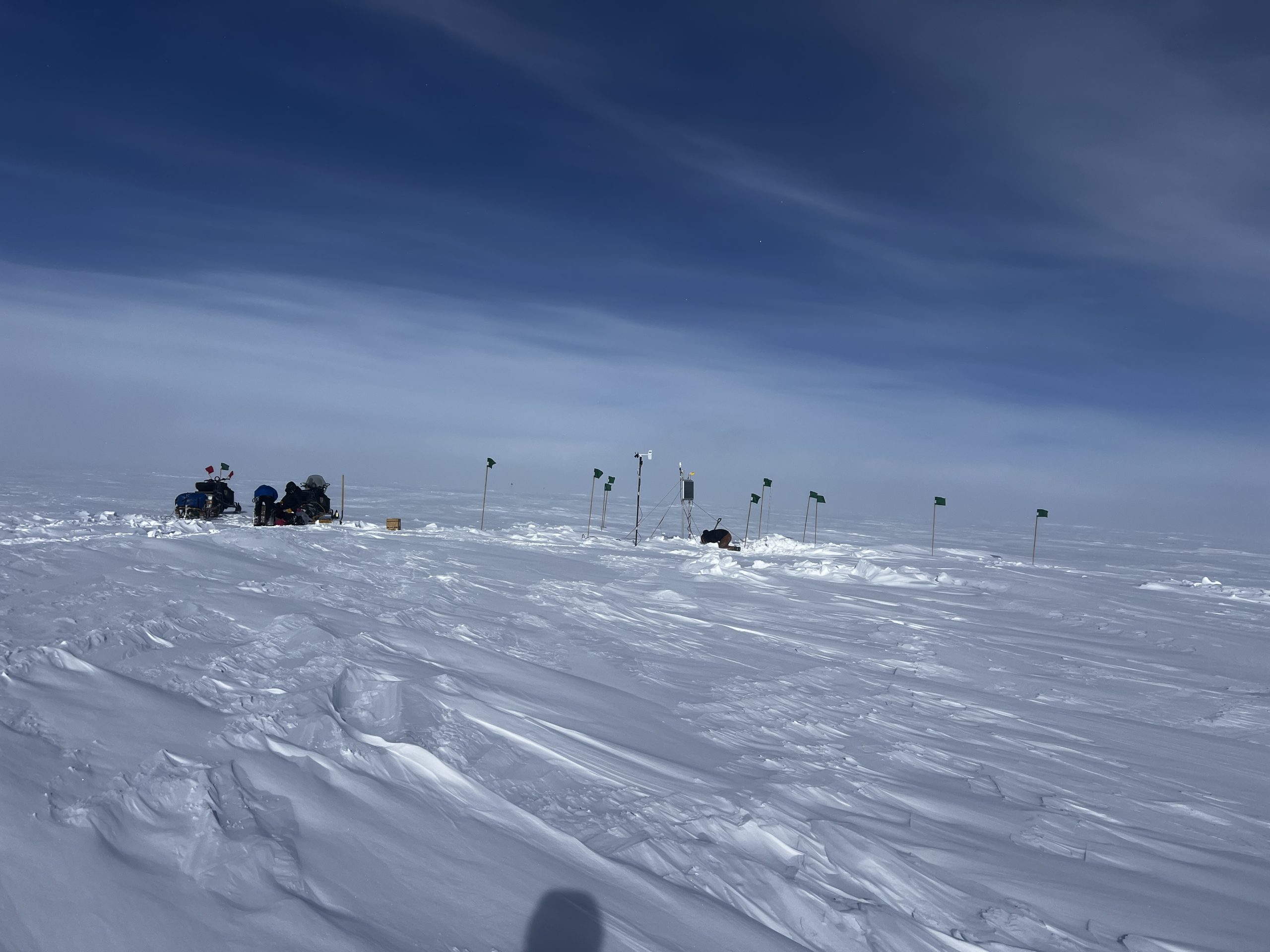
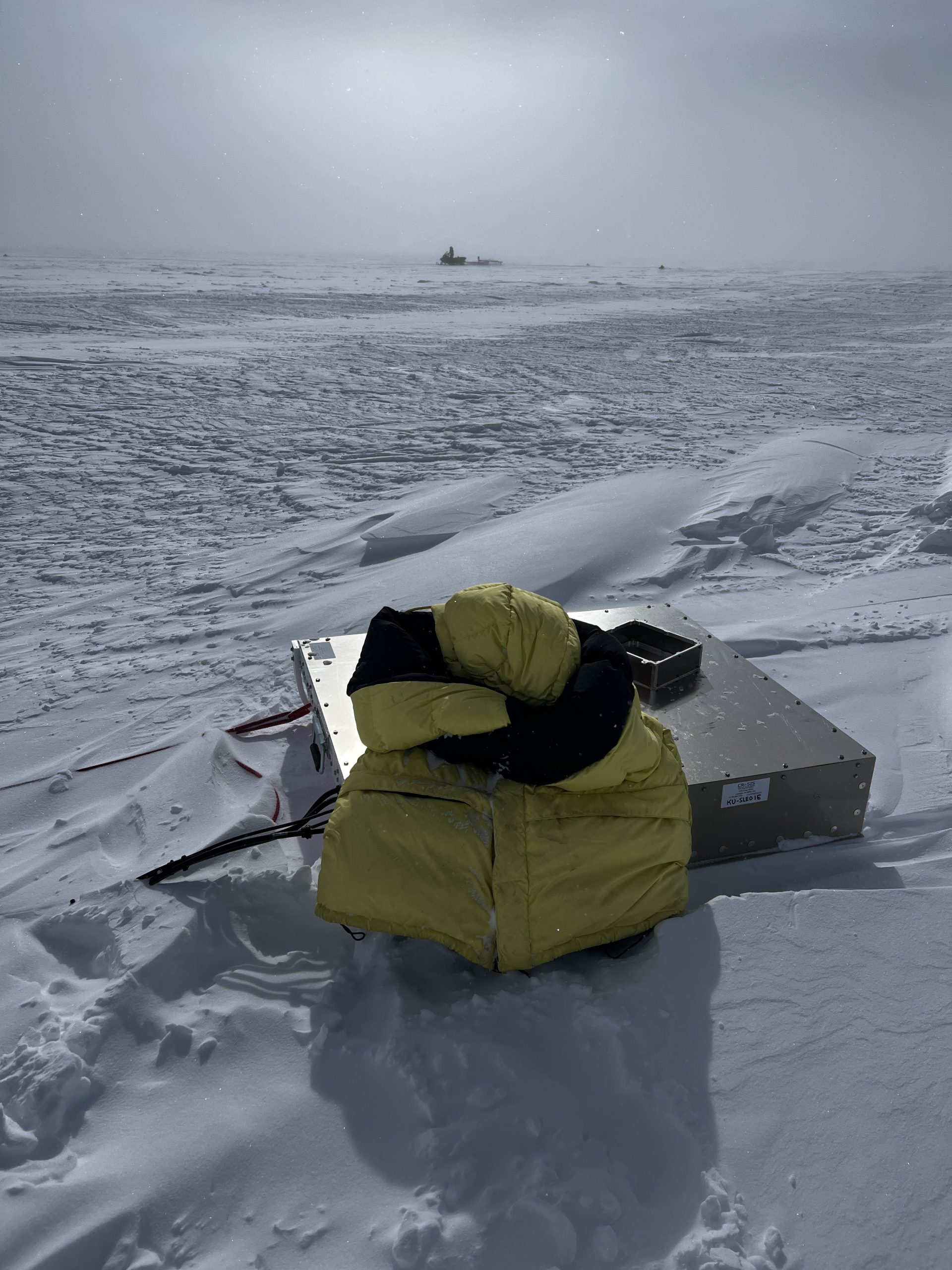
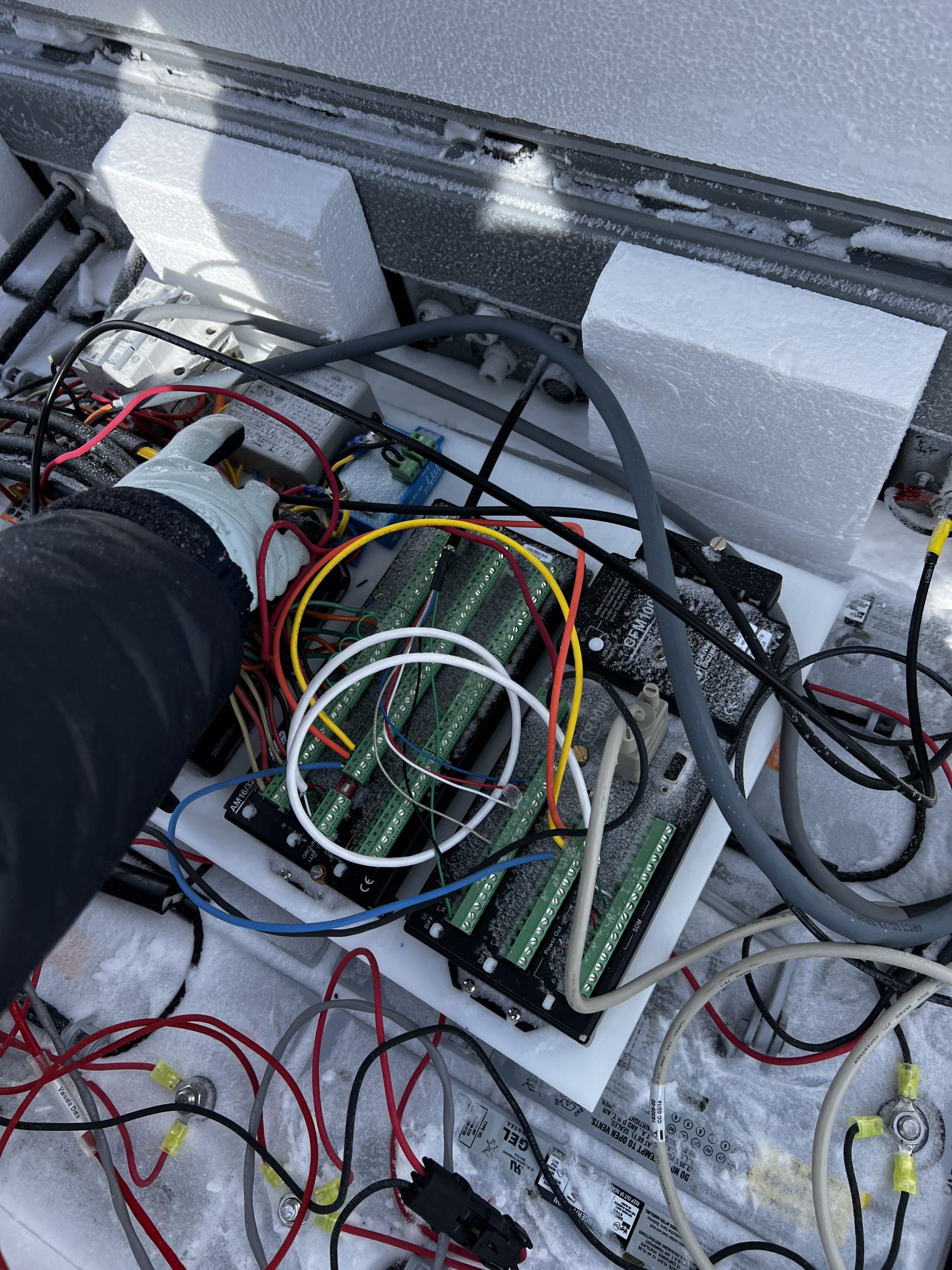
Ellen, Dylen, Ilyse, and I headed out to the 2 cm site to troubleshoot the battery box. The box is connected to a Resolute data logger which will collect data and send some information back to us via the Iridium satellite connection. Ellen installed the GNSS receivers at the sites and Ilyse and Dylen did the Tour de Taylor Dome. The TdTD included checking that the strain gauges were recording data, digging out plywood, and checking the data logger data quality. They went to the 2 cm then the 4 cm while I EAGERed between the 2 and 4 cm sites. Somehow, despite all the EAGERing, we missed a small spot and had to go all the way back. The EAGER takes 2 hours to power up and another hour and a half to power down and save data.
I headed back to camp to make lunch and quality check data. The EAGER data looked good to me and to Knut! Finally, we can pack up the enormous creature that is the EAGER radar, its antenna, and its parts. Eventually, Ellen, Dylen, and Ilyse arrived to warm up and eat lunch. Later, Ilyse and E headed out to the 8 cm site to dig up more plywood and check more strain gauges.
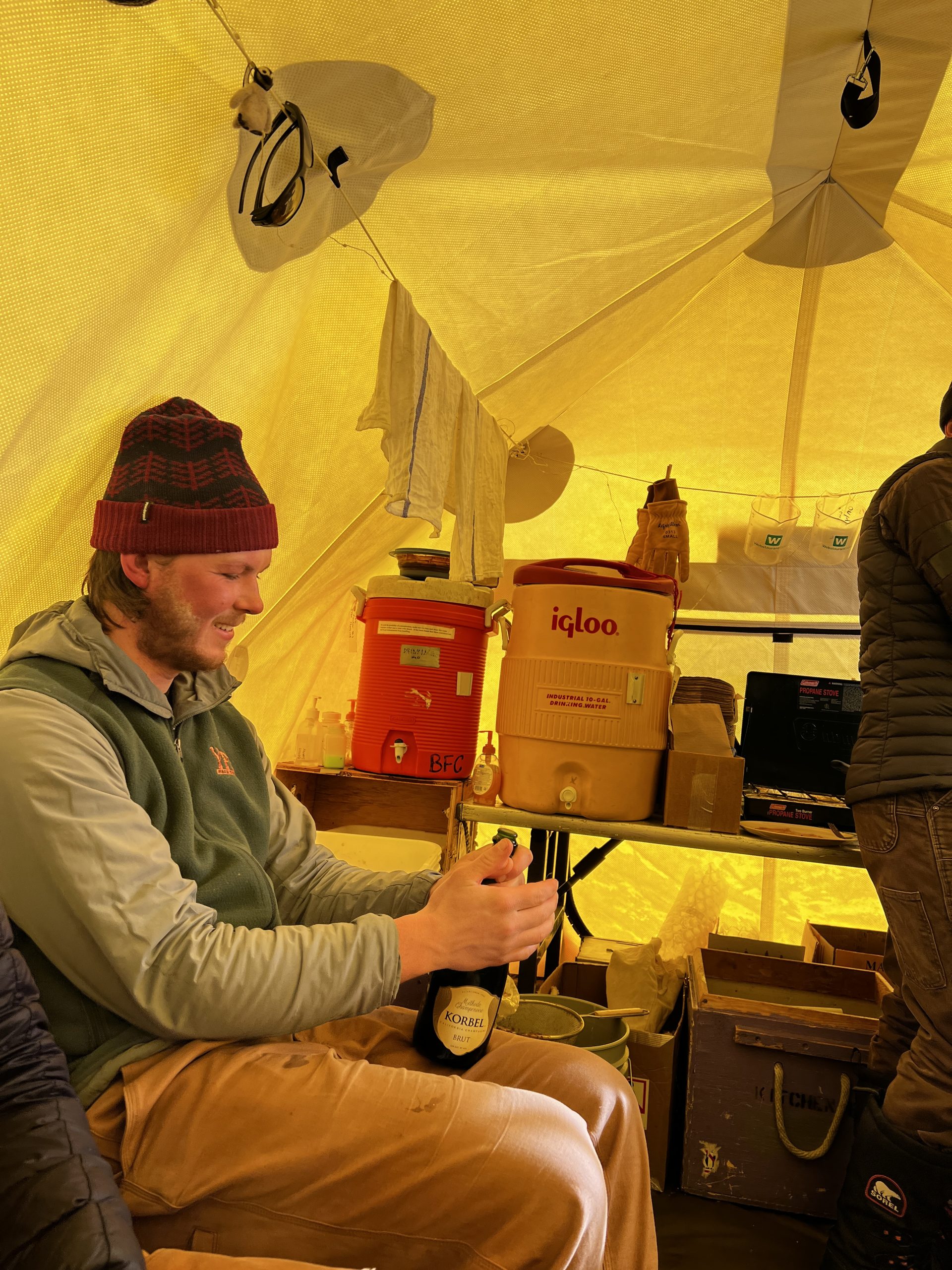
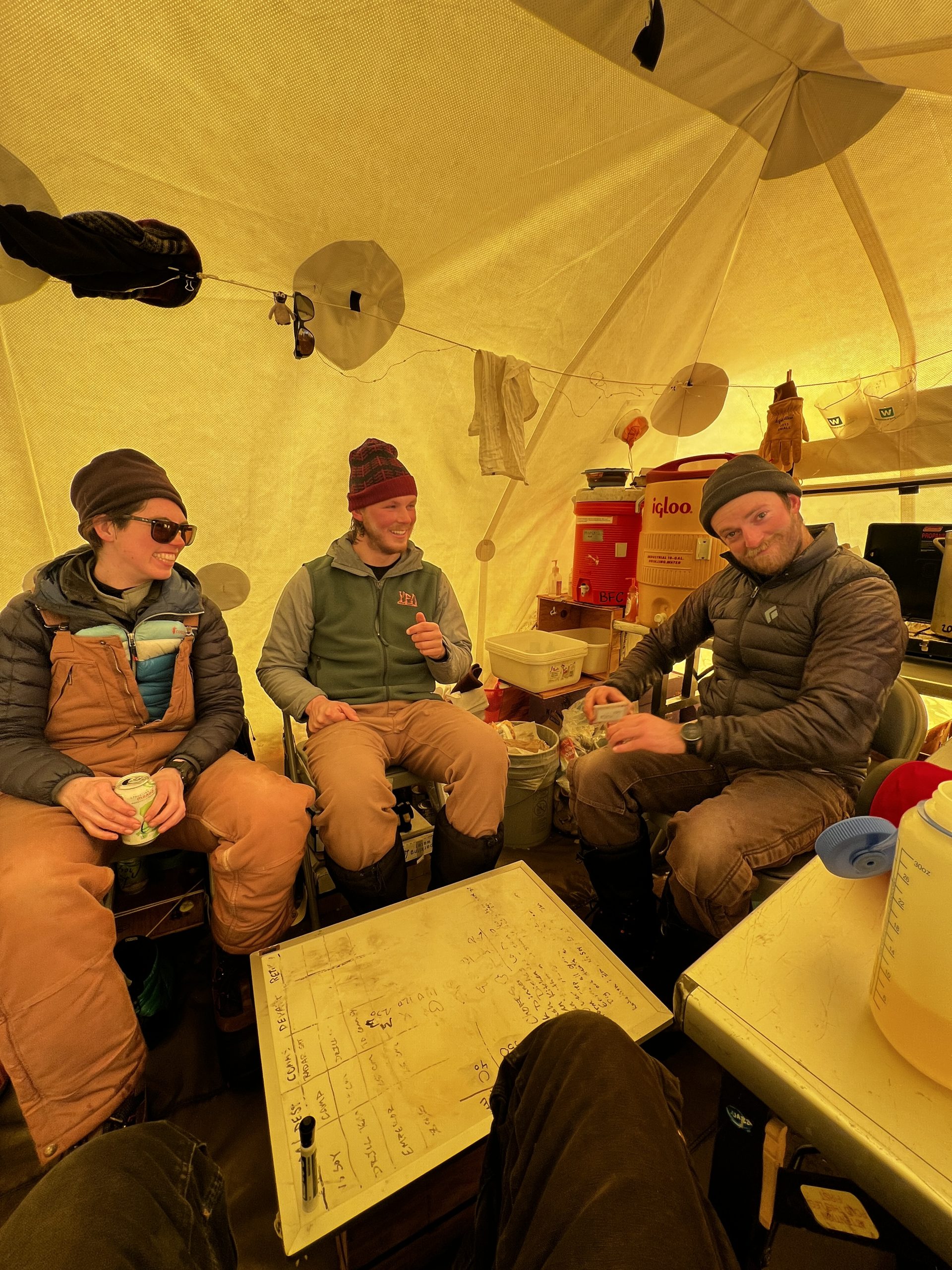
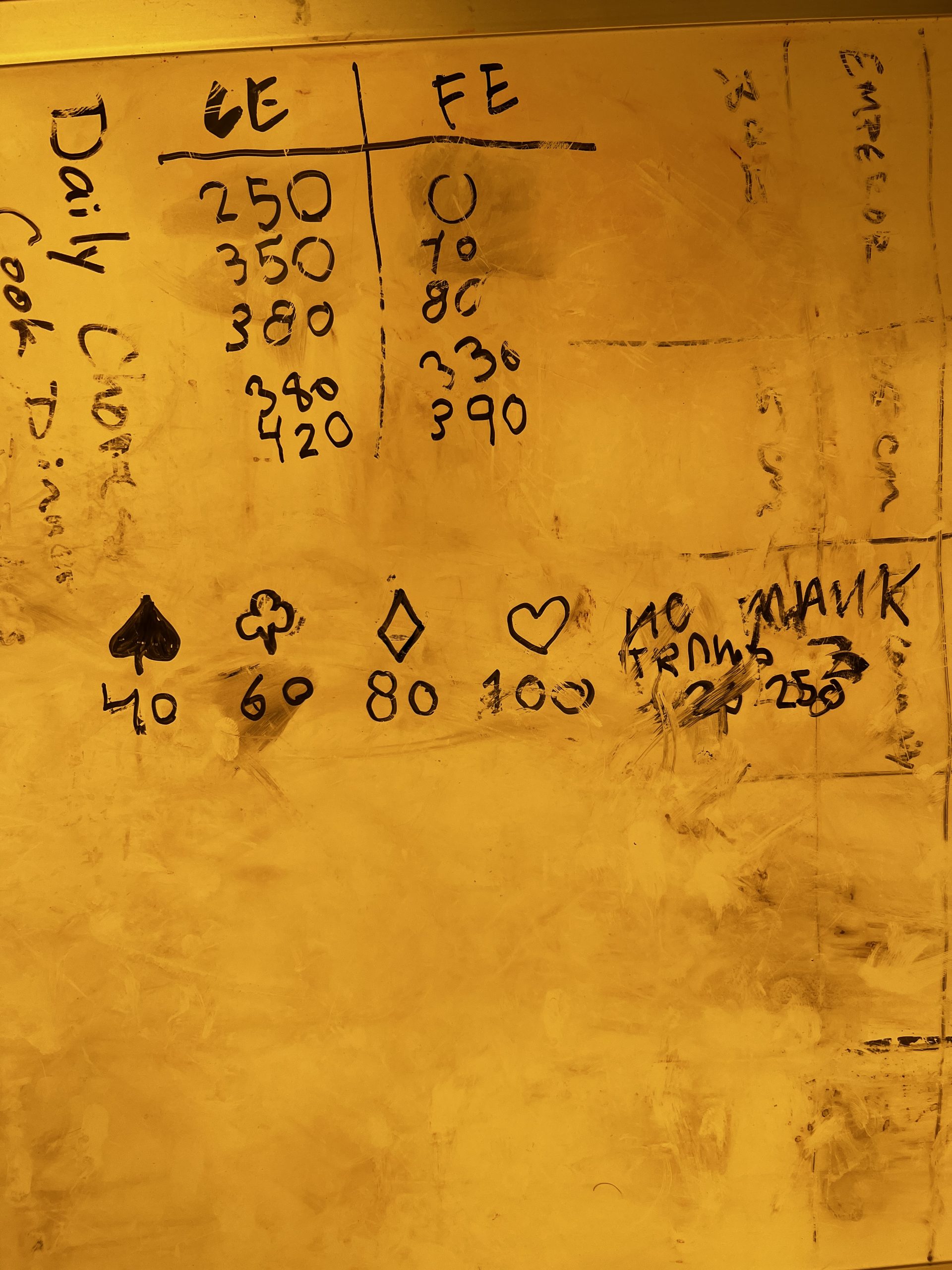
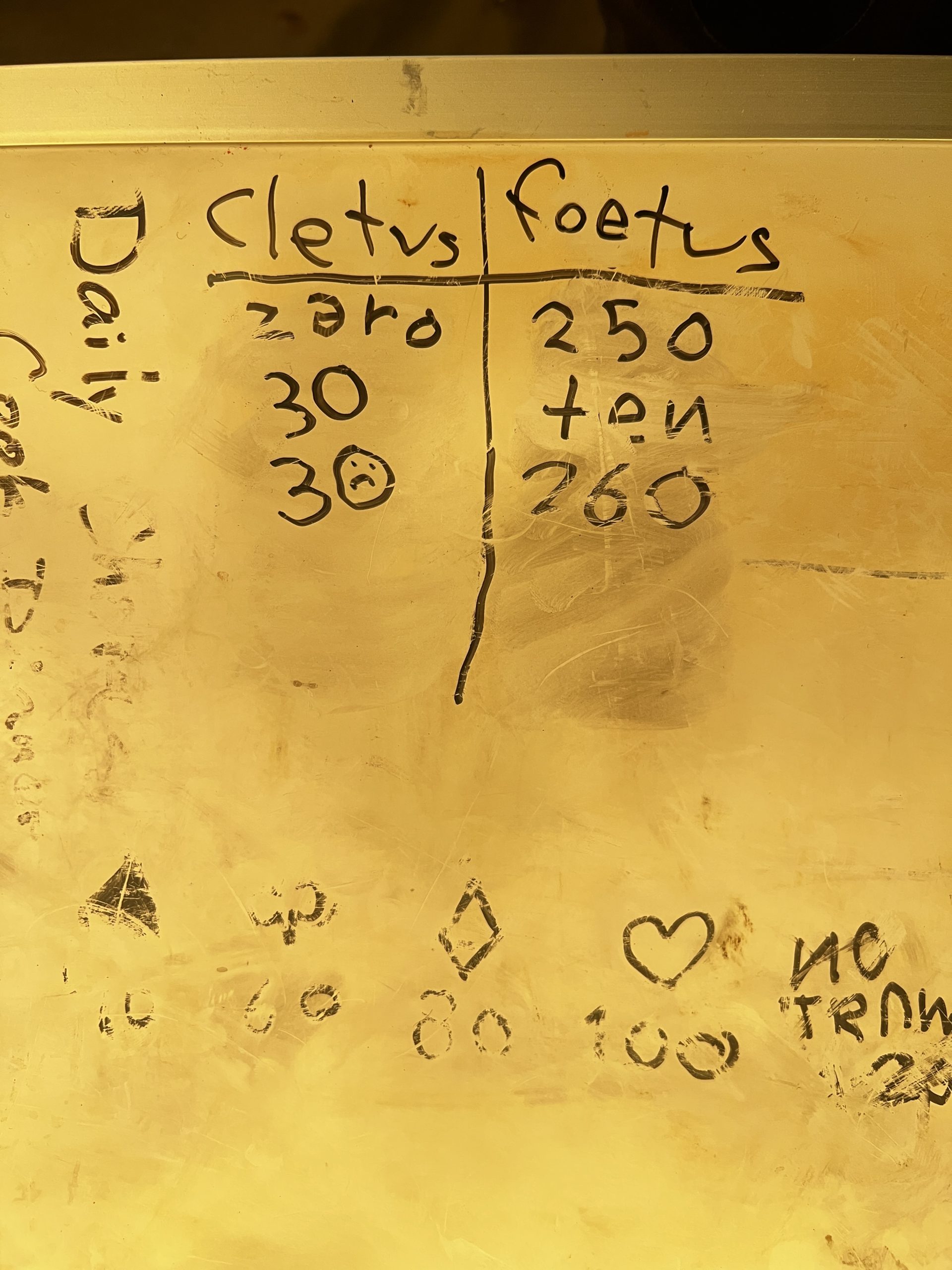
Ellen and I made curry and garlic pita for dinner. Forest and Elliot had popped open a bottle of bubbly to celebrate being done with the drilling. Ellen and I joined the drillers to play 500 – team names were Cletus (Claire and Elliot) and Foetus (Forest and Ellen). Foetus won two out of three rounds but it was pure luck, of course.
Jan 23: Last day of science!
Today’s weather was mildly better; the storm let up for a bit and we took advantage of this time to pack up camp.
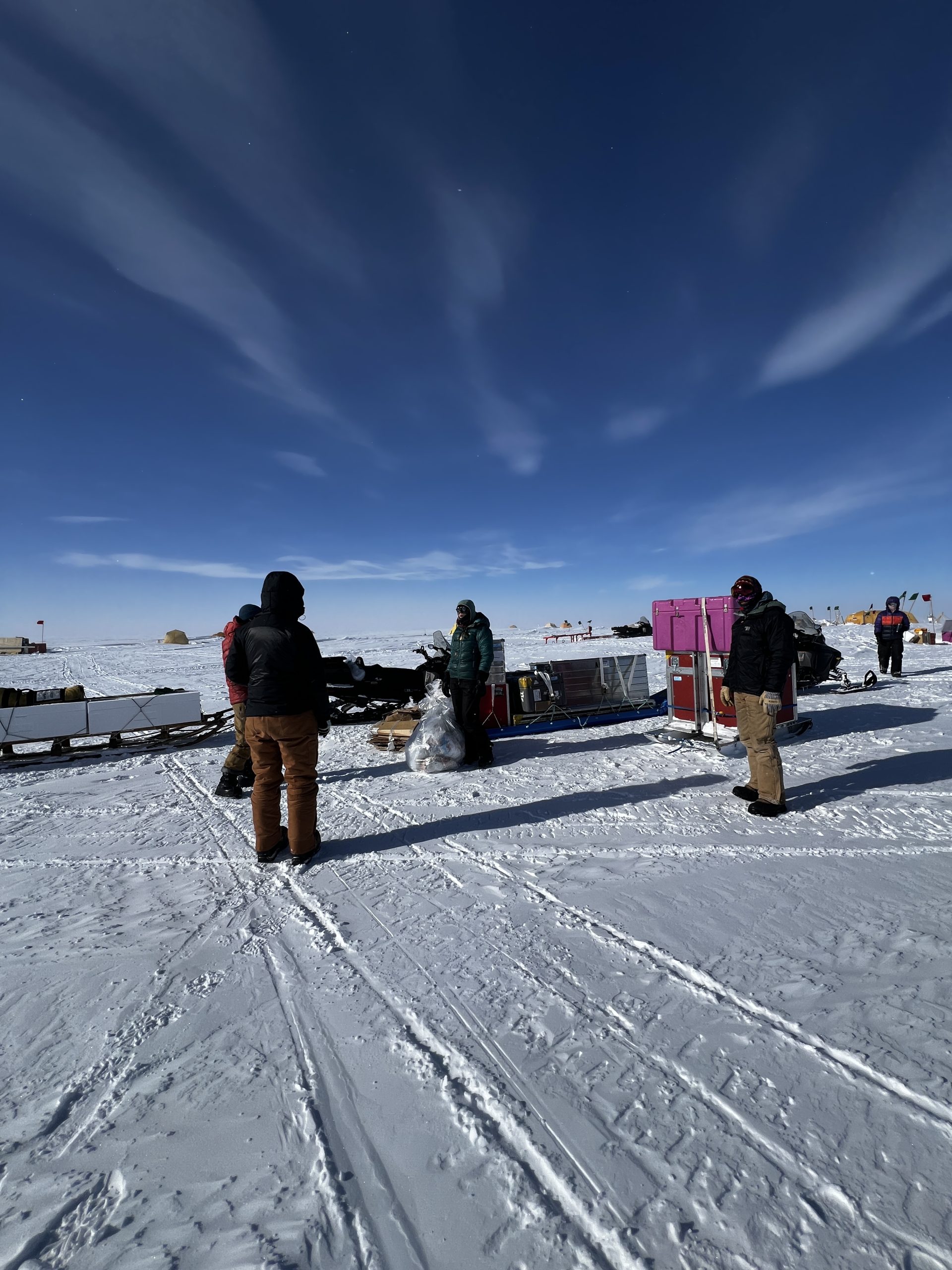
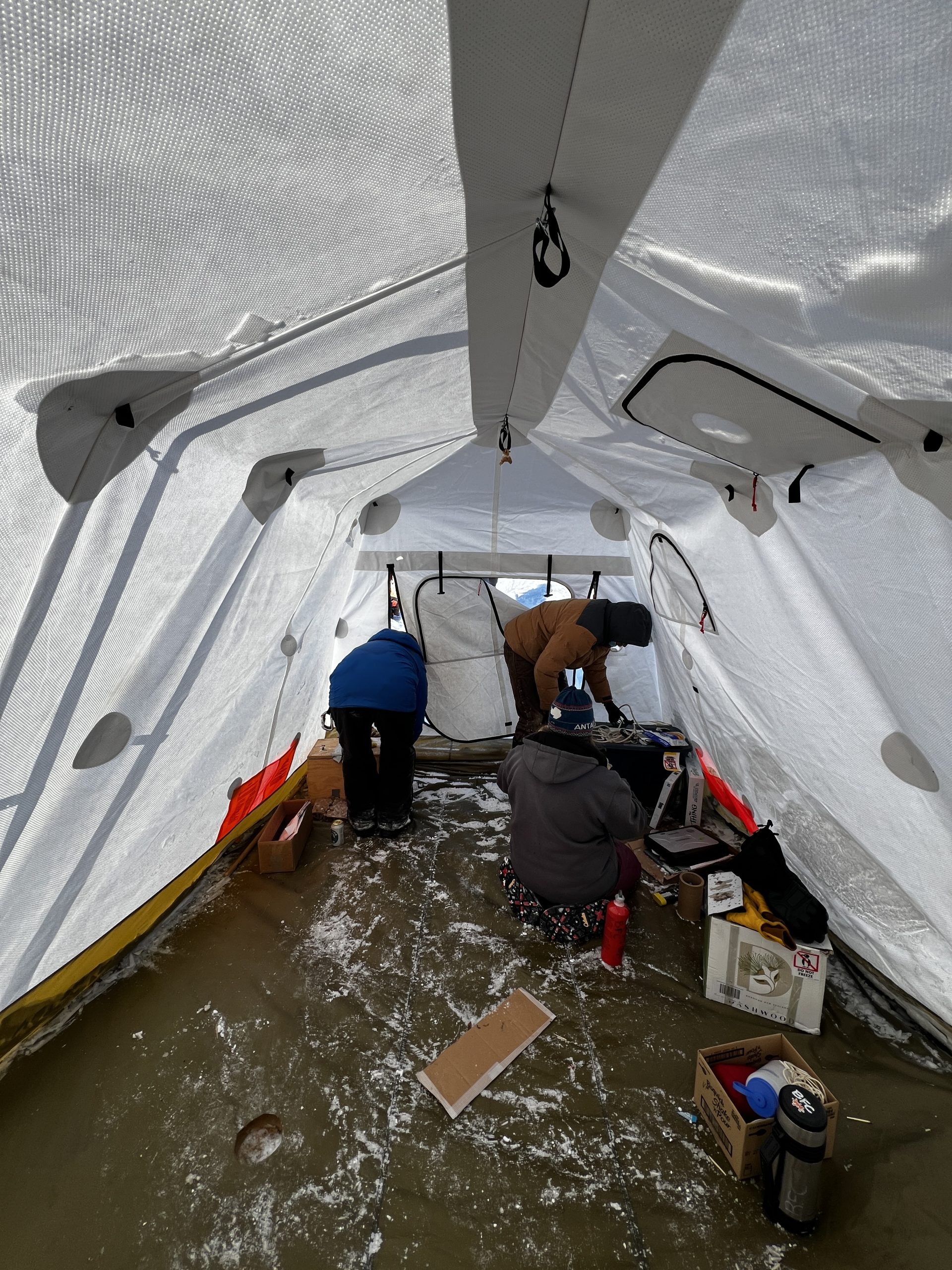
Everyone mobilized for parts of the day – packing up two different Arctic Oven pup tents, cleaning out said tents, packing up the EAGER (which took ~3 hours), getting science gear tagged and on the retro cargo line, and consolidating food.
We got two flights today – one carried Margot, a FAST team member who will be helping with take-out. We sent off some ice cores before the next flight which had PUEO people on it. PUEO is a group that sends weather balloons up into the atmosphere. They deployed an antenna here since they needed a way to track the balloon’s progress. So, they had their own flight to come and take out the antenna. We also put the Eclipse drill on the plane since we’re done drilling!
Ilyse and Dylen were out all day buttoning up various sites. They’ve been grinding to get science done so they’ll head out again tomorrow if it’s nice.
I made grilled cheese and tomato soup for dinner and vowed to sleep in tomorrow since I’m zoinked! The wind is booming outside of the tents and we’re all glad to have packed things up before the weather gets even worse. It’ll likely get quite cold (rumors of -70º with wind chill… fearmongering or poor weather forecasting? Probably both).
Jan 24: Double Shuttle
The -70º F weather did not happen… but it sure is cold! It’s probably closer to -35º F today with ~25 kt winds. It’s quite chilly here and the wind flapping at the tents is a constant unpleasant noise. But, we had things to do today because planes are landing!
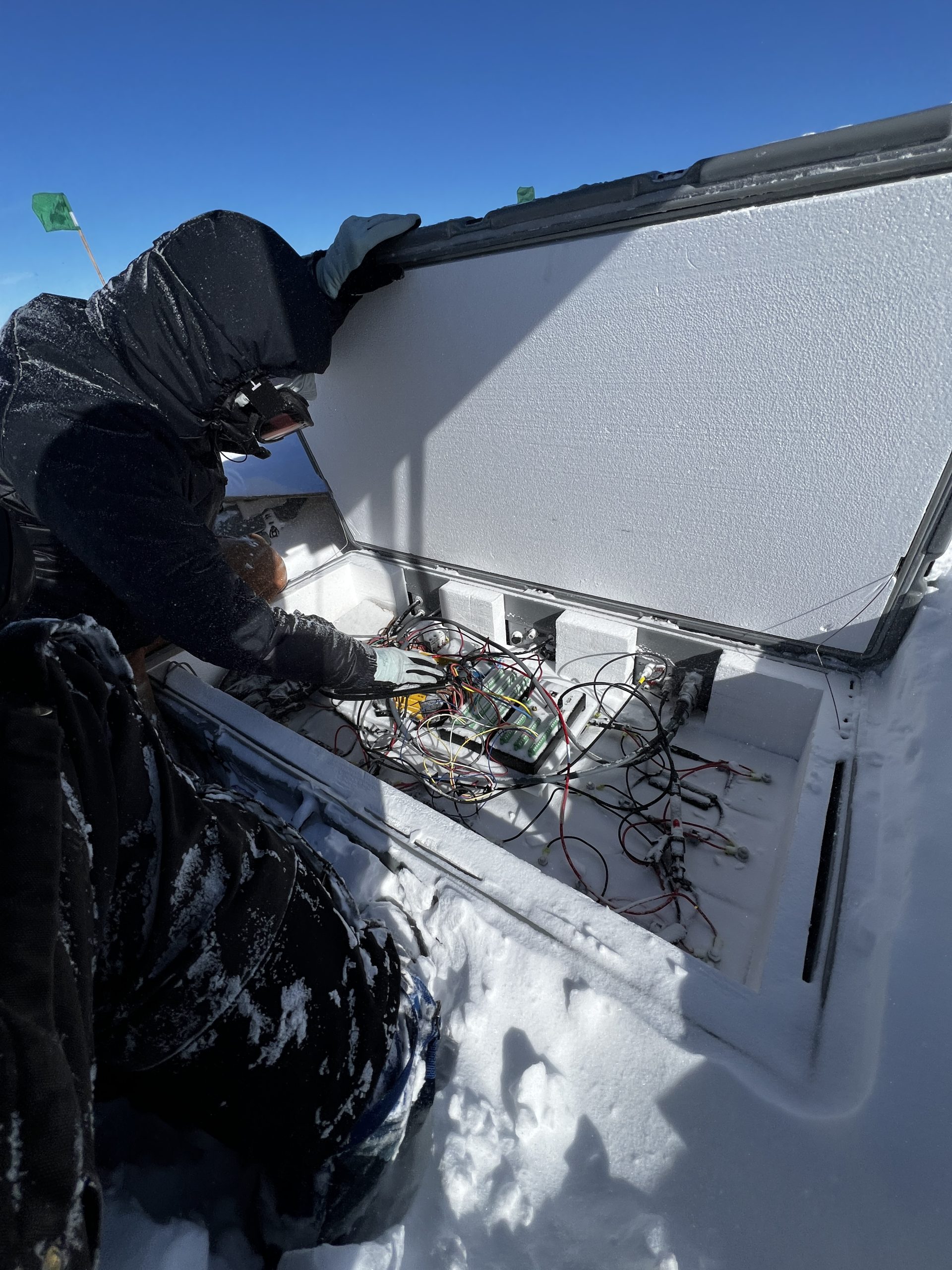
This morning, Ellen and Zoe headed out to do more science… they replaced a cable at the 25 cm site and fixed the GNSS! EarthScope confirmed that they are seeing messages, meaning that the battery boxes are working and sending messages as they should.
Meanwhile, Dylen and Ilyse went to the 8 cm site. They found that one of their strain gauges was not collecting data and there was no immediate solution. If we had more time, they think they’d be able to fix it. But, the other strain gauges are confirmed to be working so they will have sufficient data at the 8 cm site.
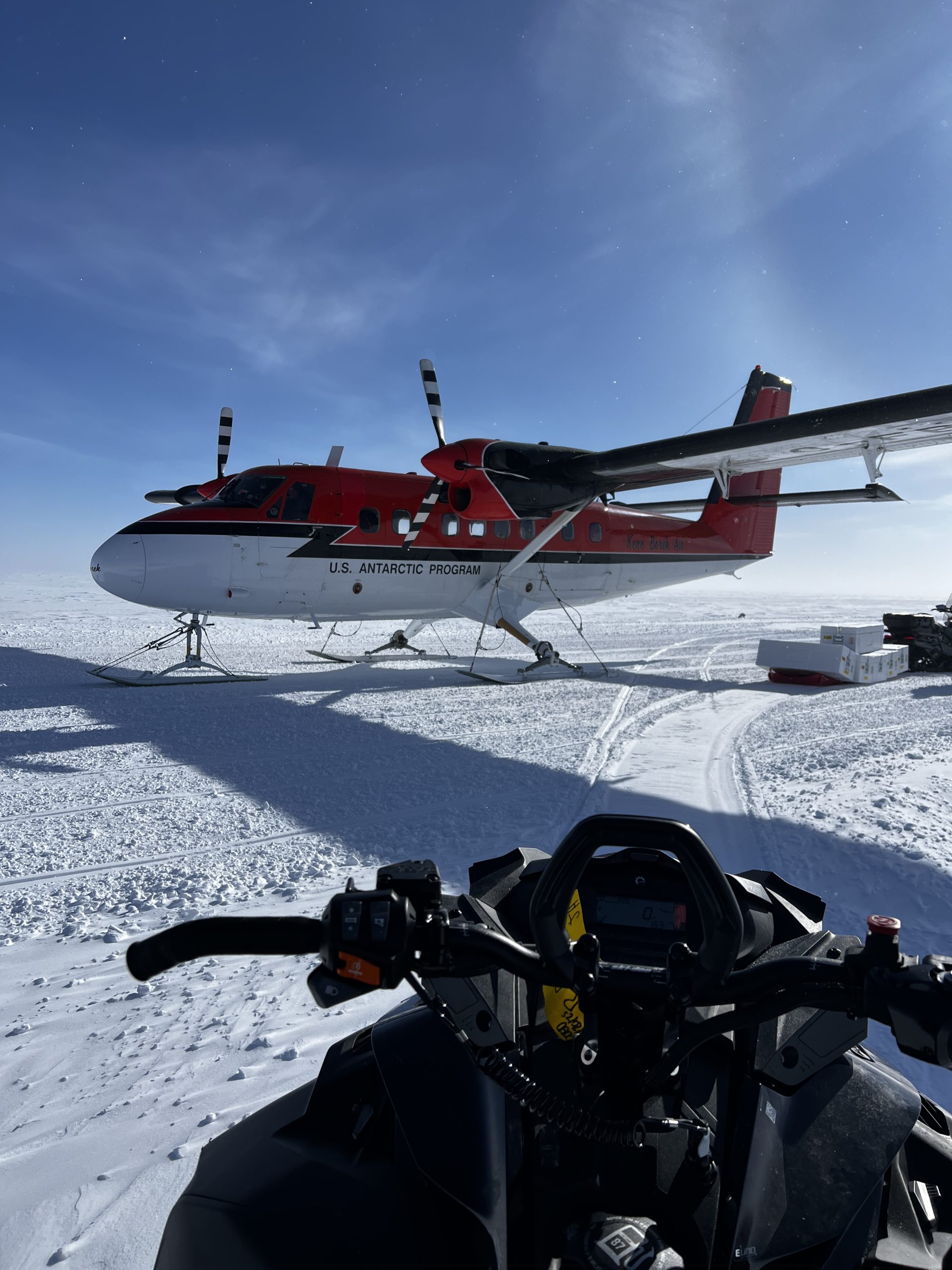
FAST, Elliot, Fresh Dyl, Forest, and I helped unload and load two Twin Otter flights. They landed despite the wind and sketchy-ish viz. We got most of the radar science cargo on the plane which felt like a big win. Dylen and Ilyse came back later, packed up their stuff, and put away their tent. Taylor Dome camp is quite bare at this point.
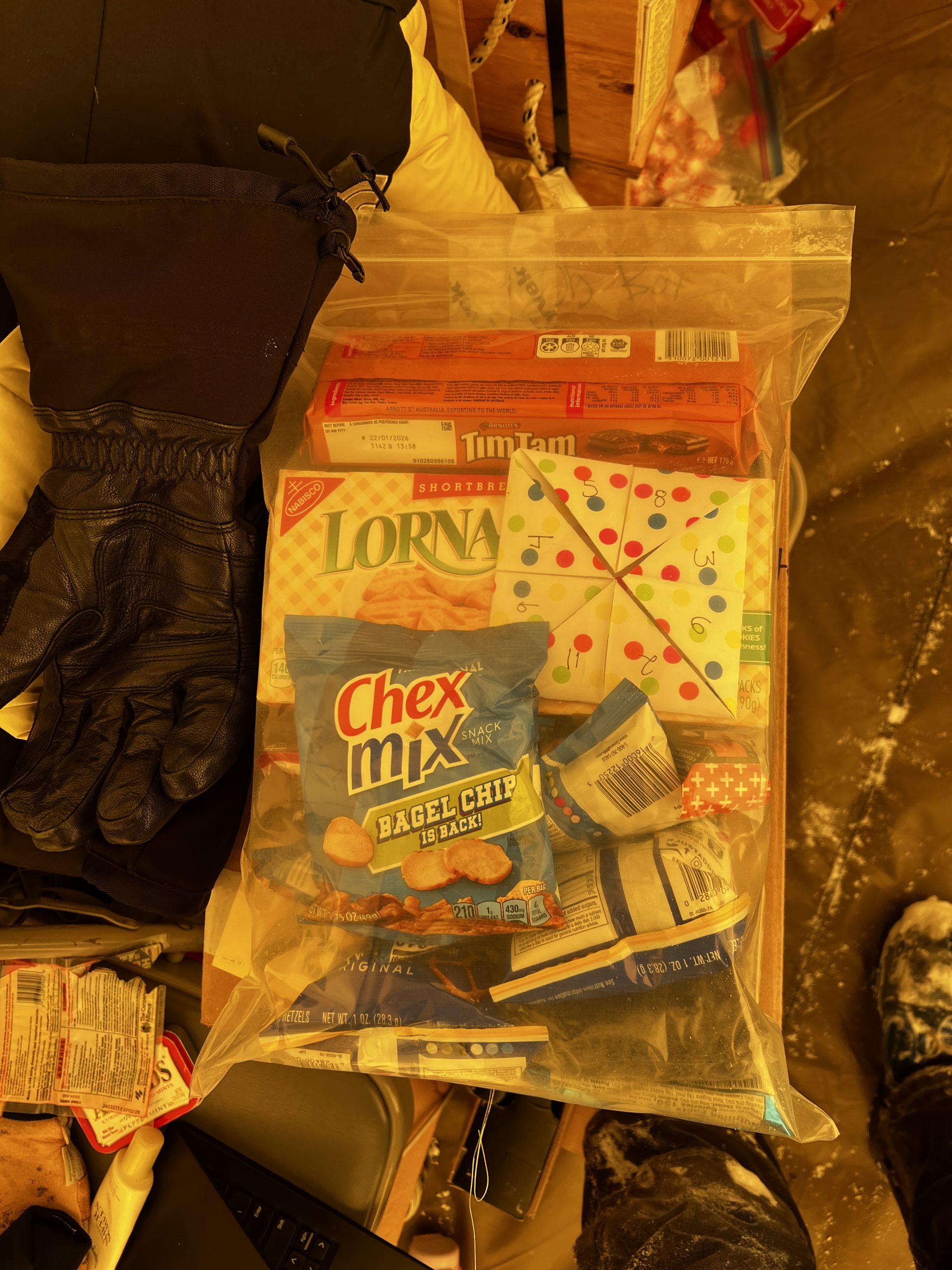
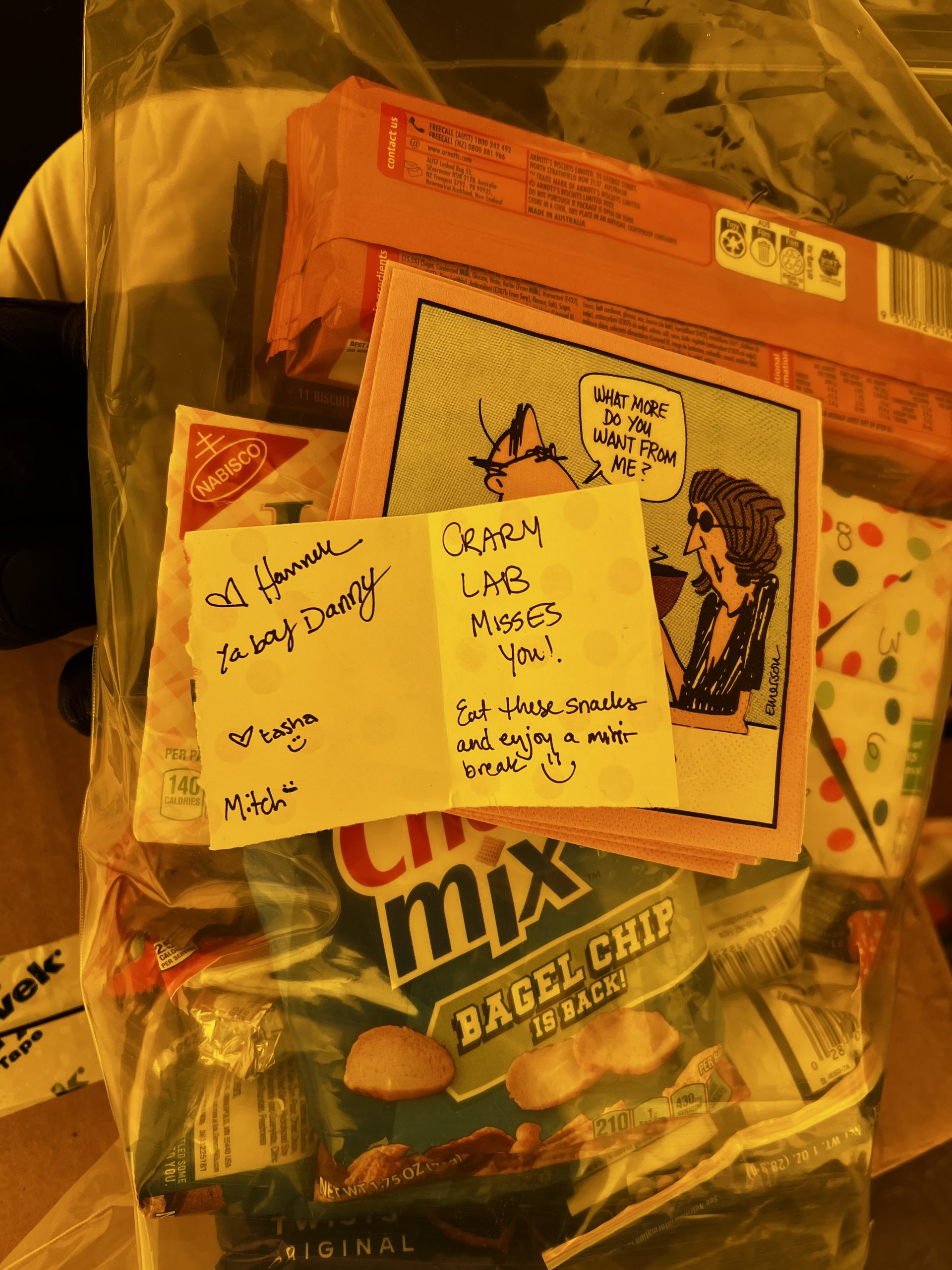
We received a special treat on one of the planes today – the Crary Lab staff sent us a bag of treats! They sent Rice Krispie Treats, Tim Tams, granola bars, a Tim Tam disguised as a Fig Newton, Skittles, chips, and lots of other candy bars. They send a sweet note and some things to do, including crossword puzzles, which we’ve been obsessed with recently.
We’re expecting the weather to continue to get worse tonight and through tomorrow, until it chillaxes a bit on Monday and Tuesday. I will most definitely be going to sleep with a hot Nalgene tonight.
Jan 25: Sunday Funday
Happy Sunday! Today, I opted to sleep in since Ellen and I had gotten all of our cargo sorted and most of it was already back in McMurdo. We were still in the middle of quite a nasty storm that is supposed to let up a bit in the next few days so we’re trying to wait until the winds subside before digging holes that will just fill in with blowing snow.
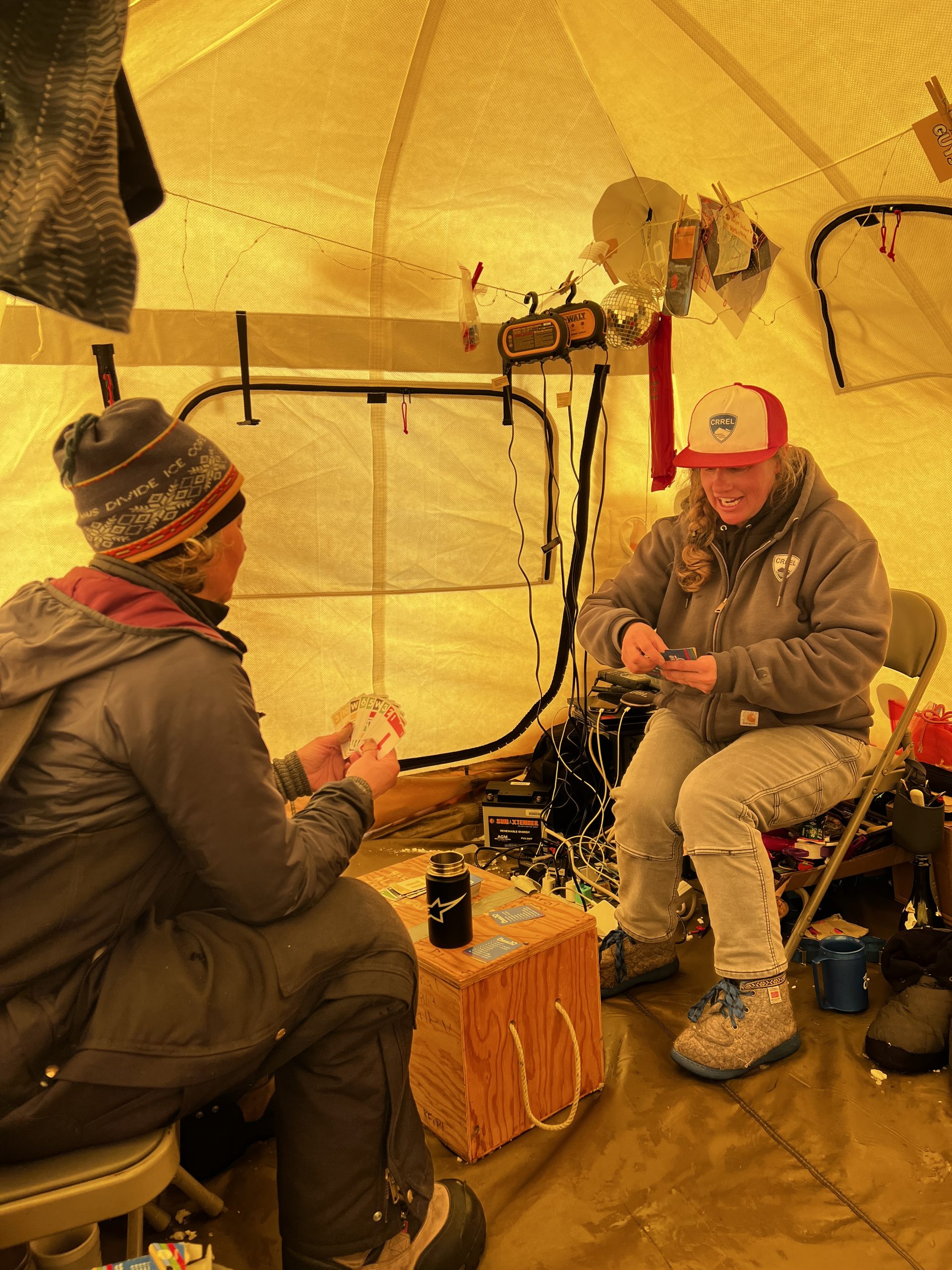
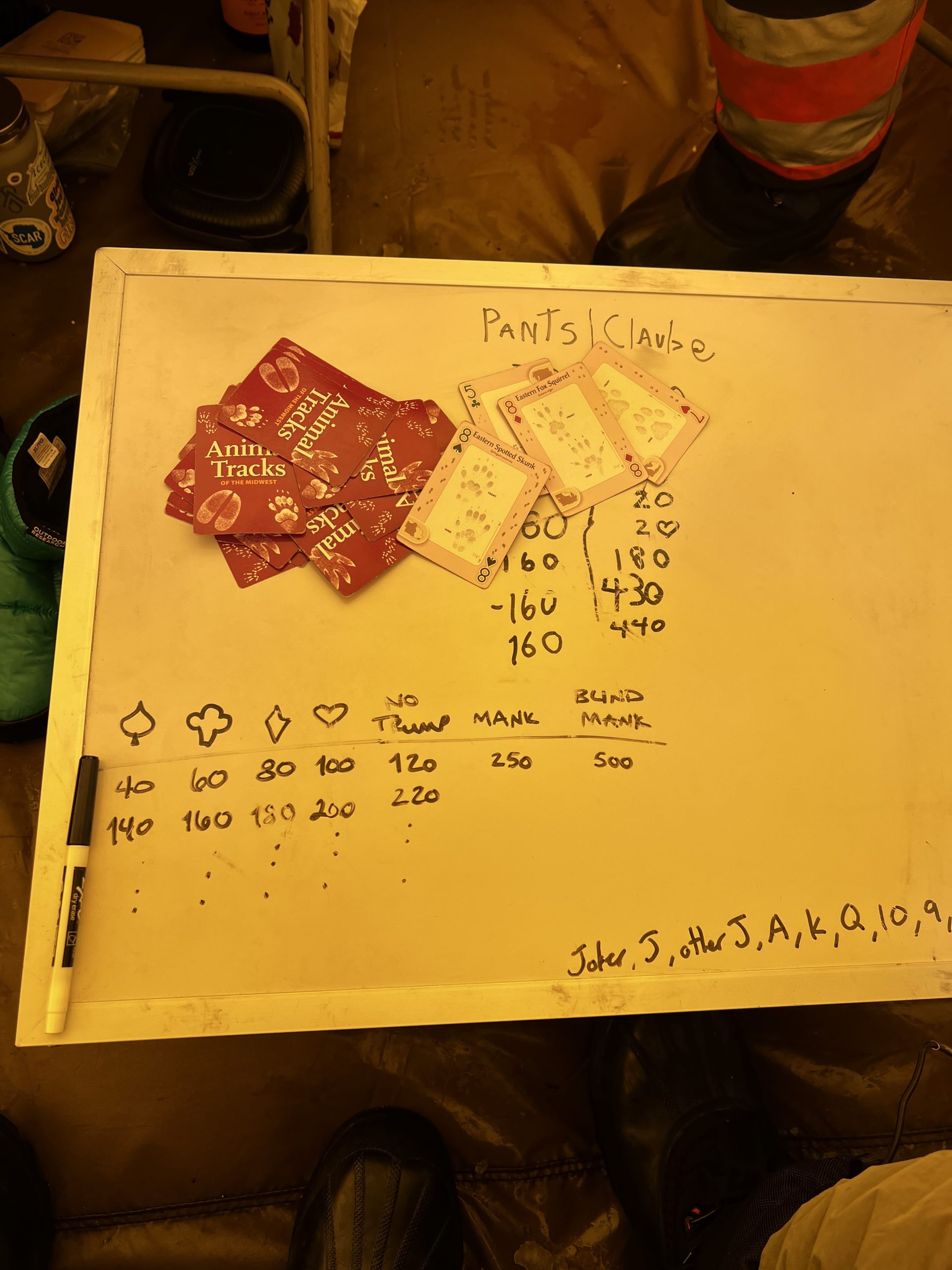
Dylen and Ilyse were done with their science so they packed up their things, including a science tent that they had been using. We gathered in the kitchen tent later to play cards!
Jan 26: Diggin’
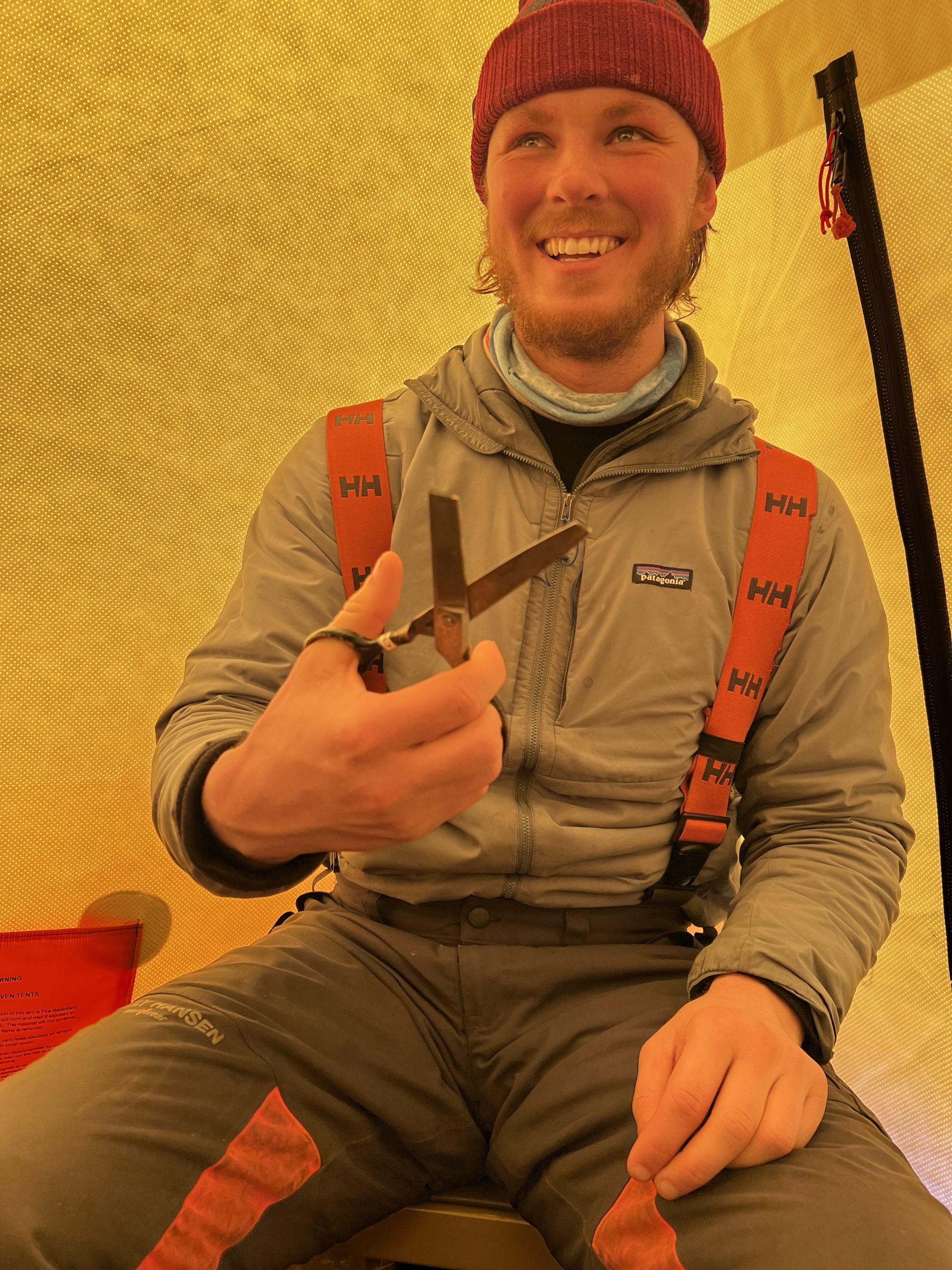
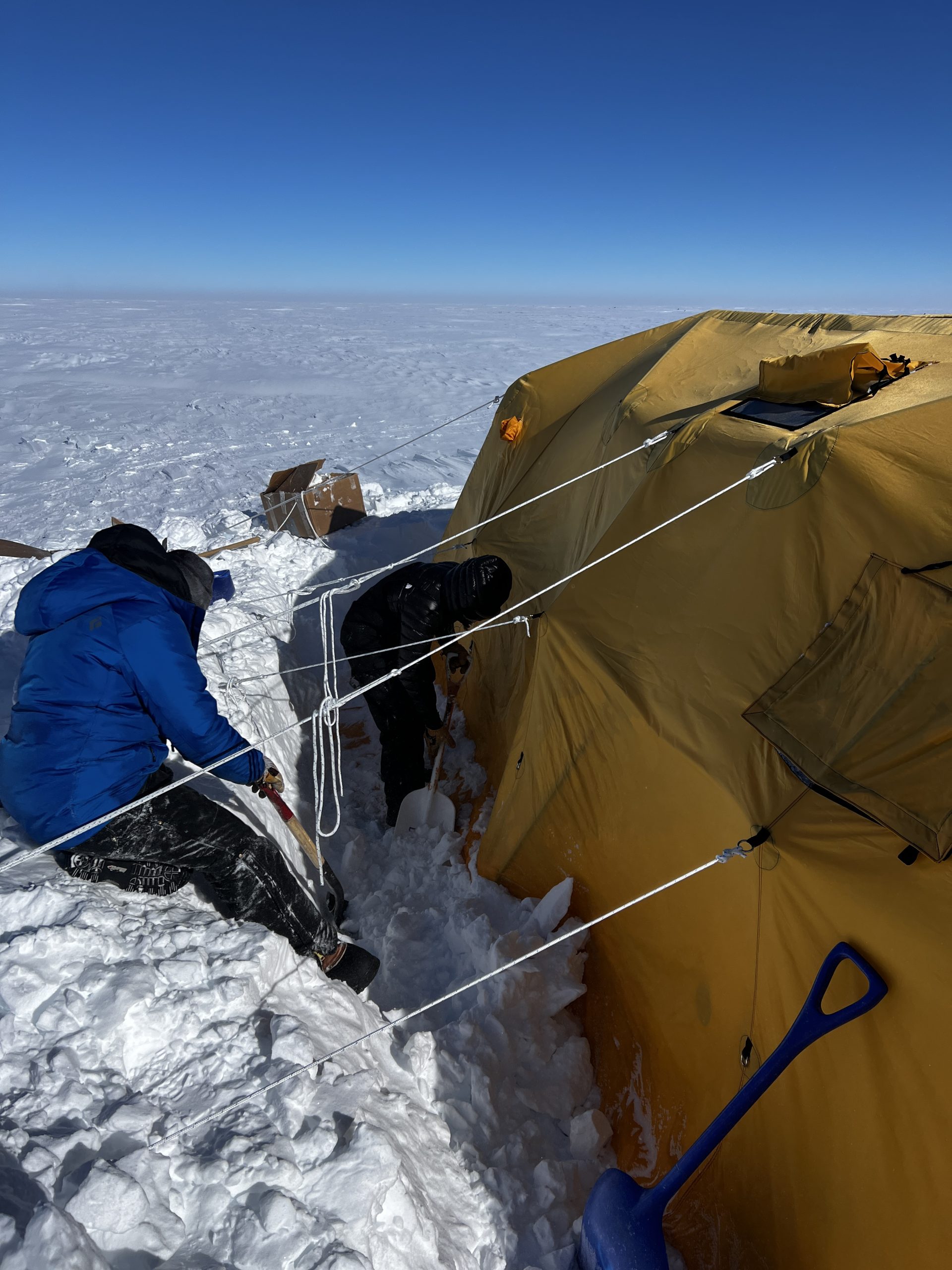
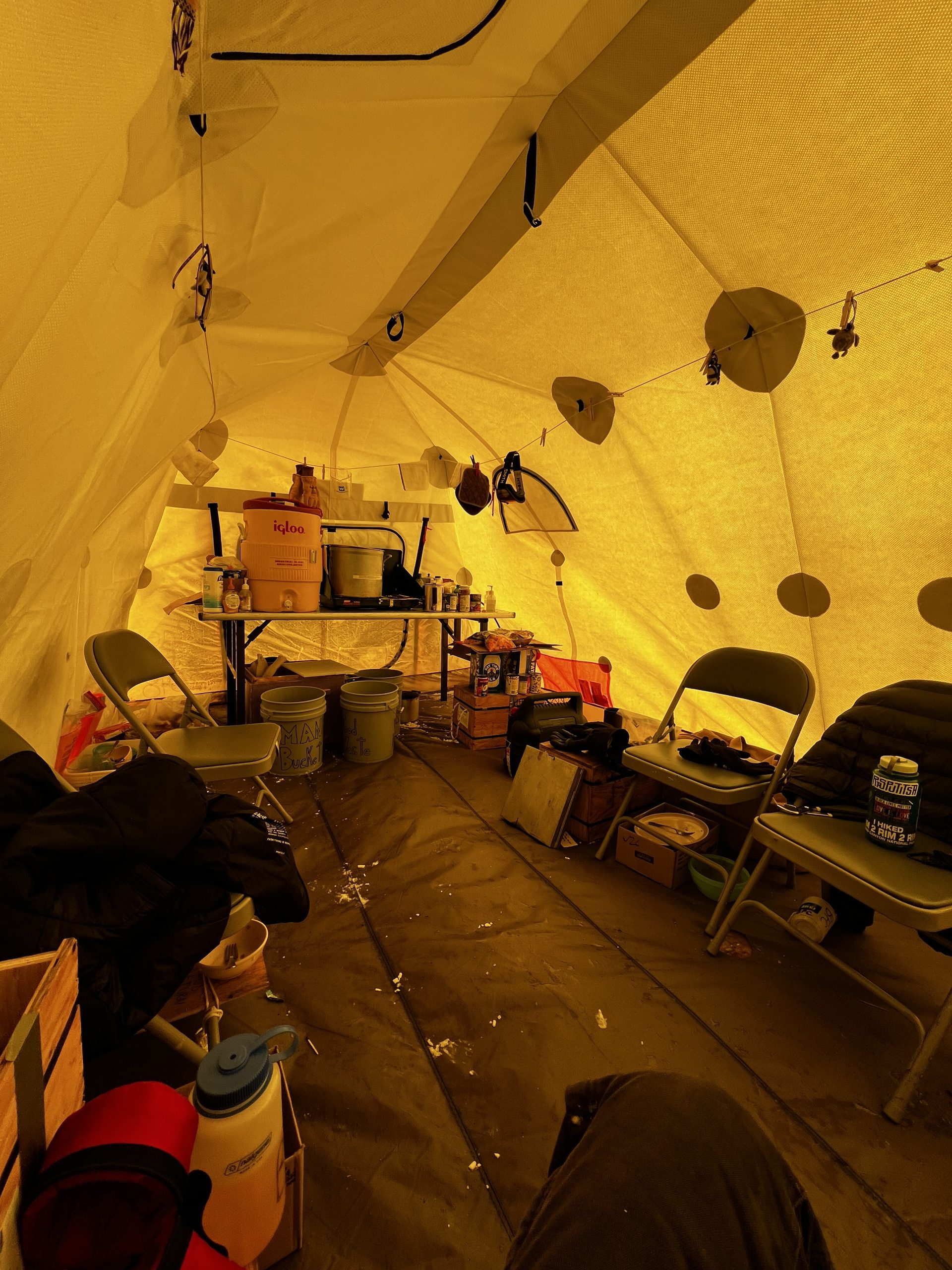
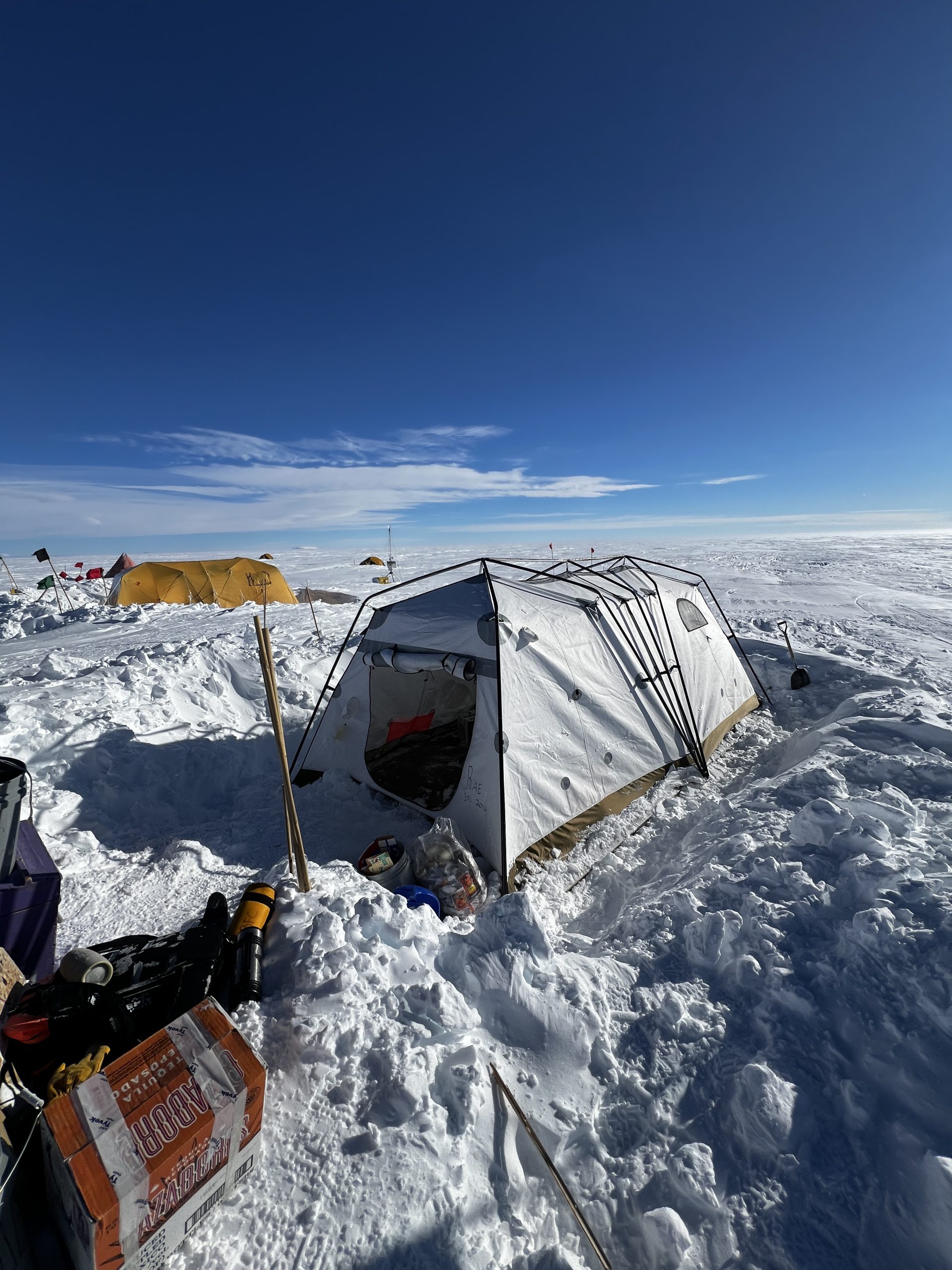
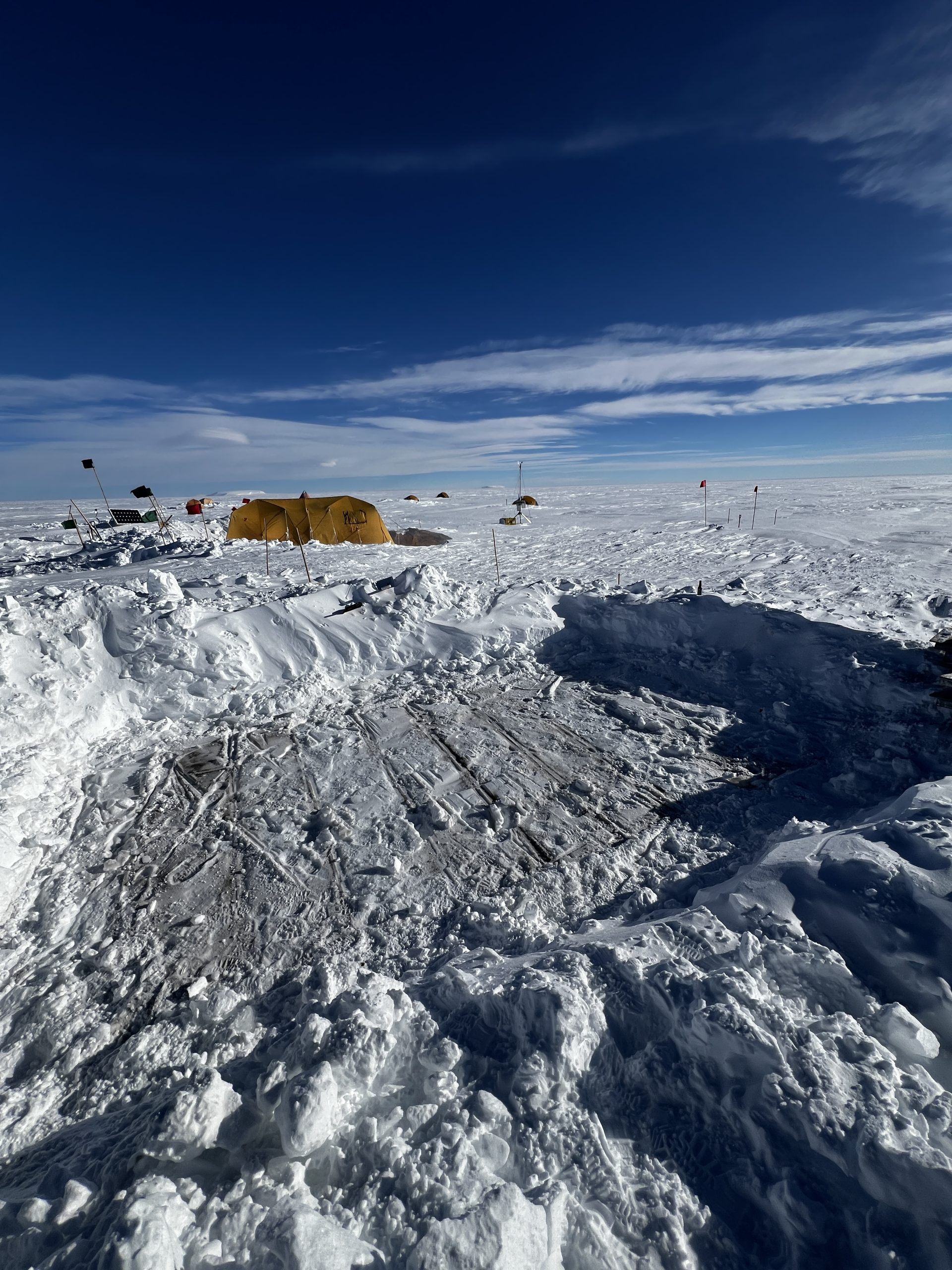
In preparation for our big take-out day tomorrow, the team got to work digging out the large kitchen tent, called an Arctic Oven, or AO. The AO had been up since the beginning of the season so it was quite iced in there. Also, it was blowing snow yet again so we had to deal with snow filling in the holes that we were digging which was quite annoying.
We used plastic shovels to remove snow and ice so that we wouldn’t rip the AO’s shell. We mostly succeeded in not damaging the tent which, as we were reminded, costs tens of thousands of dollars. This digging took quite a while – we were ~4 ft deep in glazed snow which you have to chip away at since it’s close to being ice. We also worked on moving out of the interior of the tent; we packed up the food boxes and random items that were inside the tent to make space and be able to take it down entirely.
We also spent time digging out our personal tents. When we arrived, we staked our tents with bamboo pieces. Now that we’ve been here for a month (or more), the stakes are quite buried in the ground and stuck in the glaze so they’re difficult to yank out. I dug my stakes out and put them in newer, softer snow so that it only takes 20 minutes to take down my tent tomorrow. We have to wait to take down our tents until we know that the flight is coming. Of course, we’re also sleeping in them tonight (and longer if take out is delayed!)
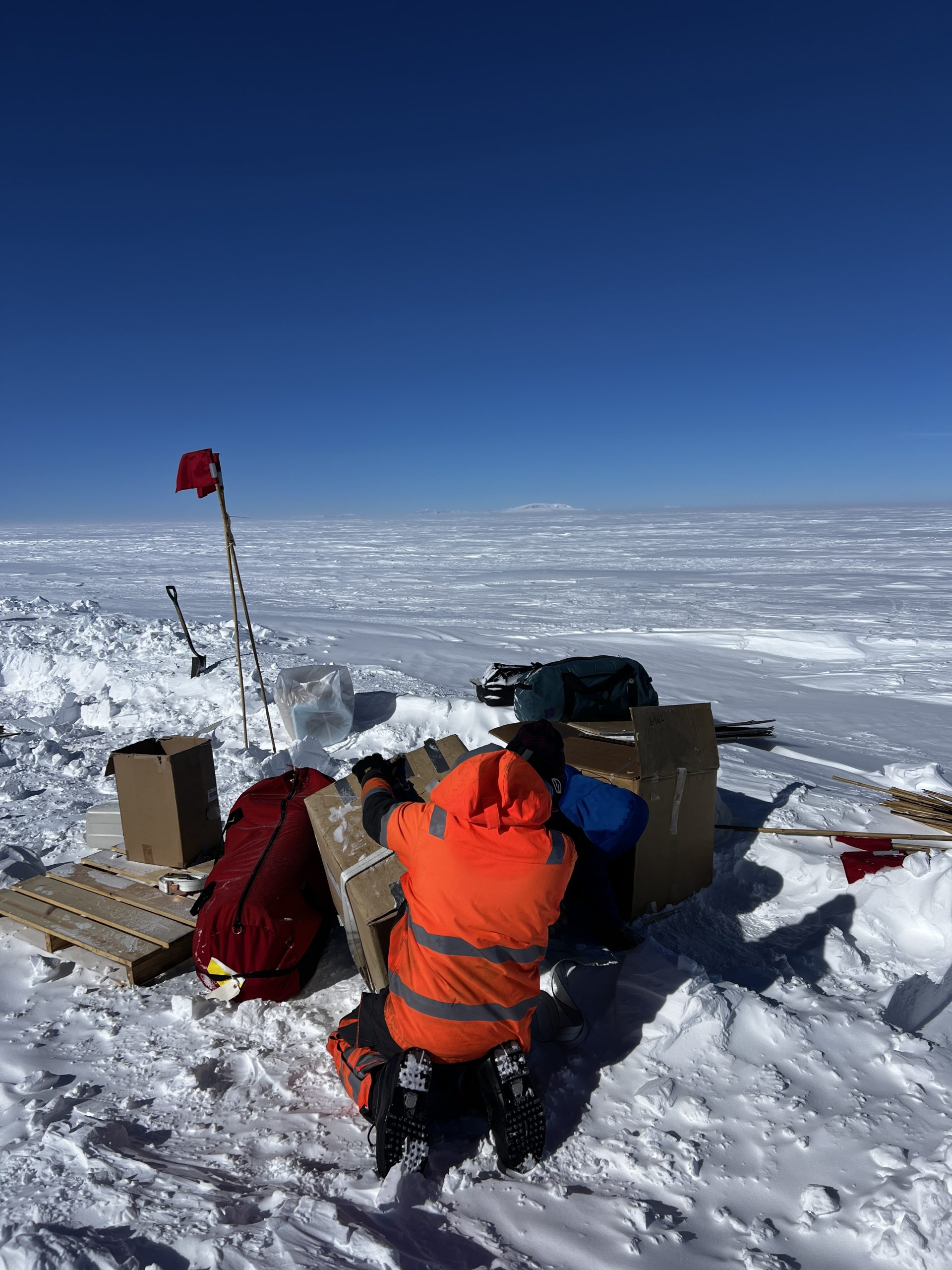
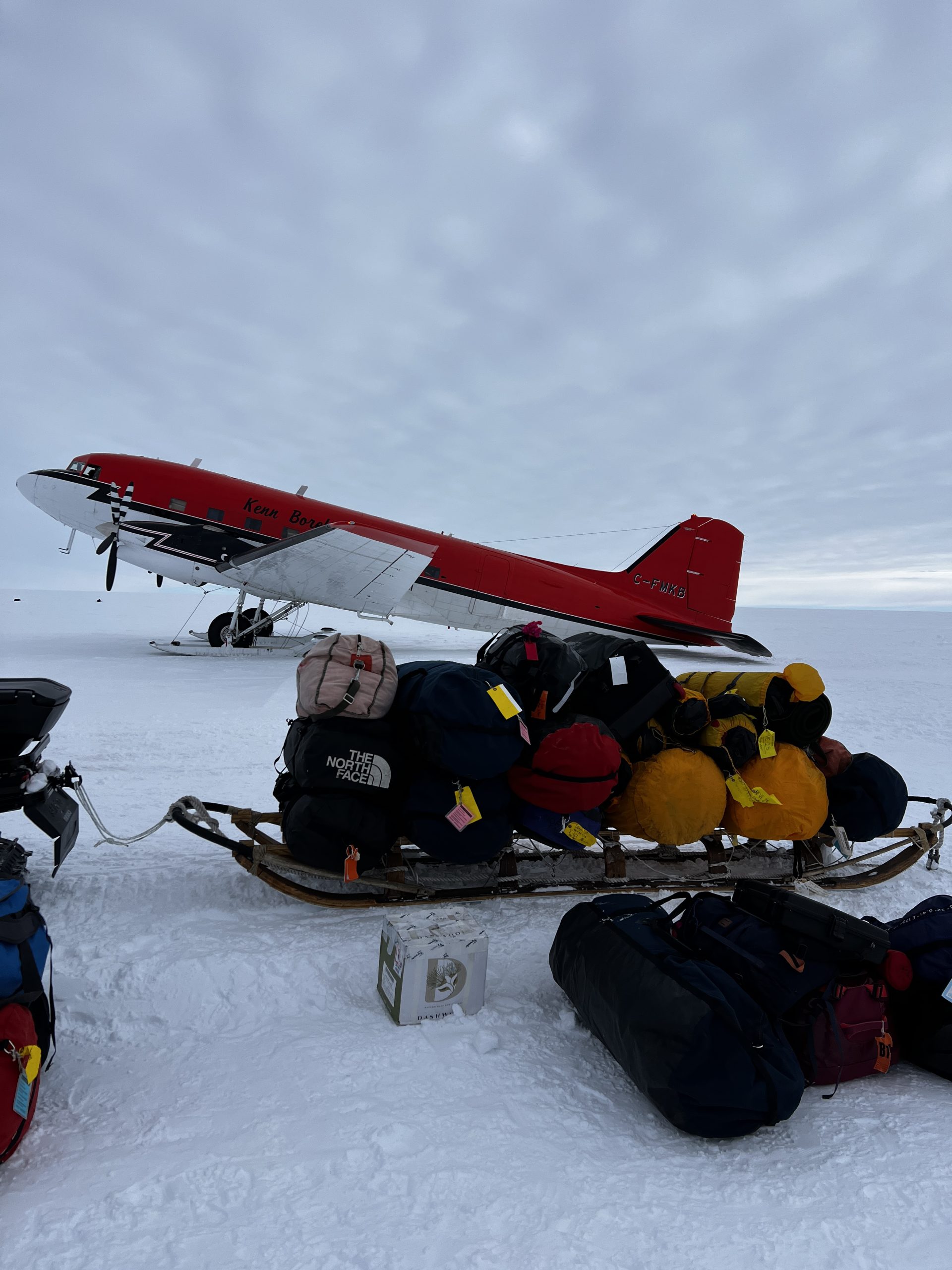
Another pre-take out task was to move cargo. The planes have limited space and weight for cargo so we had to move cargo from our enormous cargo line into three different cargo lines for the flights. There was a large line for the Basler, a smaller one for the Twin Otter that will take the team and our personal gear, and another line for the Basler that will arrive after we leave, which FAST will put their cargo onto.
After a lot of digging, I was able to sleep a bit despite being excited and nervous for tomorrow’s agenda.
Jan 27: Take out!
Everyone woke up with nerves today. The sun wasn’t quite out at 7 am, which created sort of flat light that pilots typically don’t like to land in. Plus, we were sitting ducks – waiting to take down our personal tents and pack up the emergency gear until we knew that the flight had taken off. First, the Basler was supposed to come and take out our science and camp cargo. We had an hour to pack that up and for Kaisar (the pilot) to take off, before the Twin Otter would be up in the air, ready to land and pick up the team and our personal gear.
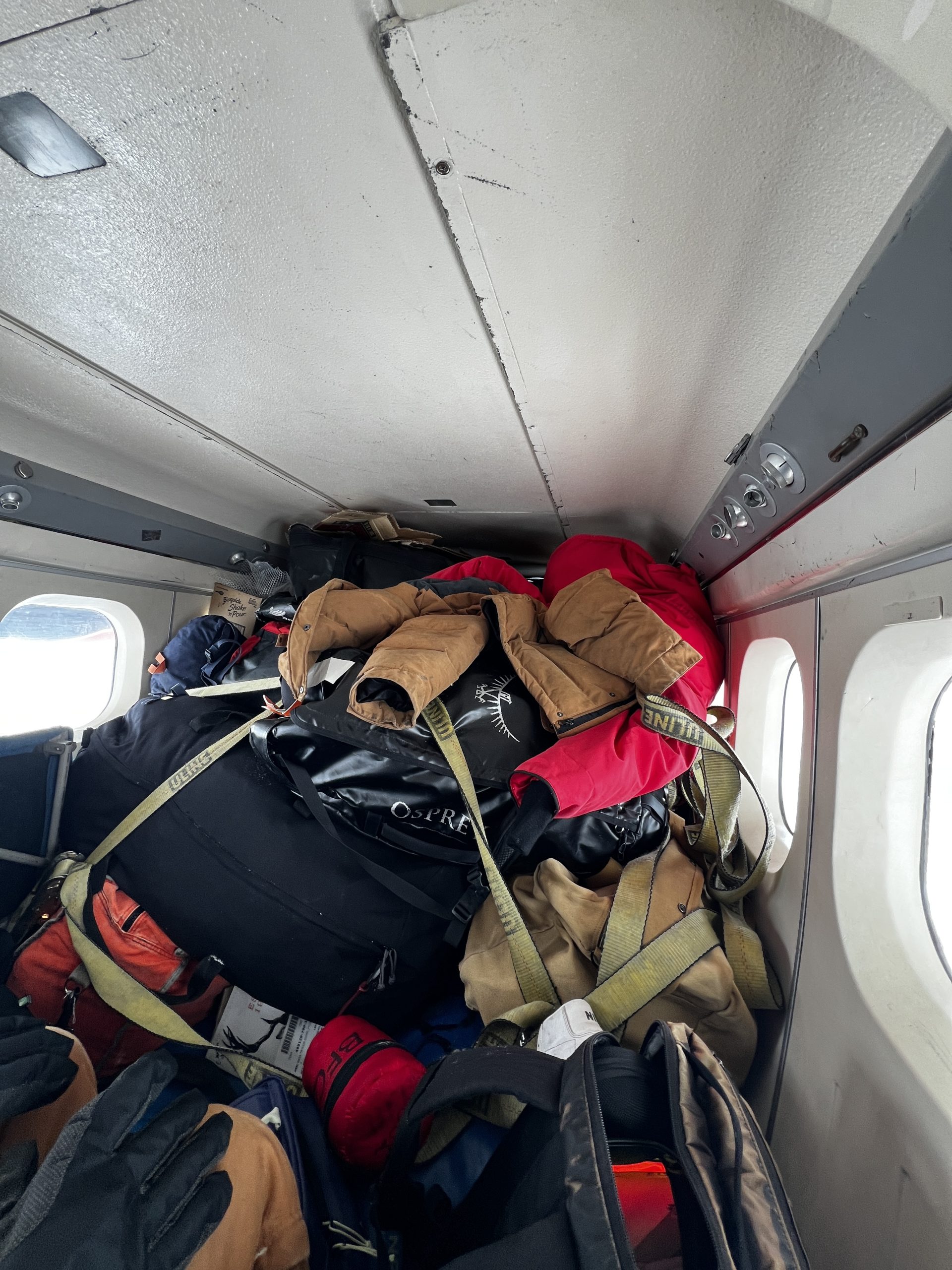
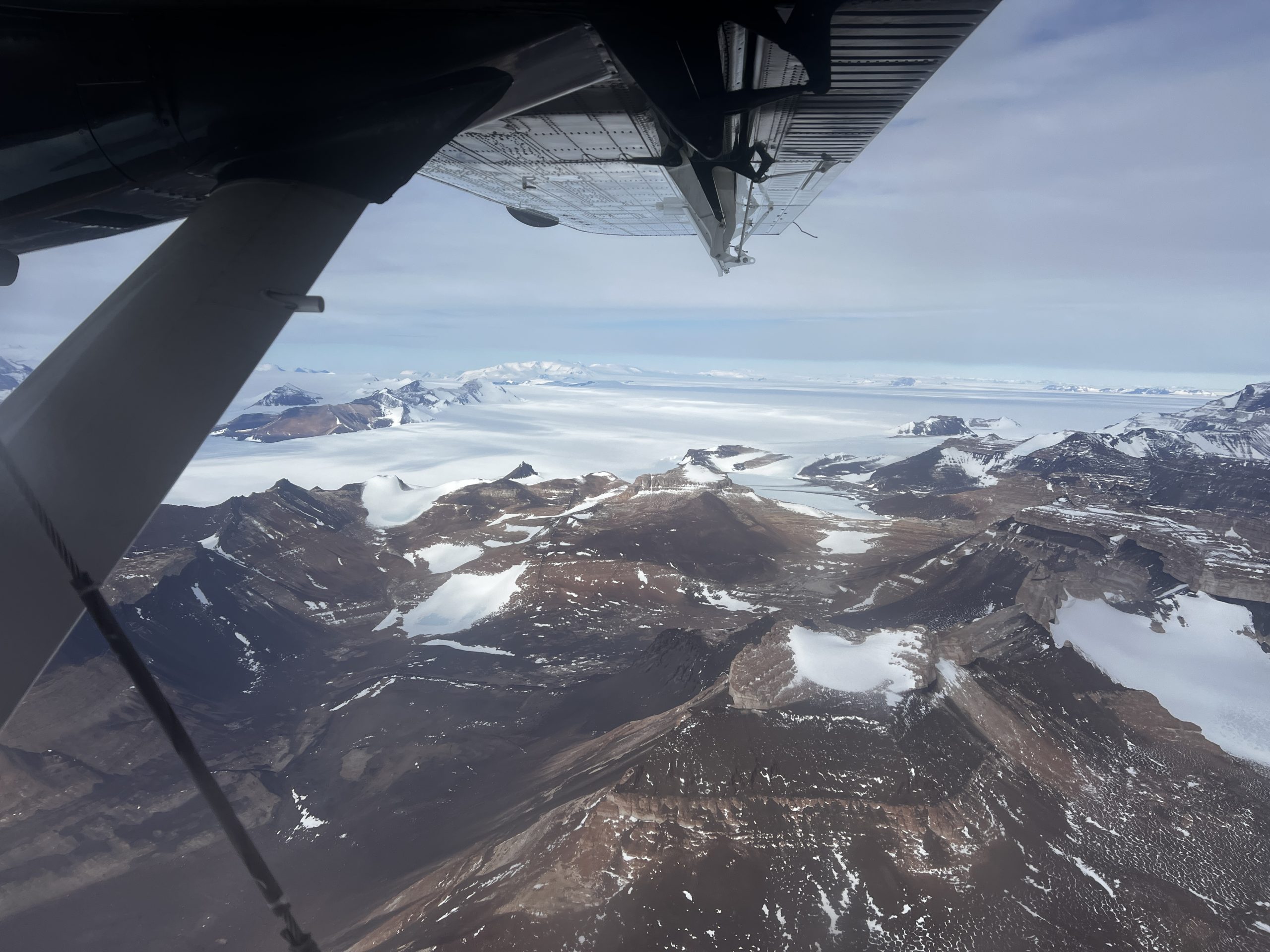
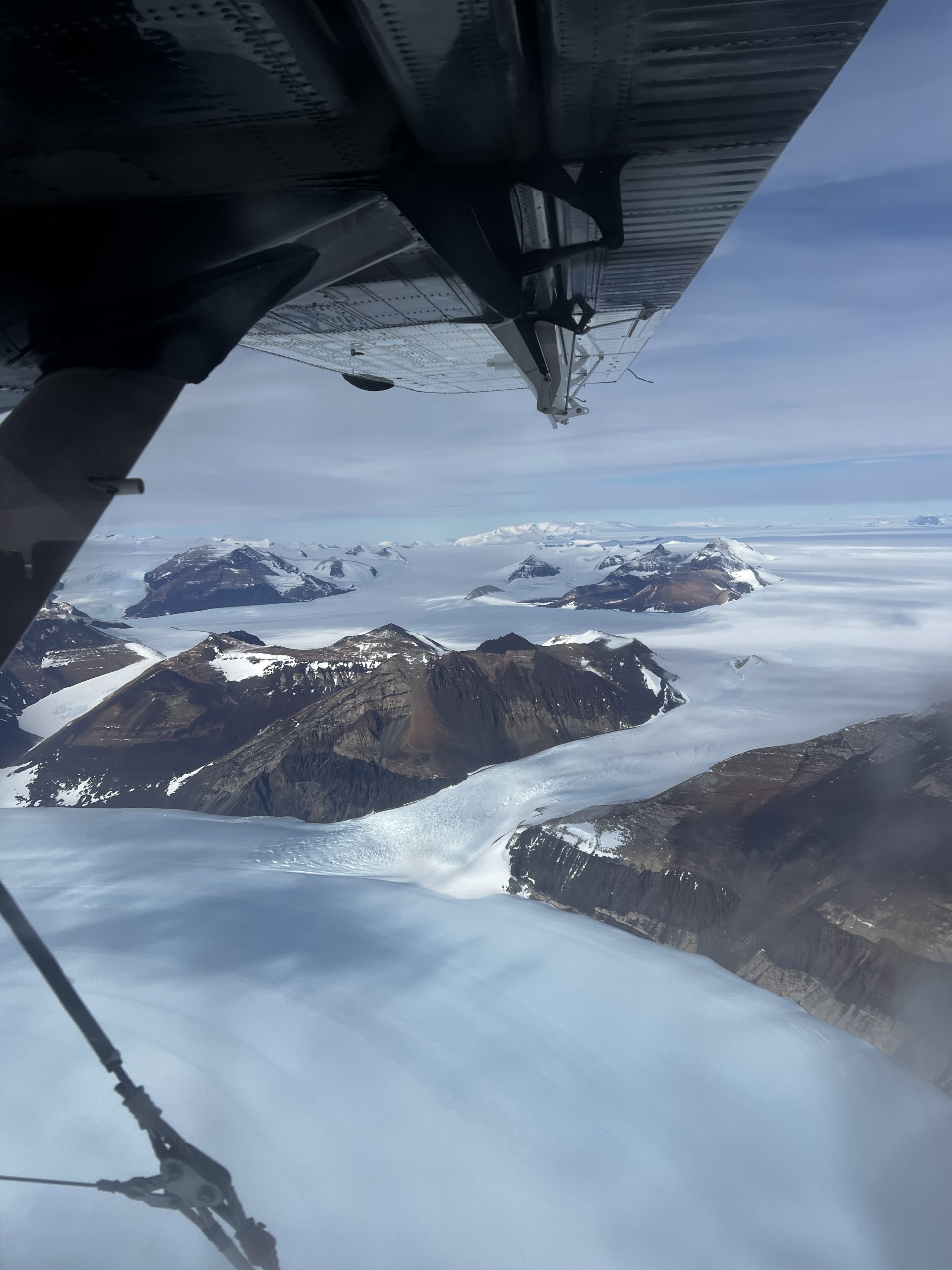
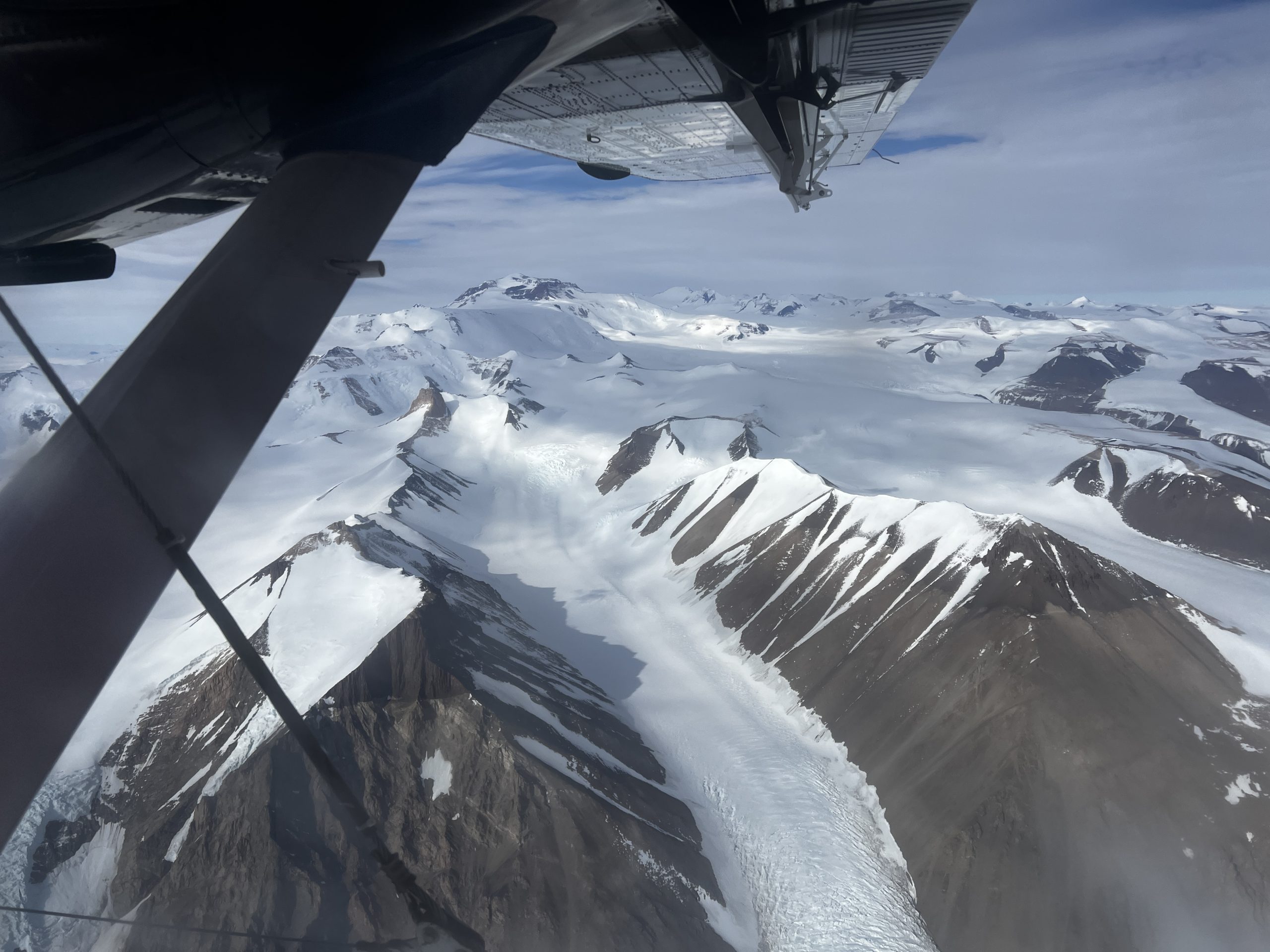
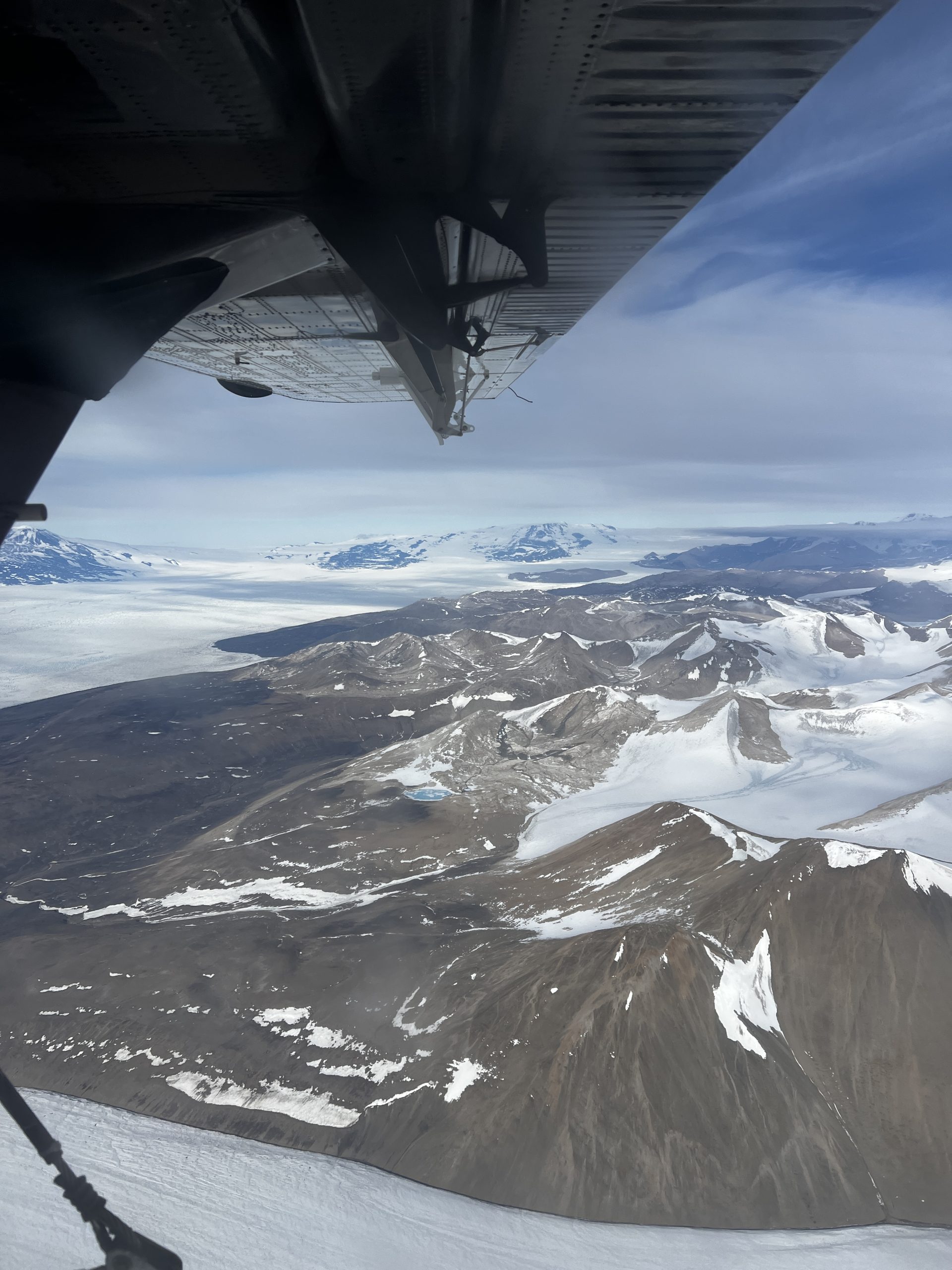
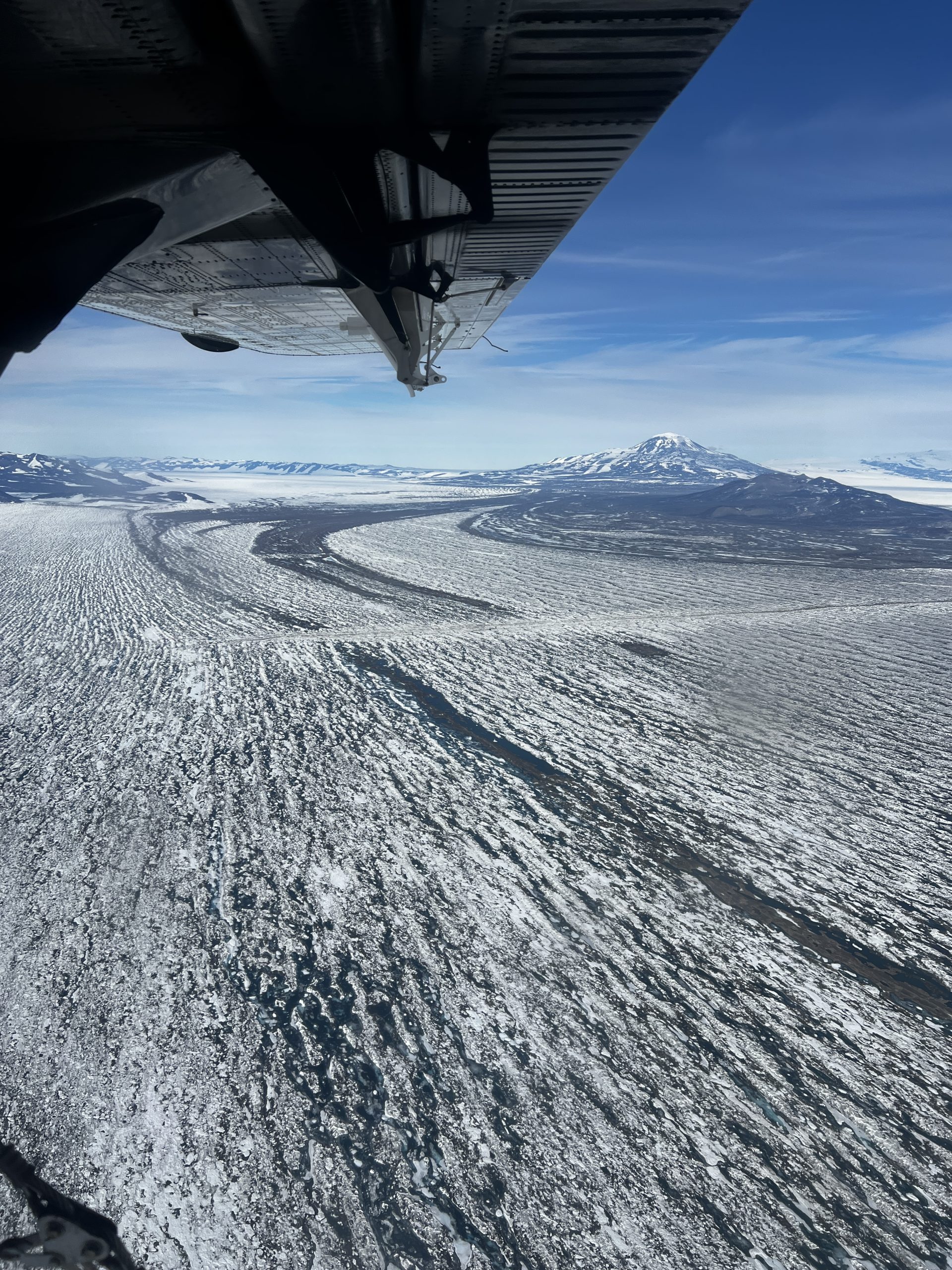
It was a hectic morning, going from waiting and trying to stay warm to moving thousands of pounds of cargo within the hour. But, we finished the Basler pretty efficiently if I do say so myself. Once Kaiser was at the end of the runway, cargo loaded, and ready to take off, he waited until the Twin Otter was ready to land before taking off. The Twin Otter landed and we boarded for one of the most beautiful flights of my life.
When we landed at Willy Airfield after the 45 minute flight, we were all cold from sitting still, high up in the cold air. We were also quite delirious – it was overwhelming to be greeted by the flight crew and our shuttle driver when we had landed. We loaded our personal bags into the shuttle and left the large cargo items to be dealt with by the forklift drivers.
The shuttle ride back was a mostly silent hour-long ride, filled with anticipation and excitement at seeing familiar buildings in town. I managed to avoid seeing people I knew (except for one jano) until I took a much-needed shower. Ellen, Dylen, Ilyse, and I were roommates again in Building 155. Everyone scrambled around for a few hours: showering, eating, unpacking, doing laundry, and seeing friends for the first time in month(s).
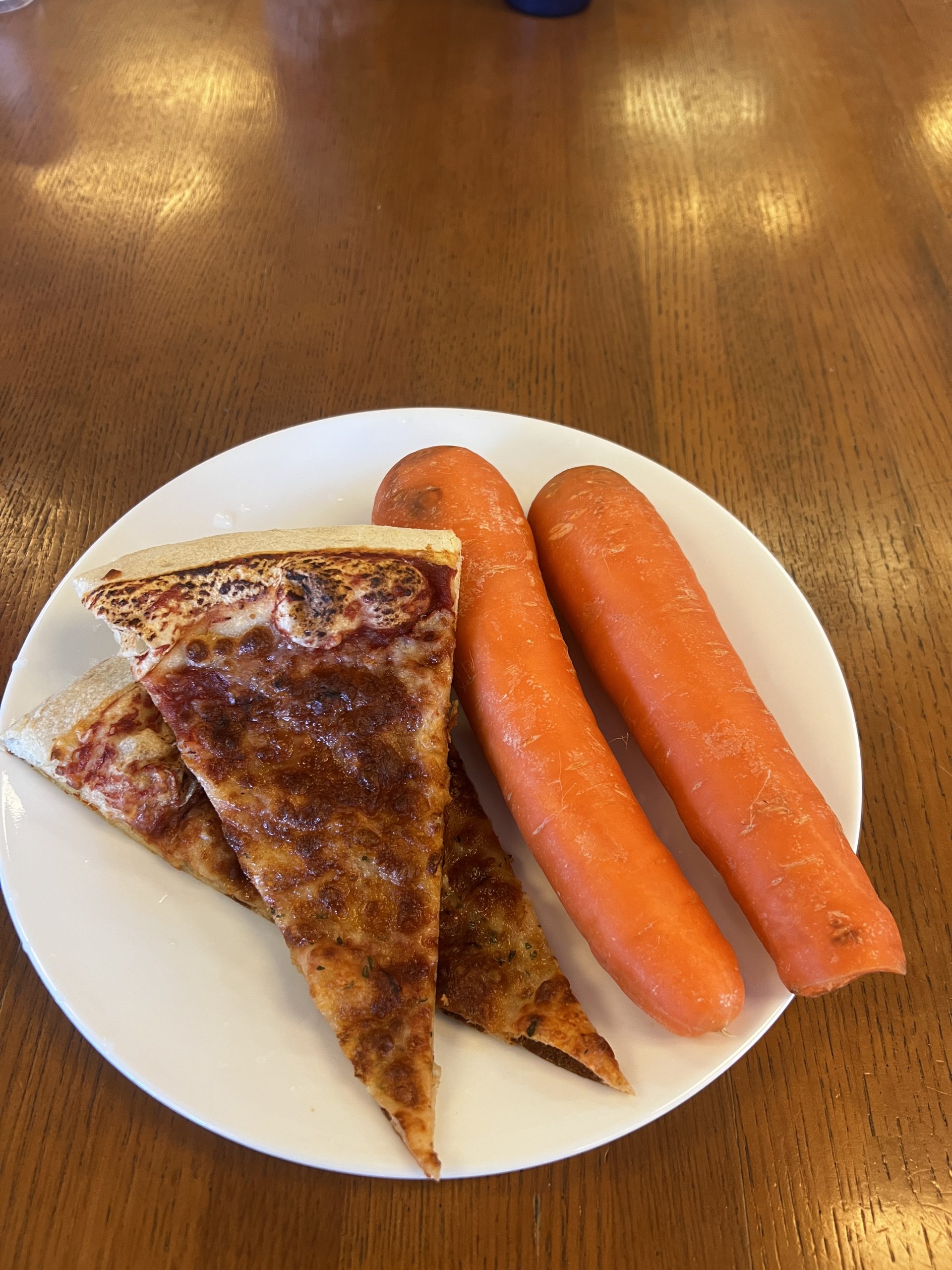
Luckily, there were refreshes in the fridge when we got back: carrots! Ilyse and I were particularly thrilled to see carrots and our lunch consisted of two slices of pizza and two enormous carrots. We grabbed dinner with E, who had been in McMurdo for a few days cleaning up drill equipment and packing our cargo (which was incredibly nice of her since we didn’t ask her to!).
When we all walked into our room after lunch, we found Naomi standing in there, unpacking her bags! She was assigned to be the fifth roommate! It’s funny that they put five people who had spent a month in the field together all in the same room but it’s also nice to know all of my roommates.
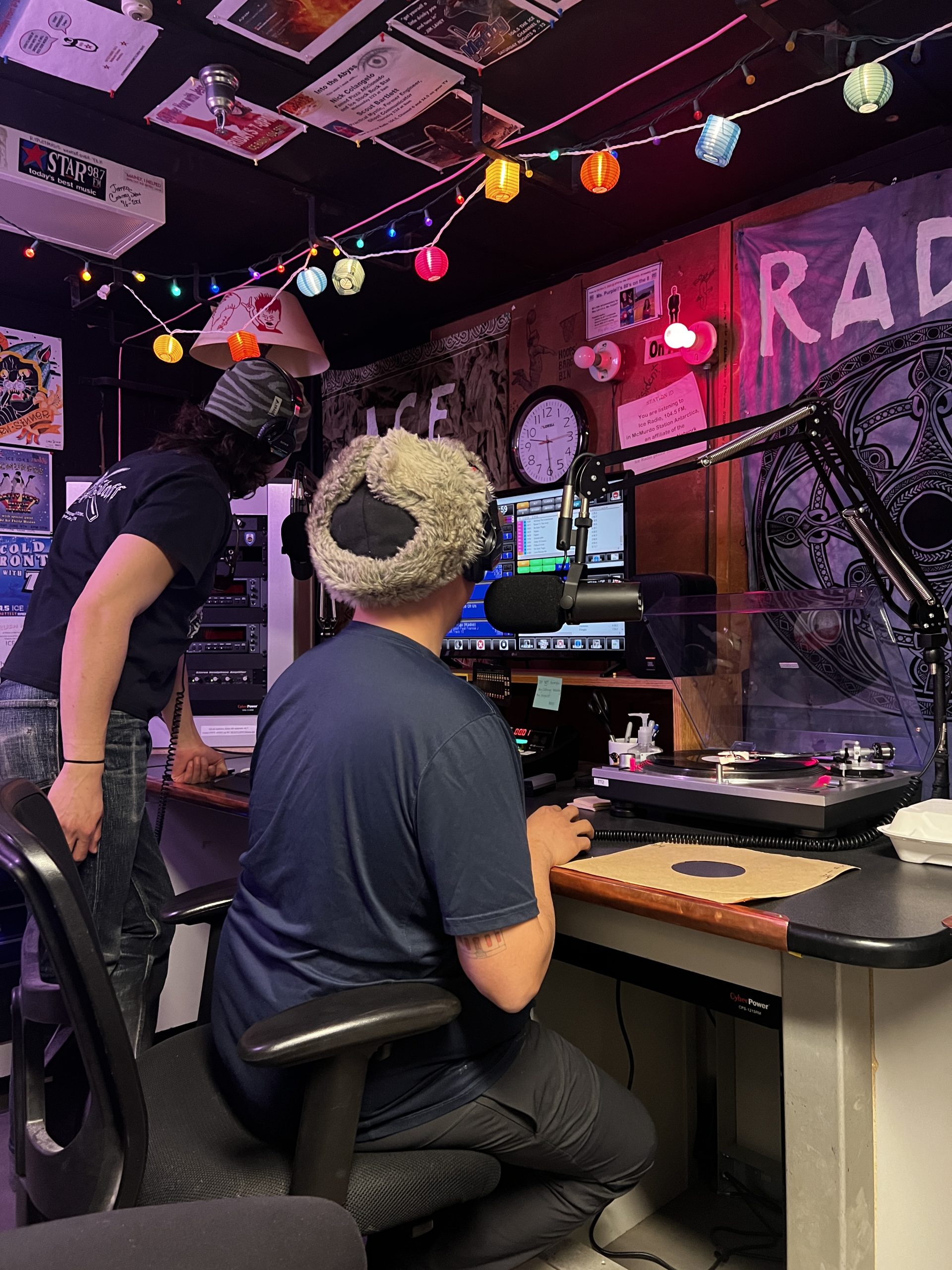
Later, we rallied to the radio room where Christian and Luc were hosting radio shows. Dylen and I hung out in there while they hosted their shows. Luc’s show theme is to play music that has inspired a great artist. So far, he’s done segments on Elvis and Beyonce. Today’s show was inspirations of Loretta Lynn. Christian’s show, Love Hour, featured love songs. Typically, there’s a theme like sad love songs, yearning, upbeat love songs, etc. but there was no theme since he asked Dylen and I to contribute to the queue. I even called in to his show to request a song. Sadly, he can’t see how many people are listening so I didn’t know how much competition I had to call in and request a song.
After this, we headed to the galley for ice cream, which is one of the things I missed most while being in the field. It’s difficult to crave cold desserts when you’re surrounded by cold all the time so I was excited to be eating ice cream in a place where I knew I would warm up easily afterwards.
Jan 28: Back to cargo
Surprise!!! We still have lots of cargo to sort through. The team got to work early today, shuttling boxes that we loaded up on the Basler and Twin Otter, and drying the contents. Since all of these boxes were sitting out on the ice sheet for a month, there is snow in most of them and/or the instruments and tools are wet. We can’t put these on the vessel since it’ll take months to get back to the United States and they will arrive mildewy and possibly damaged by water.
So, we took the boxes to our lab spaces in Crary, emptied them, and left them to dry in the dry, warm Crary air for 24 hours. We worked on sorting through items that needed to go back to the US via vessel versus commercial aircraft, too.
We worked through most of the science cargo and got to sorting through camp cargo. This was less pleasant – it’s cold in McMurdo (though not nearly as cold as Taylor Dome) and we had to look in all of our rock boxes that we’d packed food and other goodies in. We need to sort through FAST’s stuff versus ours and determine what we need to send back to the Berg Field Center (BFC). The BFC handles our camp gear, including tents, sleep kits, food, and dishes.
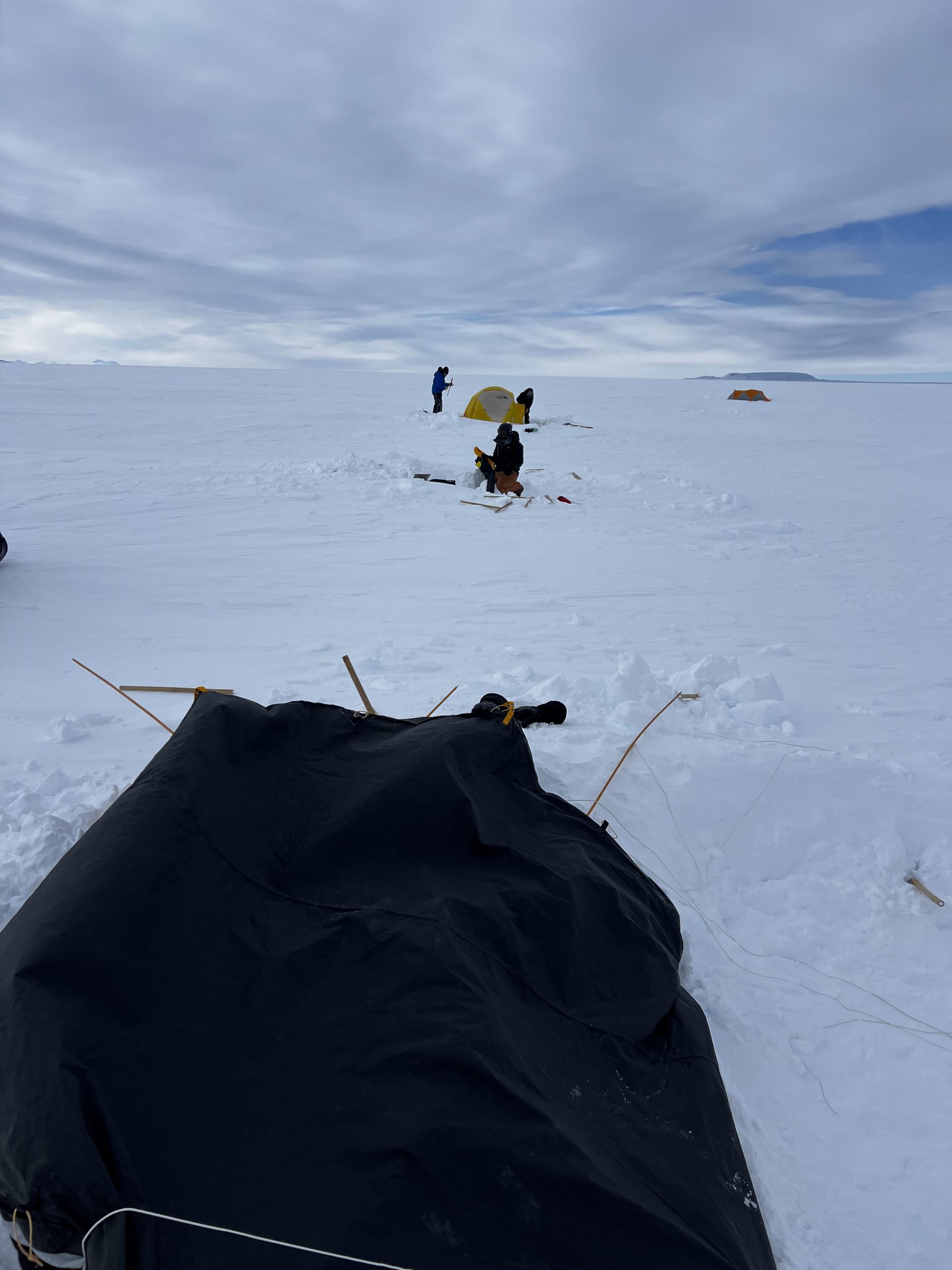
Next, Ellen and I got to work cleaning out our tents. We set them up in the Science Support Center warehouse where there was space to clean and dry them. I swept out a dustpan full of snow, mopped my tent, and put it on top of boxes to prop it up to dry out. Ellen did the same then we worked on cleaning our pee bottles. We washed and bleached them and returned them to the BFC.
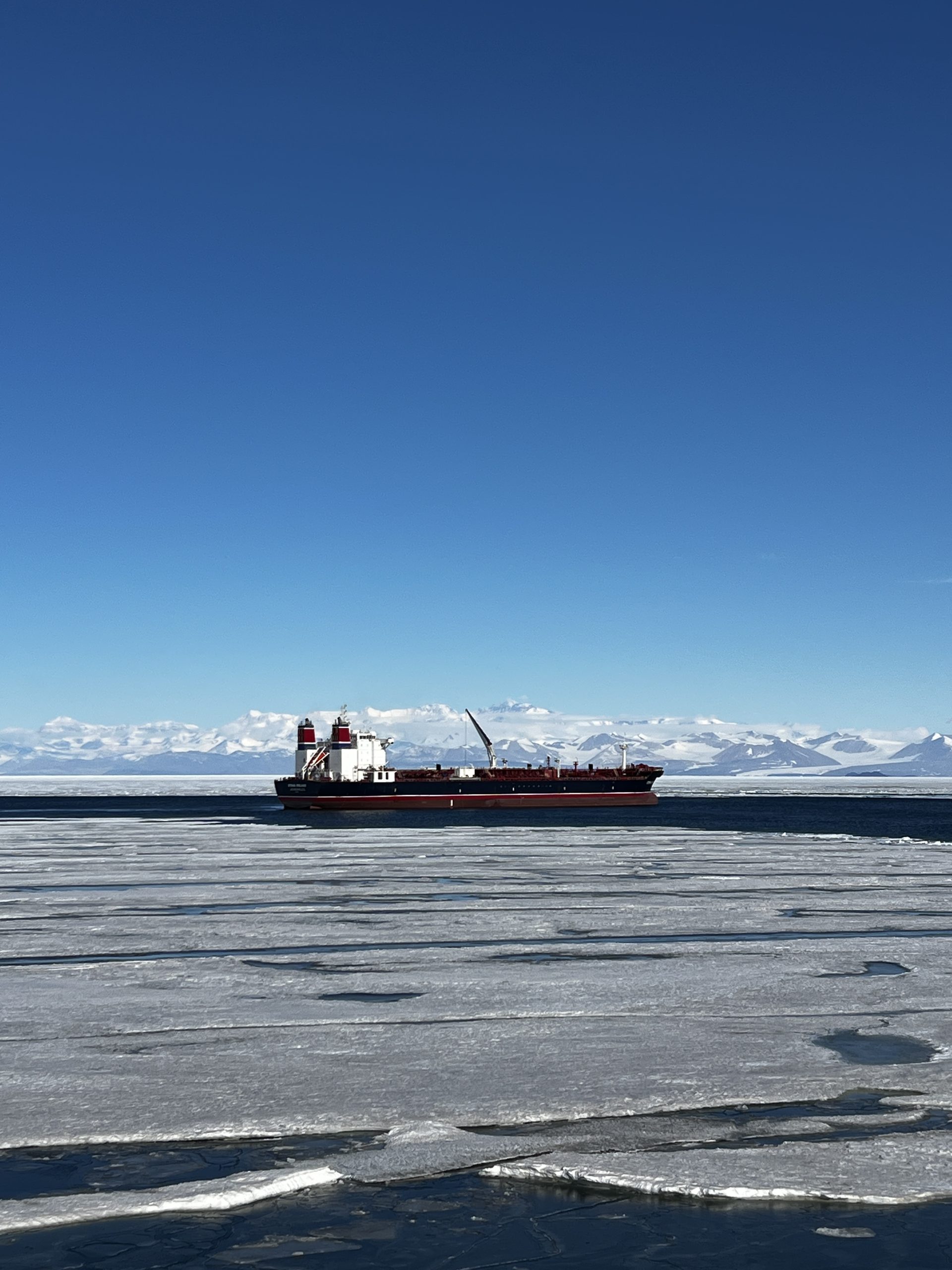
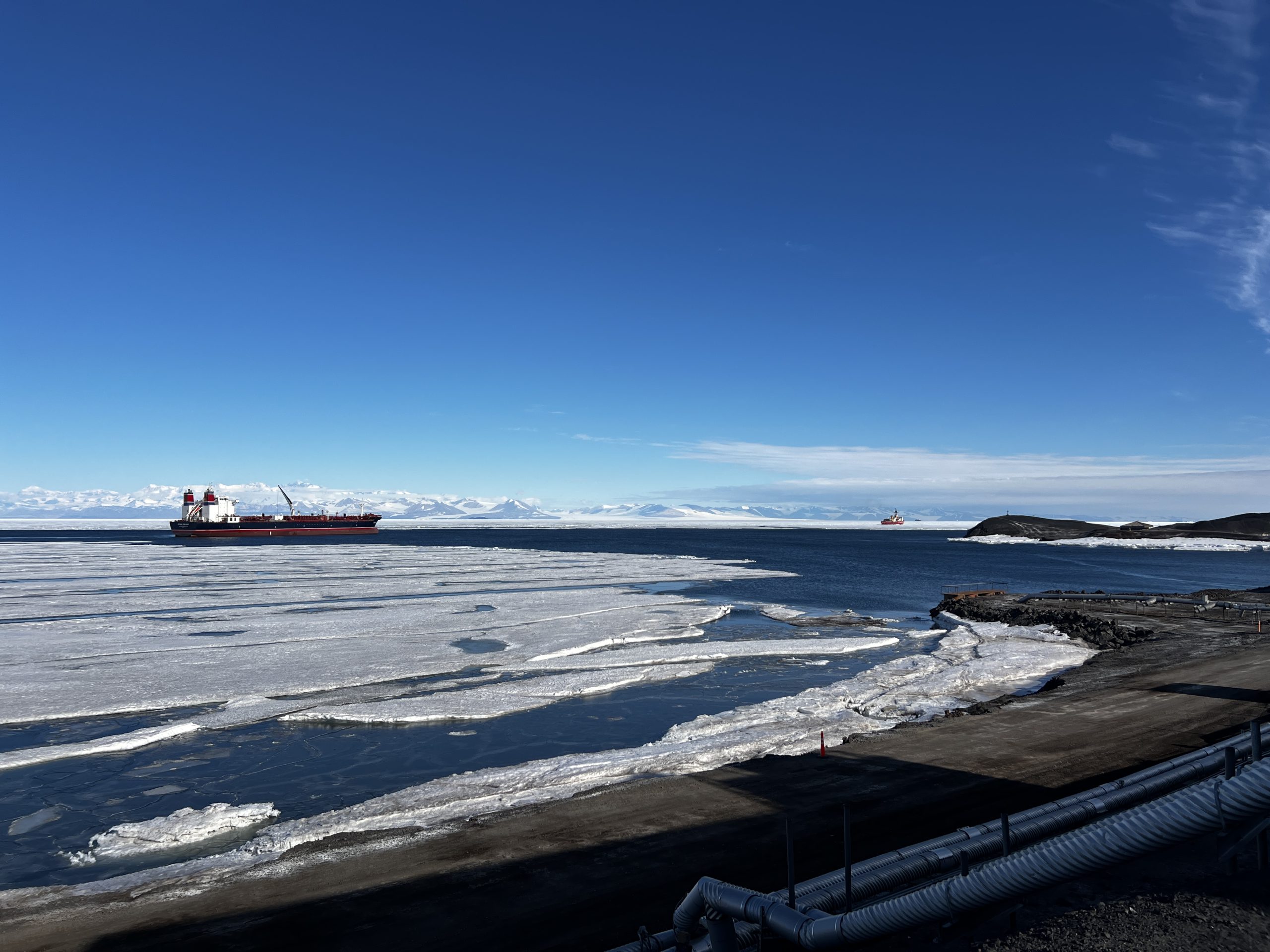
Meanwhile, there was a ship taking off from the wharf! I headed out with my camera to take some pictures and while I wait for those to upload, my iPhone pictures will have to suffice. The ship that took off was a fuel tanker, here to deliver either 7 million, 35 million, or 75 million gallons of fuel, depending on who you ask. The fuelies were quite tired after working round the clock to get the tanker emptied and the fuel stored on station. This new fuel supply is supposed to last two years on station. Anyway, I chased the ship around for a bit before heading back to the team to continue helping with unpacking.
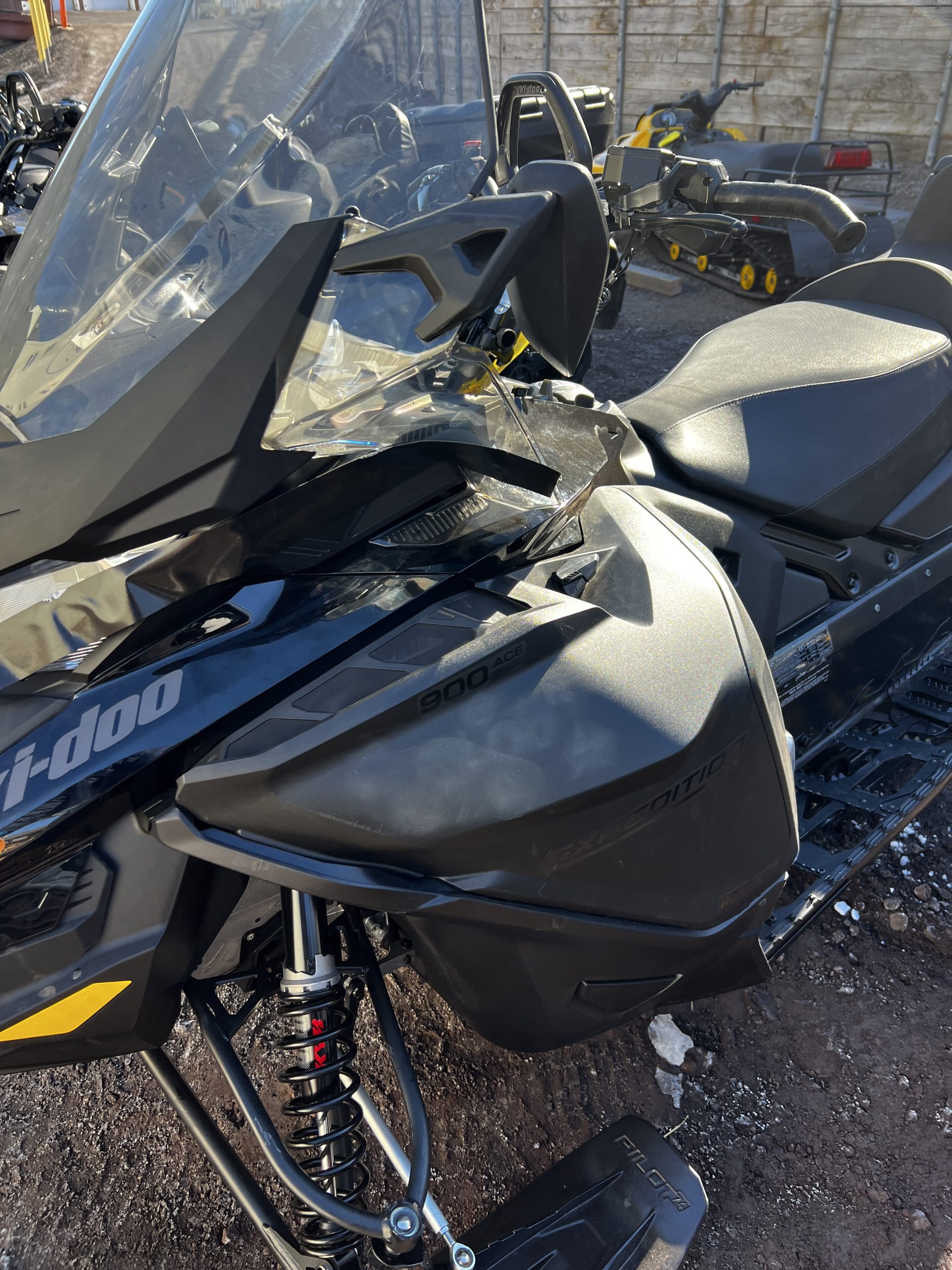
We received some unfortunate news: the names we gave to the Ski-Doos were not appreciated by Tony… We had to clean the Ski-Doos off using hand sanitizer and rags. It was a real workout but we got it done and hopefully Tony will be less displeased.
Later, the team headed to the beach for Beach Beers. Some of the stewies were celebrating their 100th day on ice and the janos were in search of whales. We went on the Observation Hill loop, which is a hiking path that goes around Ob Hill toward Scott Base with beautiful views of the ocean. It’s bizarre to see open water after a month of only seeing ice. Much of the sea ice has melted or been broken up by the Polar Star, the icebreaking ship wandering through the water out here.
We didn’t see any whales but it was nice to see friends again and catch up. It was quite cold and windy despite the past couple of weeks apparently being really nice and warm. We’re expecting Condition 1 this weekend due to an incoming storm… It’s been incredibly overwhelming to see so many people and moving parts after spending a month in the field with the same 10 people, where the only noises were Ski-Doos and generators.
Disclaimer
The opinions expressed are solely my own and do not express the views or opinions of the National Science Foundation, the United States Antarctic Program, or the University of Washington. This blog is for entertainment purposes only.