Dec 5: Snow day!!!
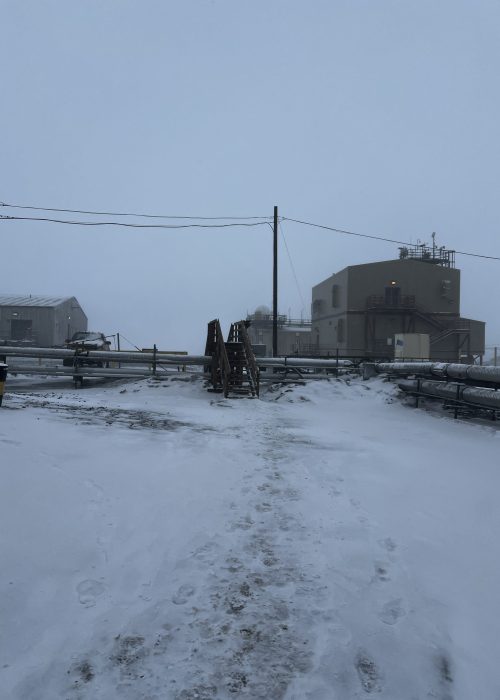
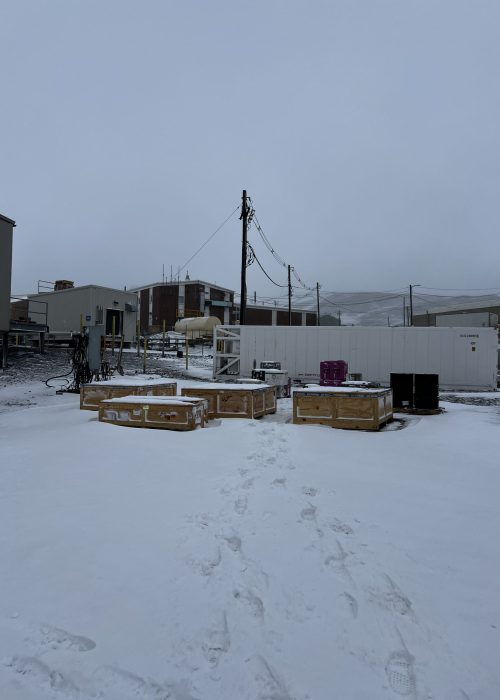
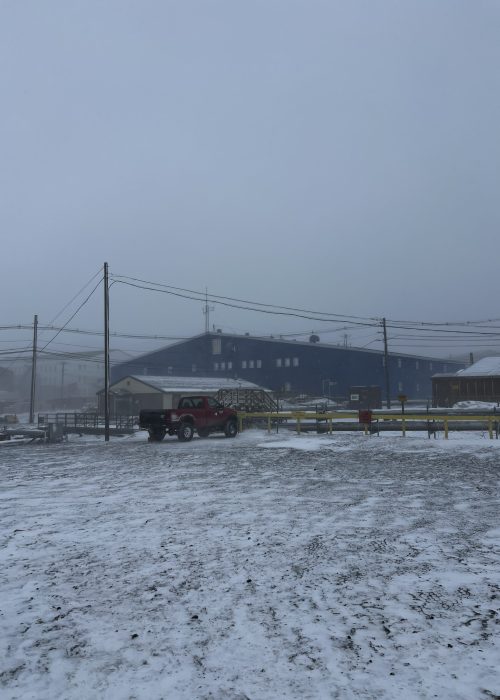
We woke up to a beautiful and dangerous snowstorm today! There was only about 1 inch of snow throughout town but weather was bad enough for the town to go into a special weather condition. Due to the bad weather, our meeting about food for our time in the field was cancelled – the person we were supposed to meet with was called on a search and rescue mission.
Sidenote: Conditions 1, 2, and 3
McMurdo has three different weather conditions: 1, 2, and 3. Condition 3 is “normal” conditions, which could be many weather scenarios, but there are no restrictions regarding checking in or out throughout the day. We are allowed to travel recreationally (like going on hikes) during Con 3.
Condition 2 occurs when: winds 48 to 55 knots are sustained for one minute, or visibility less than 1/4 mile, but greater than or equal to 100 feet sustained for one minute, or wind chill -75ºF to -100ºF sustained for one minute. During Con 2, residents must check out with Central Comms by radio prior to leaving McMurdo town limits and check in upon return.
Condition 1 occurs when there are winds greater than 55 knots for one minute, or visibility less than 100 feet sustained for one minute, or wind chill greater than -100ºF sustained for one minute. During Con 1, all travel by vehicle or foot requires prior approval from the NSF station manager.
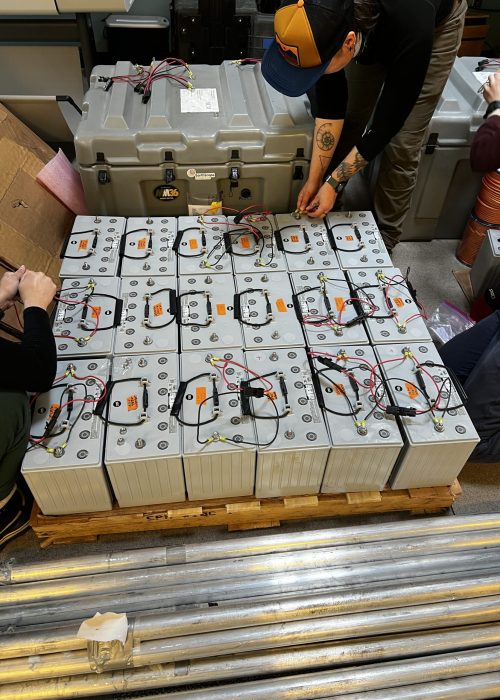
According to Zoe, it’s unusual to have Con 2 or 1 status in town, though out on the ice shelf, rugged weather can be much more normal. There have only been 3-4 Con 2 days this summer, so this is a rare occurrence! It was quite difficult to see outside due to blowing snow and even walking between buildings was unpleasant. So, because of the snow day, we decided to treat ourselves to lifting 60 batteries each weighing ~75lb into various boxes!
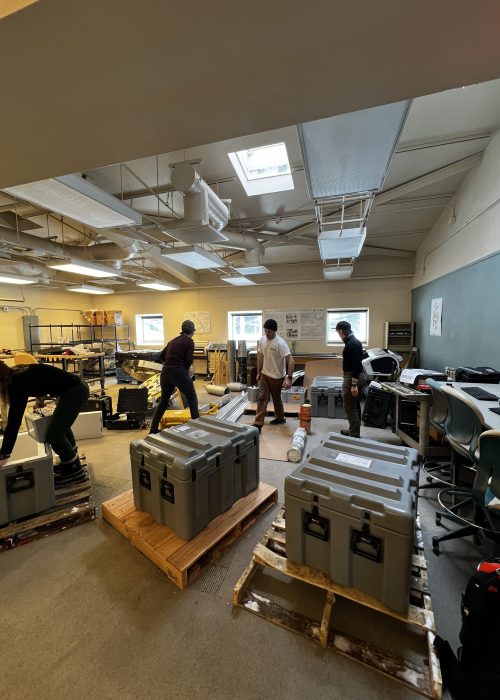
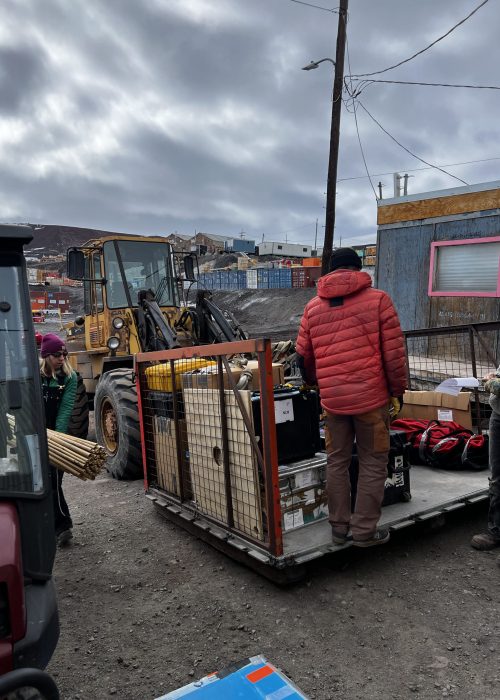
We need to prepare and separate our cargo so the different cargo work centers can process things accordingly. First, we need to get hazardous cargo (mostly batteries) into the system. Besides hauling ~4,500 lb of batteries that were already there for us in McMurdo, prepping haz cargo involved us sifting through boxes we packed months ago in the U.S. and loading them into their shipping boxes. It was difficult work but felt so, so good to clear the boxes out of our office and our designated dirt patch “cargo yard.” We still have some instruments to test but can do so before our ultimate cargo deadline of Wednesday. We expect this cargo deadline to change yet again with delays that have already set us back ~1 week.
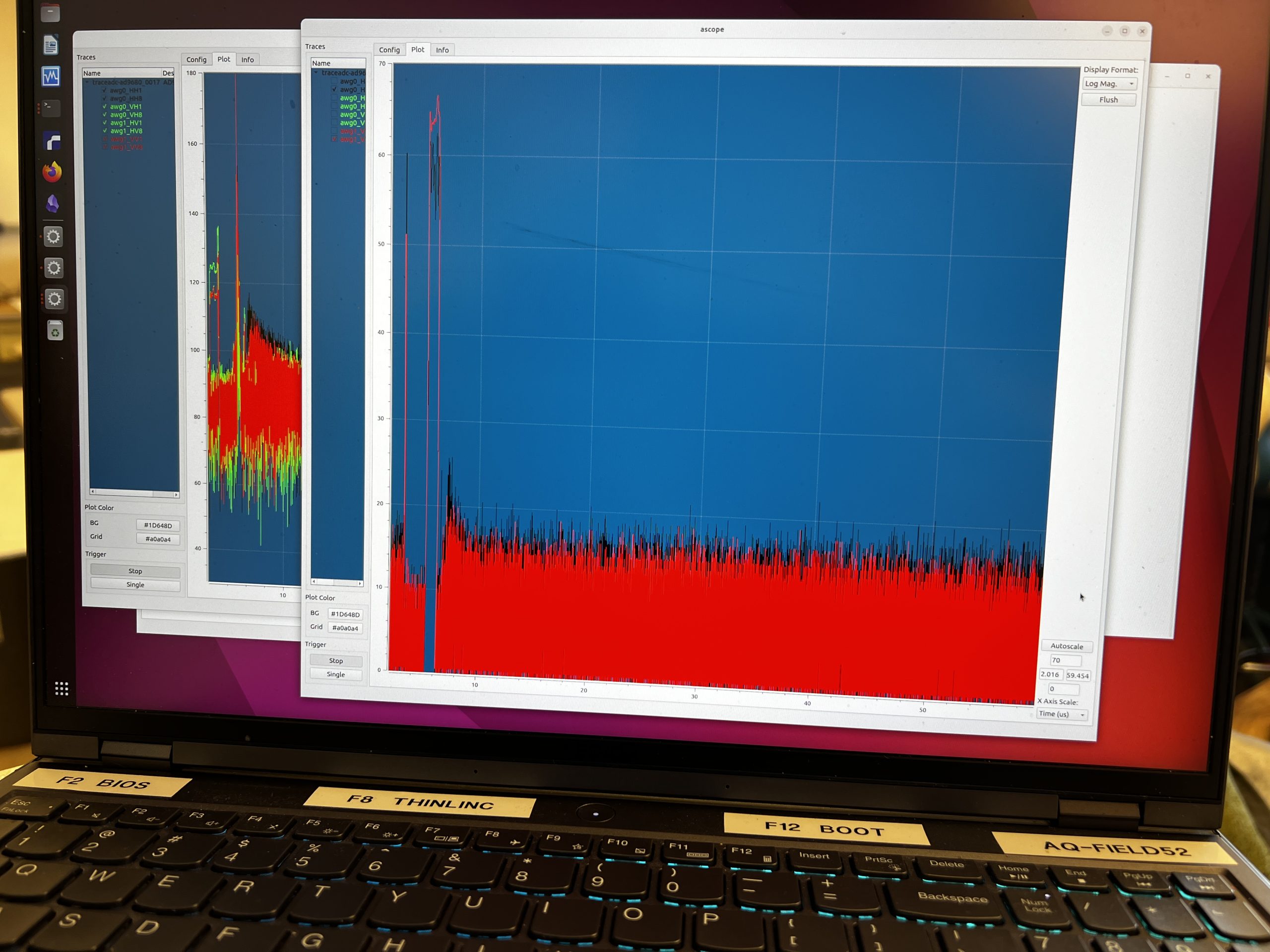
Anyway, we spent a large chunk of the day hauling batteries, packing boxes, bringing pallets in and out of buildings, and loading and unloading trucks at the various cargo departments. Safe to say we all expect to have lower back pain tomorrow. Ellen and I took the opportunity to set up an ApRES radar acquisition outside to collect some real data and test the system. I also raided the store to buy some merch and pay for the beverages I ordered ahead of time to have in the field. We have a ration of 3 alcoholic beverages per week and can order soda, sparkling water, cigarettes, alcohol (no liquor in field camps, though), and other treats ahead of time to enter in the cargo stream so we can enjoy in the field. We’ll be at Taylor Dome during some holidays so I ordered appropriately.
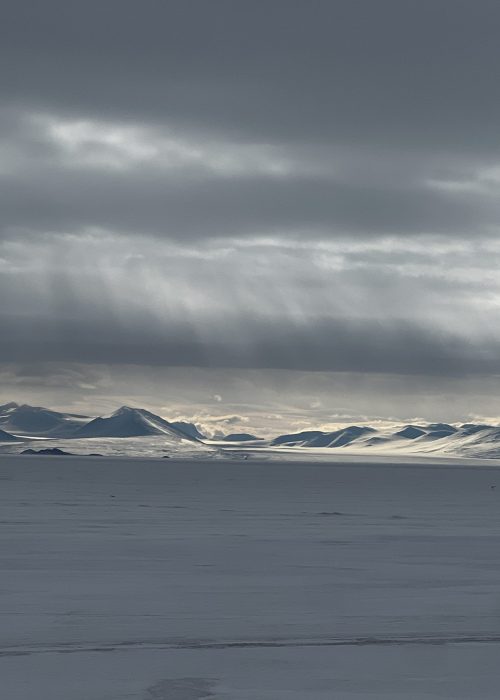
Later in the day, it cleared up and we could see the mountains again! Con 2 was lifted and we were back at Con 3.
Dec 5: Touch tank
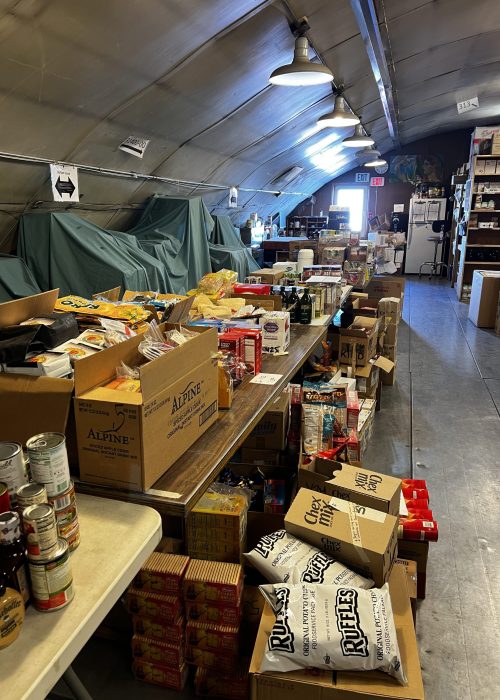
Today, we woke up to more cargo to deal with. After a meeting with Hannah, who was out on a search and rescue mission yesterday, we had to edit the food list. It turns out that 3-4 oz of pudding refers to the dried quantity. I had requested enough chocolate pudding to feed a family of six for a year. We also had to include some dehydrated meals in case we will be stuck in the field for a few days with no extra food. We spent a good chunk of time debating how many packages of cookies we could or would eat during a 6-week stint living in a remote field location in Antarctica and doing manual labor. I could probably scarf down a pack of Fudge Stripes every day but that’s just me…
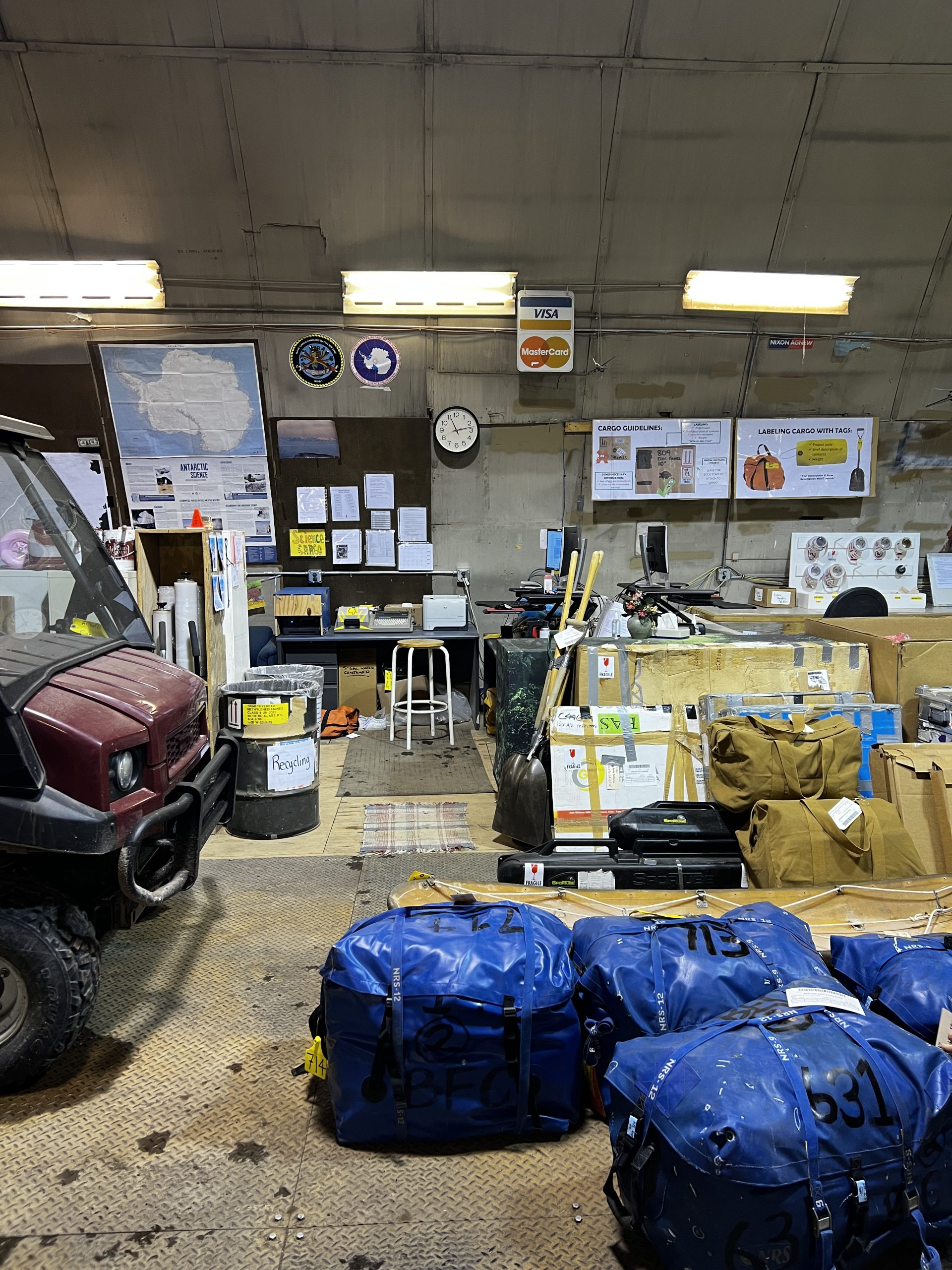
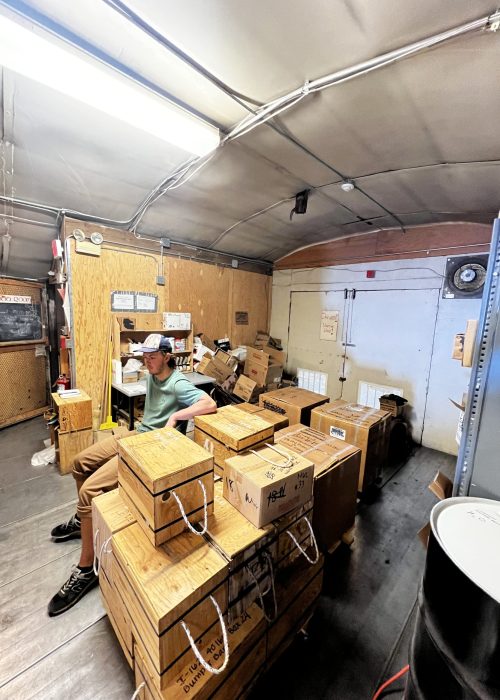
Now that much of our cargo had been hauled to the Science Cargo (SciCo) warehouse, we had to label, weigh, and measure their dimensions before SciCo would take over and put things into their system. Some items didn’t have a box so we ended up making some custom “boxes” for the solar panels using some cardboard and a lot of packing tape. This task was incredibly tedious and not terribly enjoyable but we’re grateful for SciCo’s help and relieved to have ~2,000 lb off of our shoulders for now.
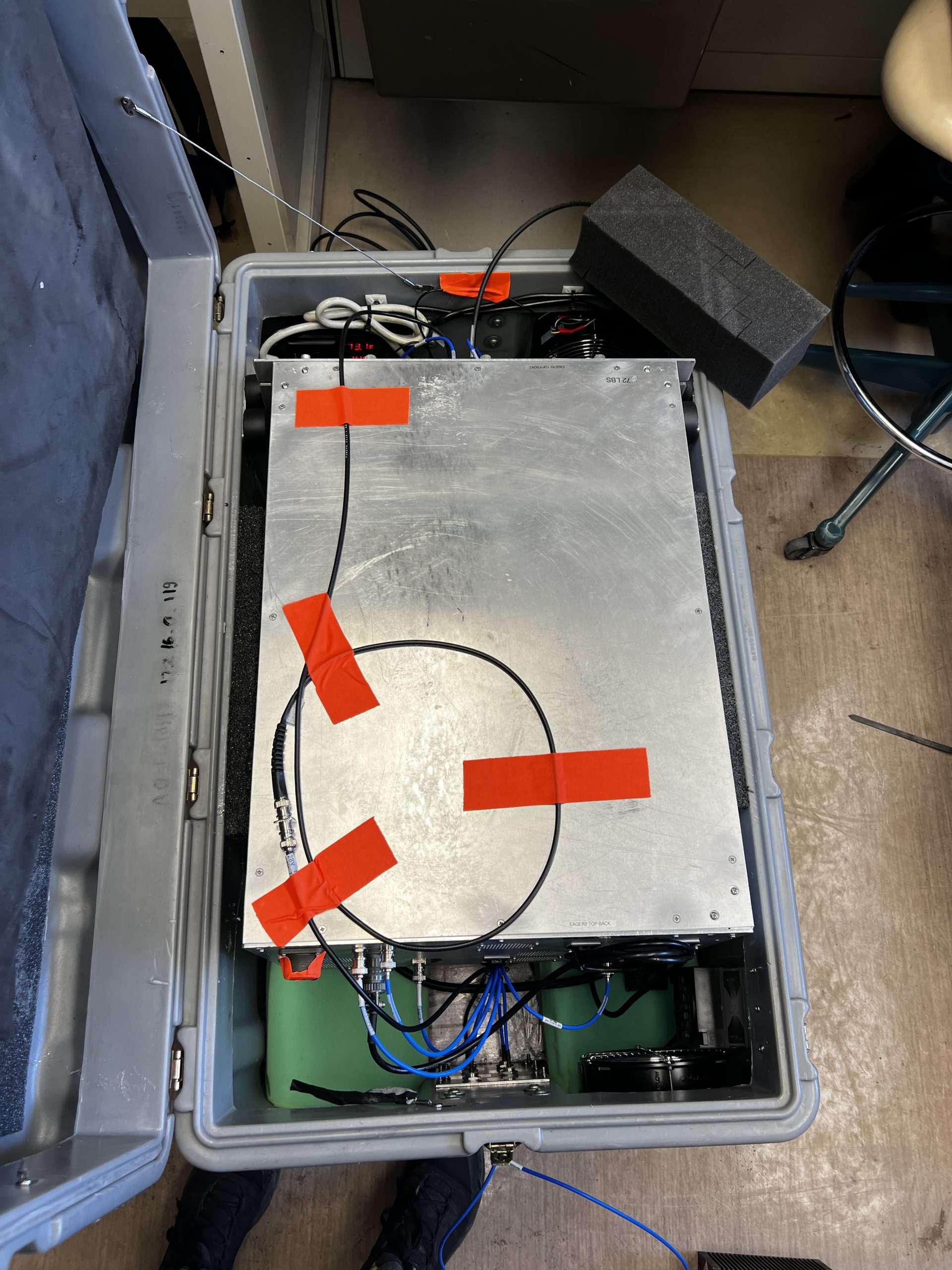
After a much-needed lunch, Ellen and I split off for another meeting with John and Knut about the EAGER radar. We walked through the setup and practiced turning the radar on, connecting it to a laptop, and setting it up to collect fake data. We’re in the home stretch with this fancy and complicated radar and will hopefully only need one more meeting tomorrow to wrap things up with the EAGER.
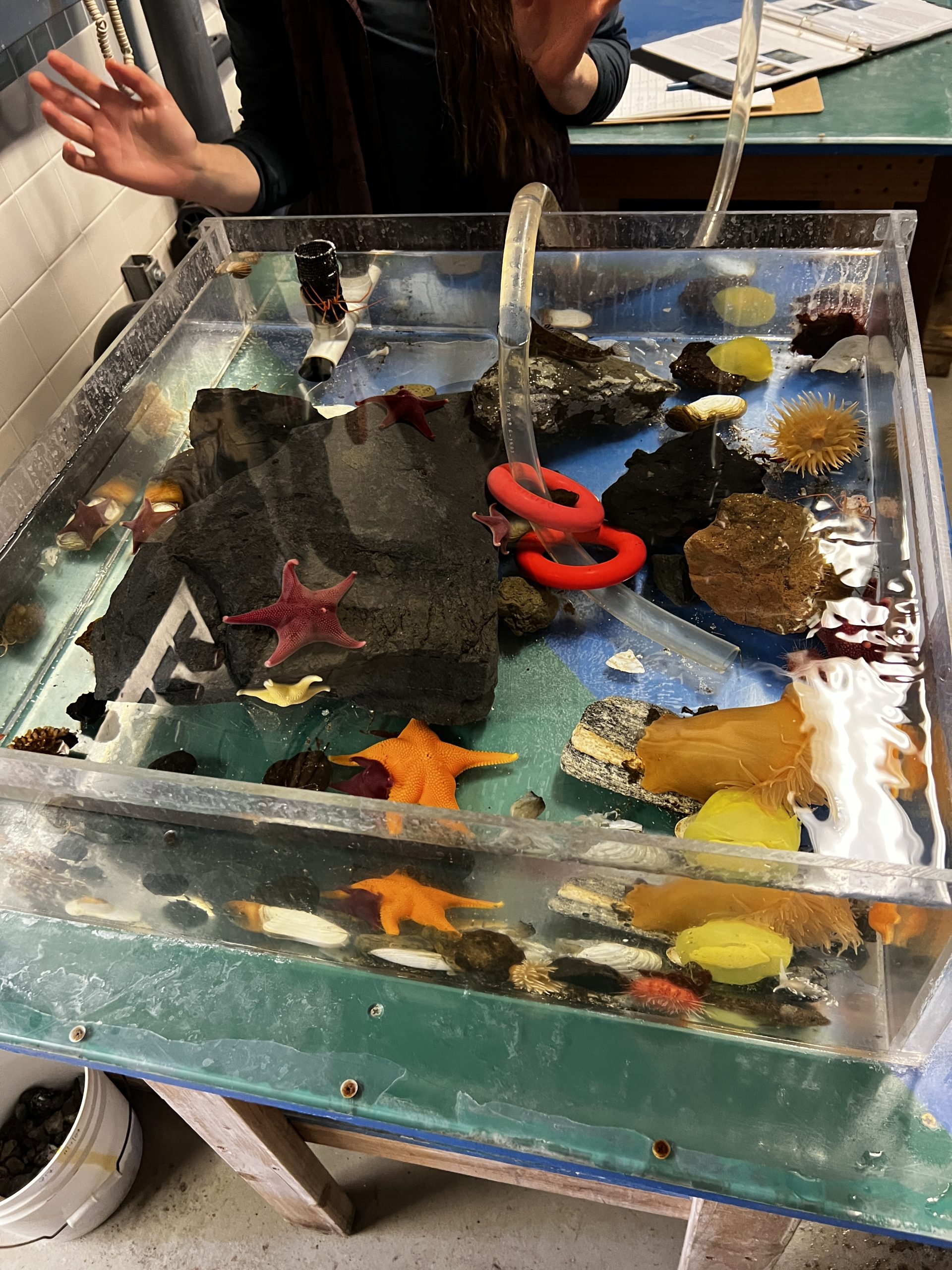
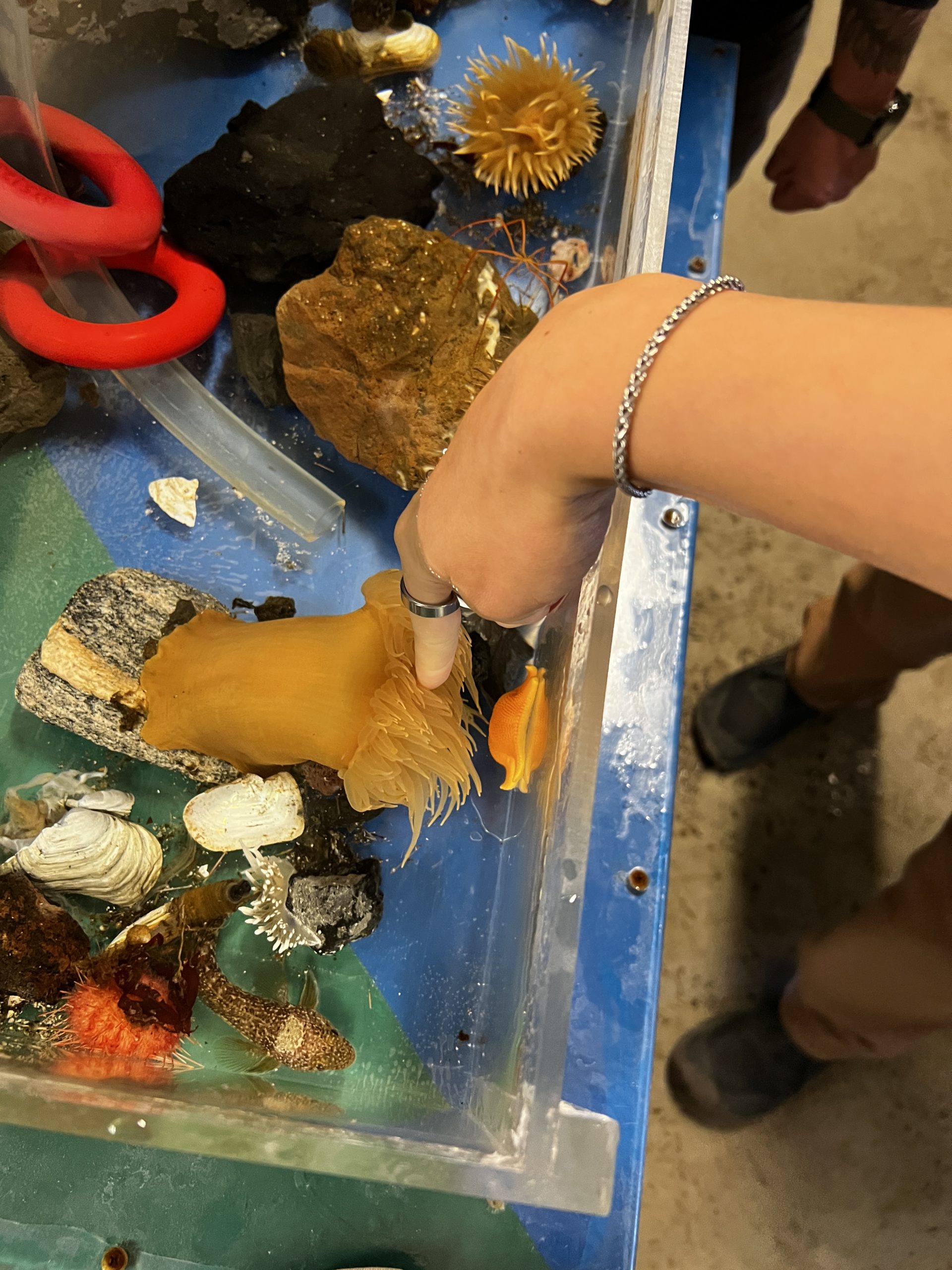
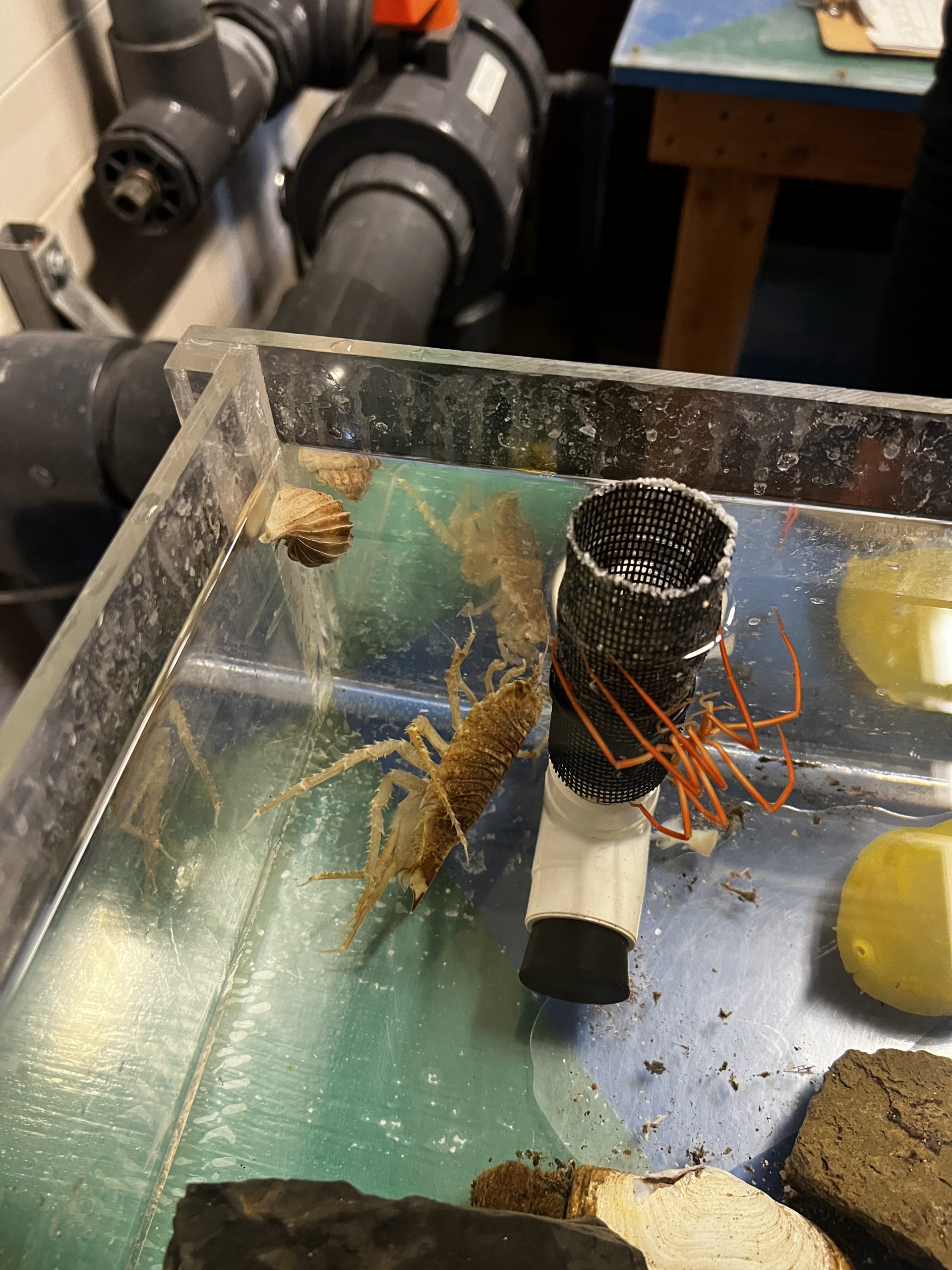
The highlight of the day after hauling cargo and trying to host a Zoom meeting while the radar’s deafening fans are screaming in your ears was the touch tank! There’s a water lab on the third floor of the science building where we got a tour of the touch tank, a tank that holds sea critters for science and learning. There were starfish, a sea cucumber, anemones, clams, sea spiders, “lemons,” a few fish, and a bunch of other creepy creatures I’ve never seen in my life! Tasha, the Crary Science Building lab manager, took us to the tank and told us about each of the critters in the tank. We witnessed a particularly chubby anemone digesting something large while the lemon next to it was trying to eat a little urchin with frosted tips. We spent some time interacting with the tank before they’ll be released back into the ocean next week. The lab is mostly empty but has held sediment cores, fish, sea urchins, and other creatures used for research. It’s quite cold in there and the water in the tank is kept at a brisk -2º C, making it difficult to determine when you’re touching a critter since your hand goes numb almost immediately.
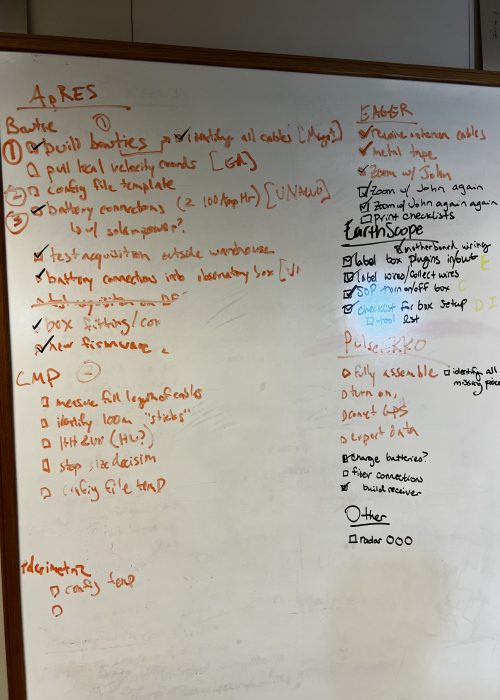
After the touch tank, Ellen and I worked on some more radar things. We’re updating firmware for the ApRES and testing a method of collecting data that will allow us to collect two different chirps from one ApRES system without manually updating the configuration file each time. We also half-built the PulseEKKO radar and scrounged around in boxes for parts for the system that may be missing… We’ll figure that our eventually!
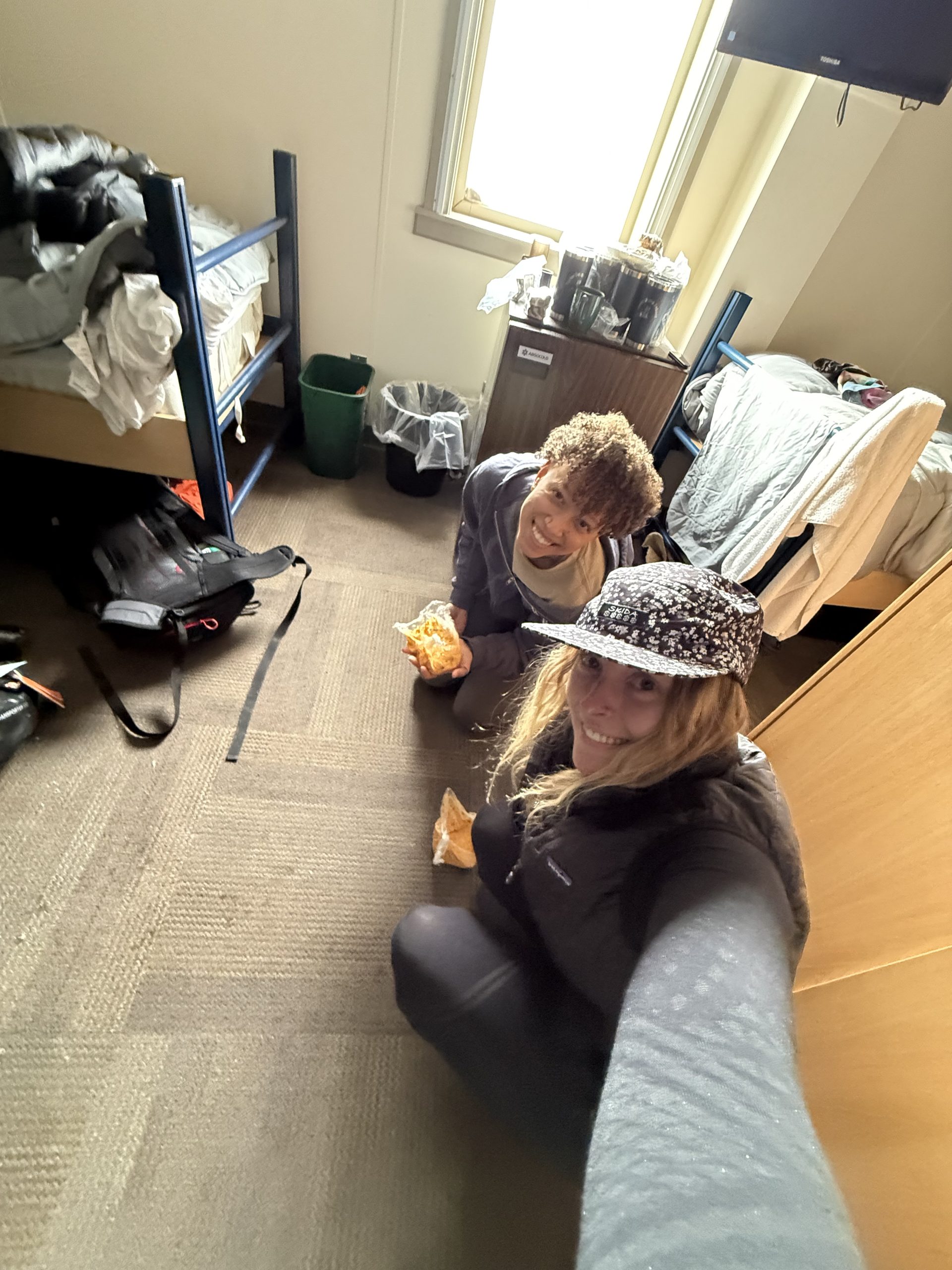
Dylen has been particularly passionate about a pumpkin mousse that appeared in the galley this week as some sort of Thanksgiving remnant. We spotted some in the grab-and-go fridge today, a fridge in which the galley staff put leftovers for anyone to grab, and decided to take the plunge. They wrap everything in Saran Wrap here, including the mousse… Elliot suspects that the “mousse” is just extra Thanksgiving pumpkin pie blended up with the name “mousse” slapped on it. Regardless of the packaging or the format, it was pretty damn good.


Dec 7: Sunday brunch
Ellen and I had yet another meeting about the EAGER radar today. We went through the data processing steps to make sure we know what we’ll do in the field.
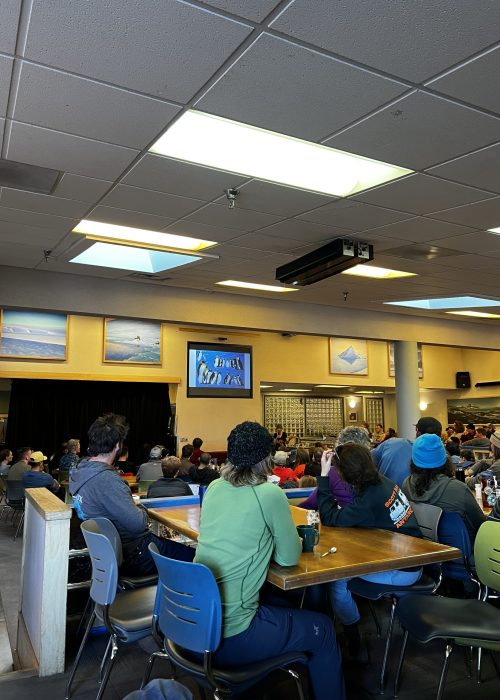
On Sundays, most work centers are closed and the galley serves brunch from 10am-1pm instead of the typical brekkie 4:30-7am and lunch 11am-1pm. Dylen and I indulged in more desserts, of course, including gingerbread trifle and pavlova.
Everyone went on some sort of hike and sporadically worked on the last of the testing, debugging, and finding parts today, as our cargo deadline continues to sneak up on us. Since our Deep Field Shakedown is now scheduled for Monday-Tuesday, we’ll only have some time Tuesday afternoon to work before cargo on Wednesday. It’s certainly a time crunch that everyone is worried about.
We all worried some more, deciding our science priorities in the field and the order of operations to set up our equipment at each firn observatory.
Dec 8: Deep Field Shakedown!!!!!
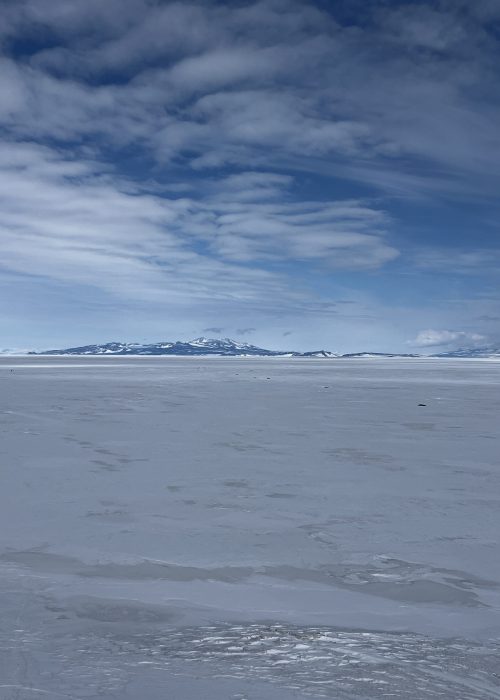
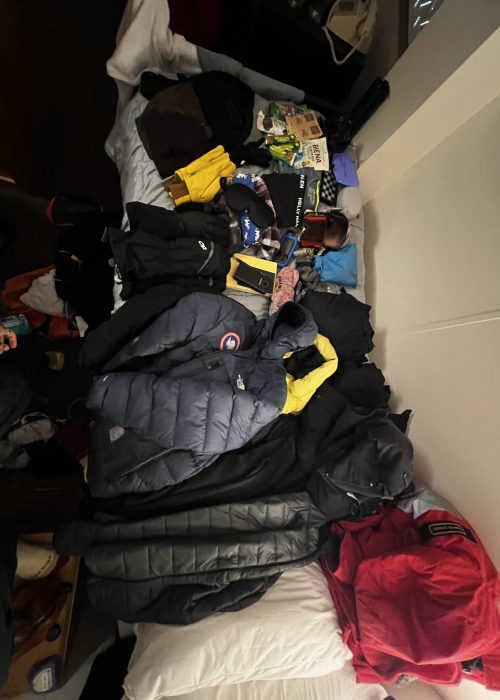
Today, we had our deep field shakedown (DFS)!!!! Most of the team (including me) was quite excited to do it since it meant that we could figure out team dynamics, test gear, and get out of town for a night. It also meant that we had to put science on pause, which has felt like a trend considering the large number of trainings and meetings we have had since being here. This would also be my first night winter camping – growing up in Minnesota, I learned to deal with the cold in the city and I didn’t have experience using gear like our Extreme Cold Weather (ECW) gear that we were issued.
The entire team gathered and met our shakedown leaders Roz and Stine at the Field Safety & Training (FS&T) building, where we’ve been for GPS, field safety, and other trainings before. We gathered all of our ECW (the first-timers brought extra gear to test out different iterations in the field) and went through safety tips, personal and team goals, and a general idea of what we’d be doing at the shakedown.
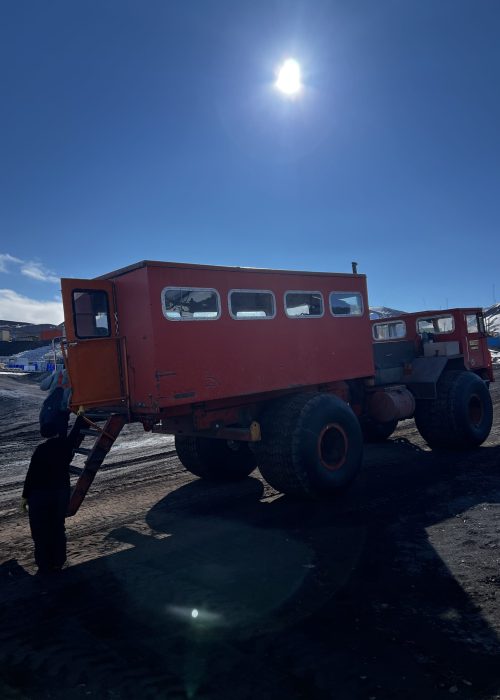
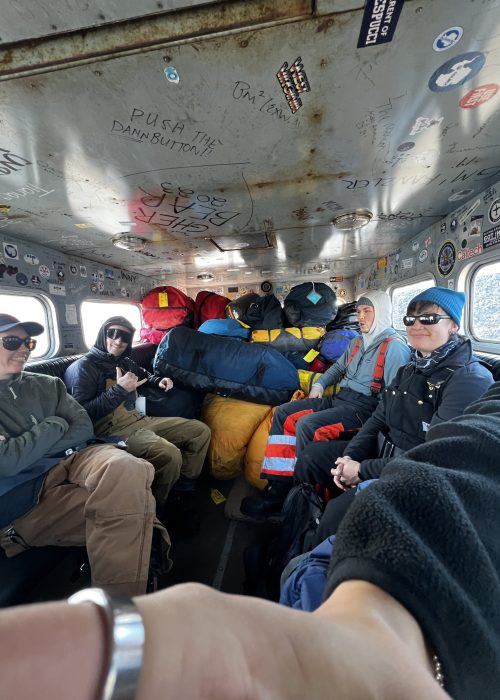
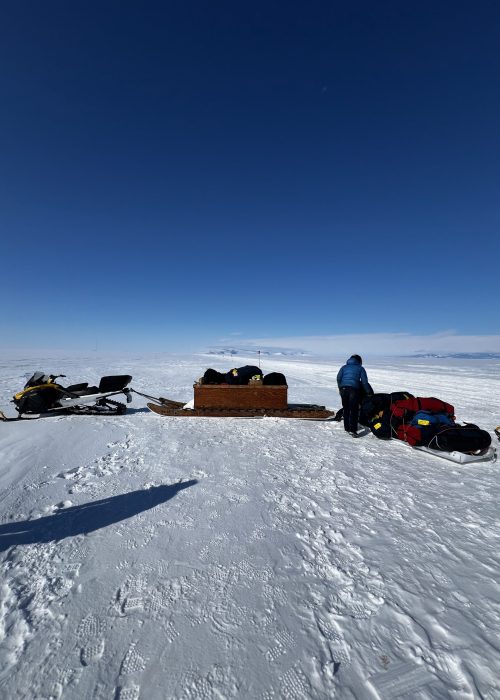
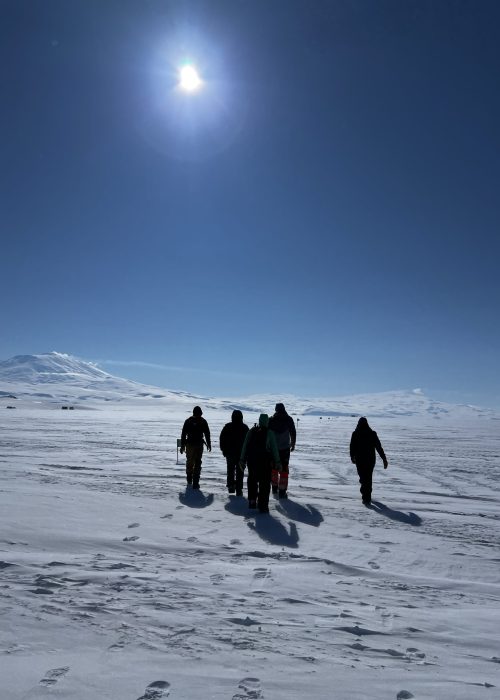
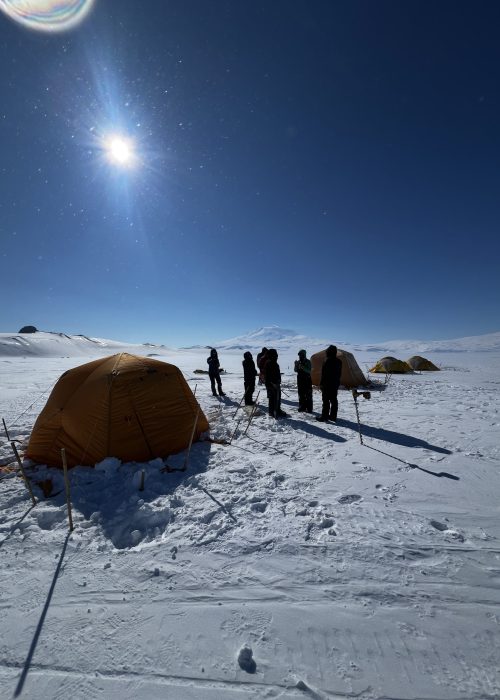
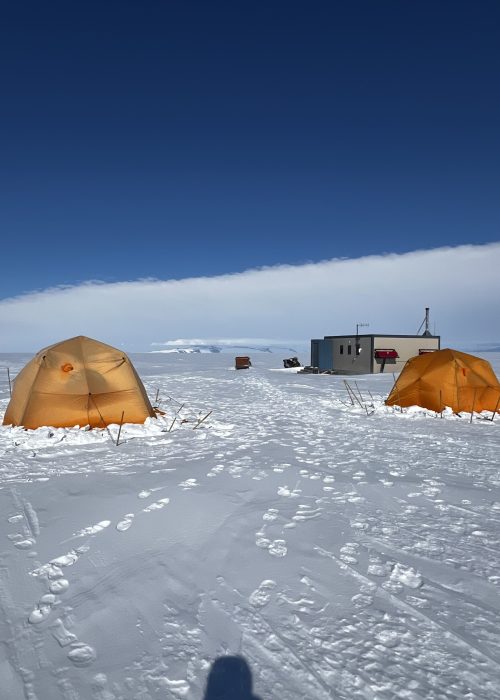
The shakedown took place at the I-Hut on the Ross Ice Shelf where there is a hut/classroom/kitchen with propane heating, an outhouse, and space for tents. The DFS used to be called Happy Camper and it used to be a requirement of all McMurdo residents. Zoe had some stories of when she used to help run Happy Camper with people who had never been camping in their lives! Anyway, we were shuttled to the I-Hut where Stine and Roz towed our sleep kits and gear behind ski-doos, while we walked ~.5 km from the road to the site.
When we got there, we ate lunch and talked about the general area before setting up the bathroom and our tents. We must pack in and pack out all human waste… separately. The bathroom consists of two seats on top of two buckets – one for pee and one for poo. The pee bucket is actually an old can that once held peas, with a handle on it. The seat is for convenience; after you do your business in the pea/pee can, you pour it into the urinal which is connected to a large outdoor urine/gray water bucket. For pooing, you go in the other seat, which is above a bucket with plastic bags, which we will pack in and out. Toilet paper also goes in this bucket. This setup implies that everyone must have coordination and separate their business into the correct bucket or there will be problems…
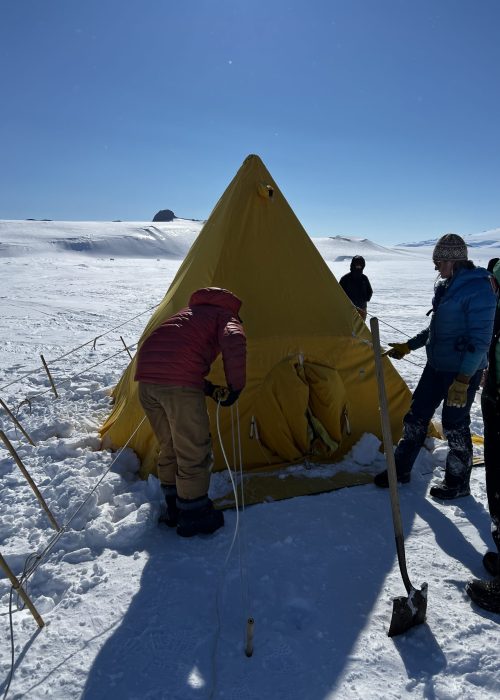
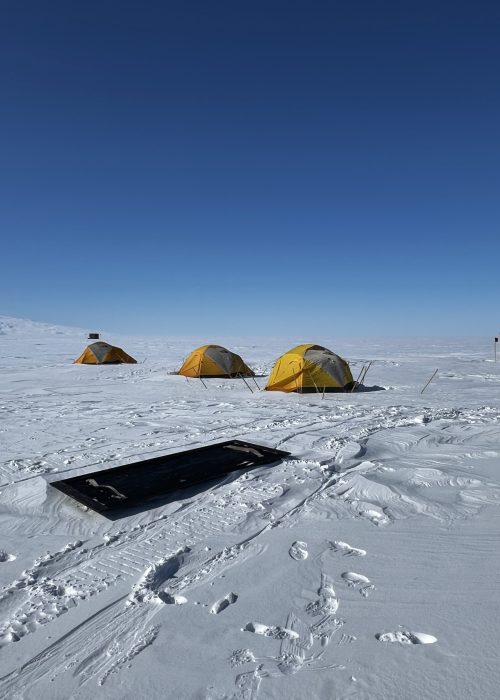
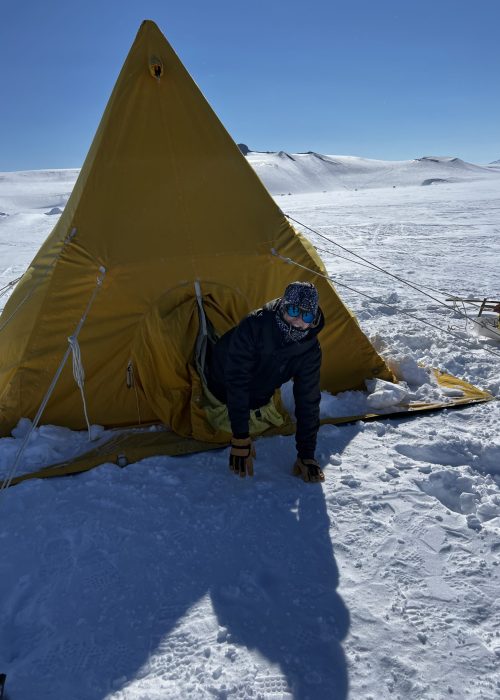
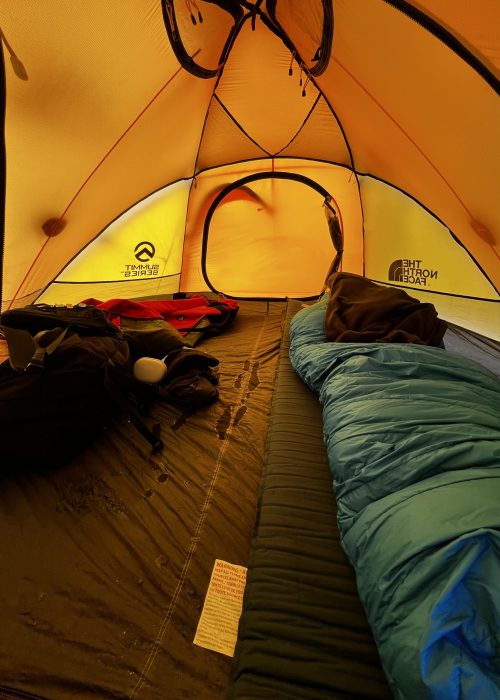
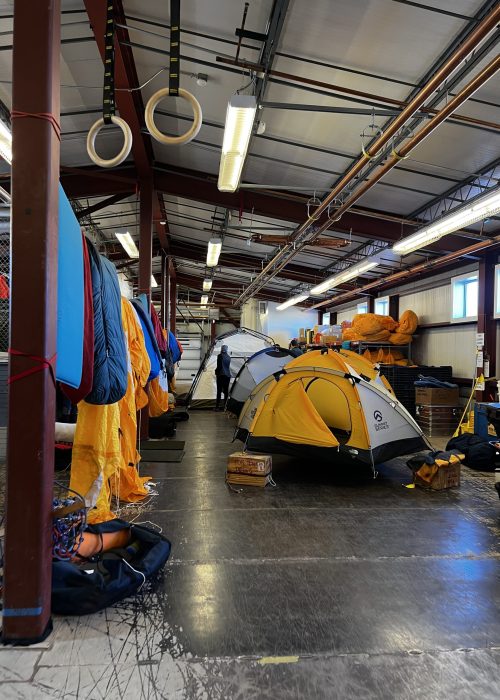
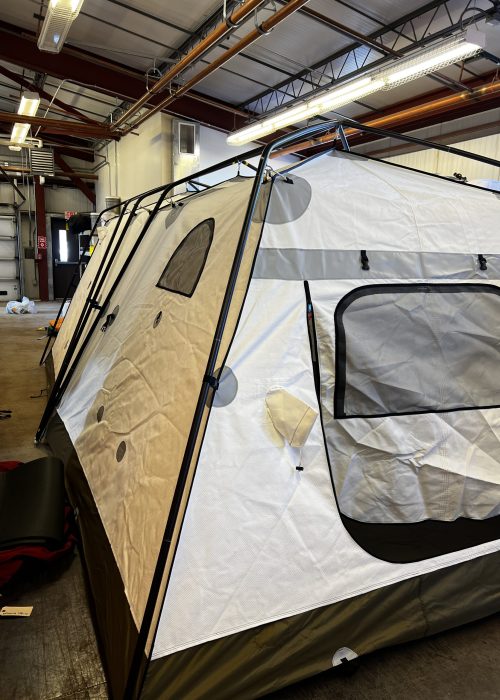
Anyway, after lunch we started setting up tents. Forest and Elliot brought much of their own gear, including sleeping bags, pads, and tents. They’ve learned a lot throughout 4 and 8 seasons, respectively, in Greenland and Antarctica, and the USAP-issued gear is not preferred. Forest and Elliot brought Arctic Oven tents while USAP issued the rest of us mountain tents and one Scott tent. A mountain tent looks like a typical camping tent – it’s a short dome that you generally can’t stand up in. A Scott tent is a slightly antiquated pyramid tent with a cinch-able flap you climb in and out of. It has less floor space but is tall and you can stand up in it. The Arctic ovens that Forest and Elliot brought are spacious and fairly warm, the mountain tents are less spacious but very warm, and the Scott tent is not terribly spacious and not warm since it’s so tall.
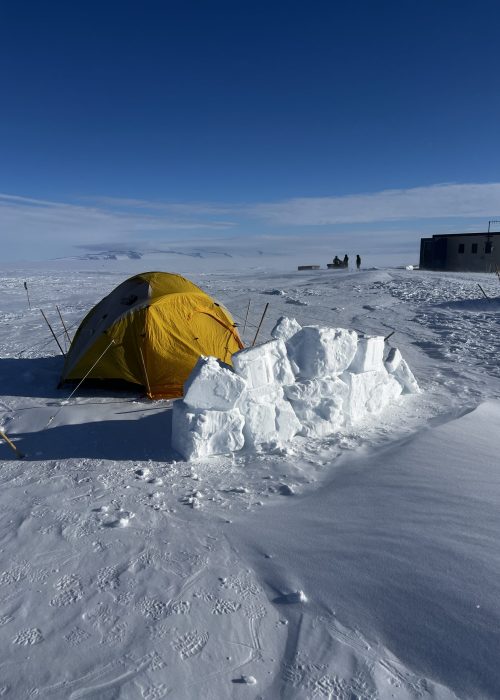
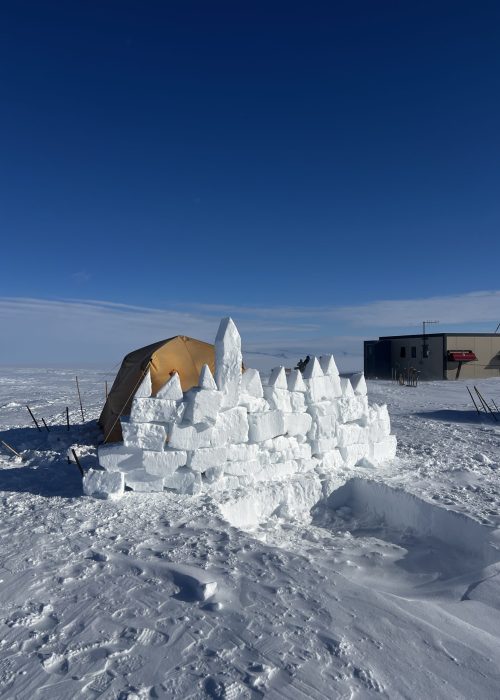
The weather was warm when we left town but turned out to be quite windy with lots of blowing snow at the I-Hut, which made it particularly challenging to set up the tents. Everything must be held onto tightly or secured or else we’d be chasing after it. We built snow walls in the wind direction of each tent to block wind and blowing snow so that they wouldn’t be as noisy and to prevent snow from burying the tents and getting under the rain fly. This proved to be hard. work. We dug 1×1 m pits and started cutting and hauling blocks using snow saws and shovels. Forest’s tent had a particularly impressive snow wall complete with a clock tower. The others got smaller and smaller as we got more exhausted from this activity.
After setting up camp, we went inside the I-Hut where Roz and Stine were boiling water on the camp stoves for our dehydrated meals. We ate dinner and played a few games of cribbage and chess before heading to our tents to get ready for bed. I brought things from my hygiene kit to test out in the deep field, including many individually packaged wipes. In order to shower out there, I’ll defrost a wipe or two to simulate cleanliness before sleeping, so I wanted to test my system during the DFS. I’m still figuring out how to protect my hair without the ability to shower and comb through it and how to stay moisturized and protected from skin cancer in Antarctica’s sunny desert environment so it was a nice opportunity to practice those logistics. I read a lovely letter from my cousin, Siri, before passing out in my sleeping bag.
In reality, no one really fell asleep easily at all… The tents flapped SO LOUDLY in the wind that even earplugs didn’t help. Plus, it’s incredibly bright all night and there’s no way to block the light in the tent. The sunlight warms up the tent quite quickly so going to sleep in the bright sunlight and 20+ knot winds with 20º F weather proved to be difficult. I have an eye mask and earplugs which helped a bit but the hot water bottle proved to be too warm for the weather at the I-Hut. I woke up a few times during the night due to the deafening wind and a bit of overheating.
Dec 9: Shaken Down
In the morning, everyone talked about how poorly they’d slept, with Ellen taking the record after falling asleep around 12 or 1 am and waking up around 3 am to listen to the wind pound her Scott tent until it was time for breakfast.
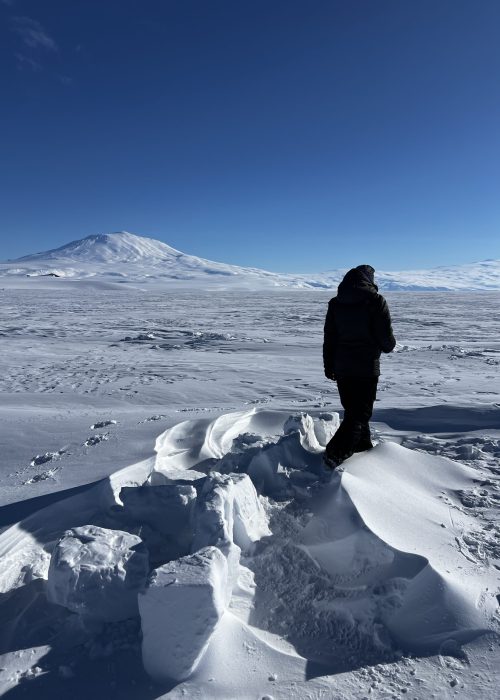
The snow pits we dug were completely filled in overnight from snow drift but the walls seemed to help block some of the snow from piling up onto the back of the tents. We knocked over the snow walls and took down the tents on another warm and windy day. We loaded up the ski-doo and headed back to the road to wait for the shuttle. While we were waiting, we practiced driving around on it since we’ll be doing a lot of that at Taylor Dome.
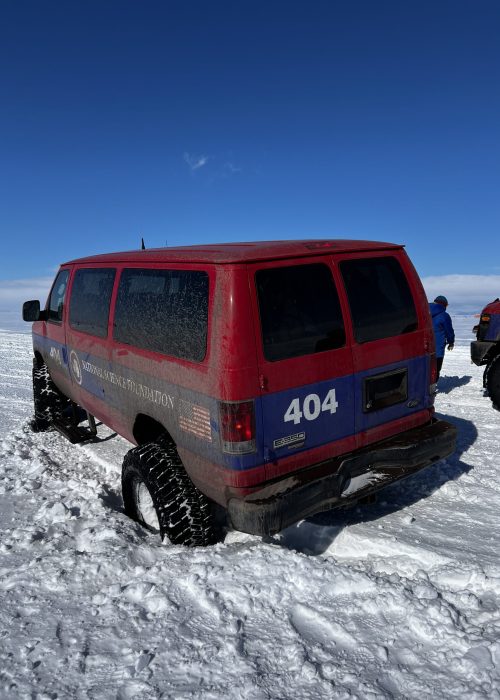
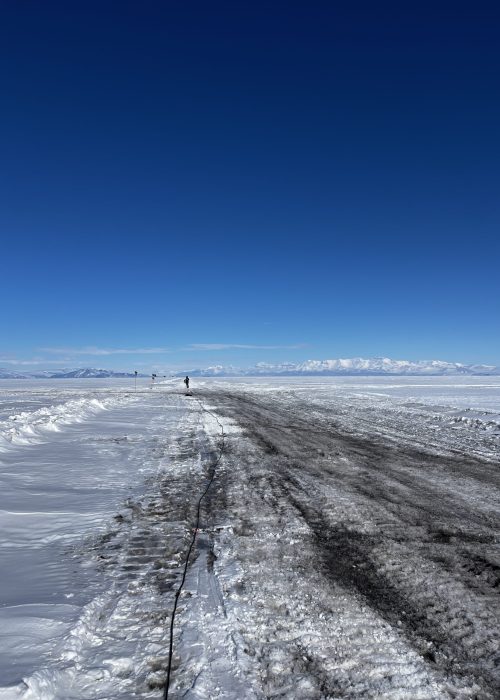
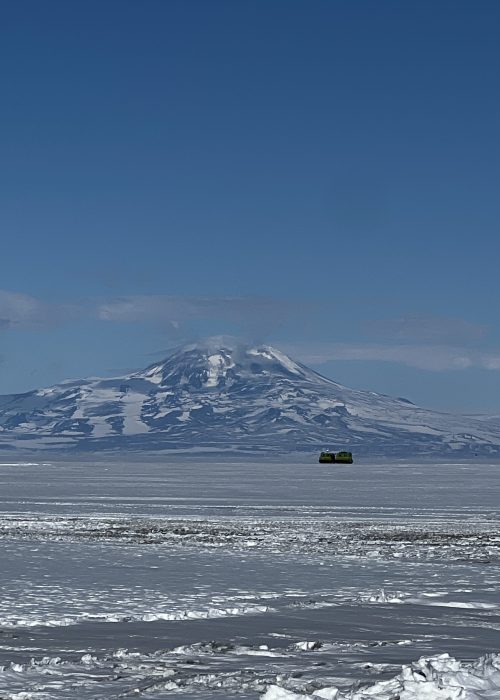
The road consists of a mildly plowed section of flagged travel routes that traverses land, sea ice, and ice shelf. As we waited for our shuttle, we saw many cars, trucks, tractors, and the KRESS driving, skidding, and getting stuck. One of our shuttle drivers ended up getting stuck, too…
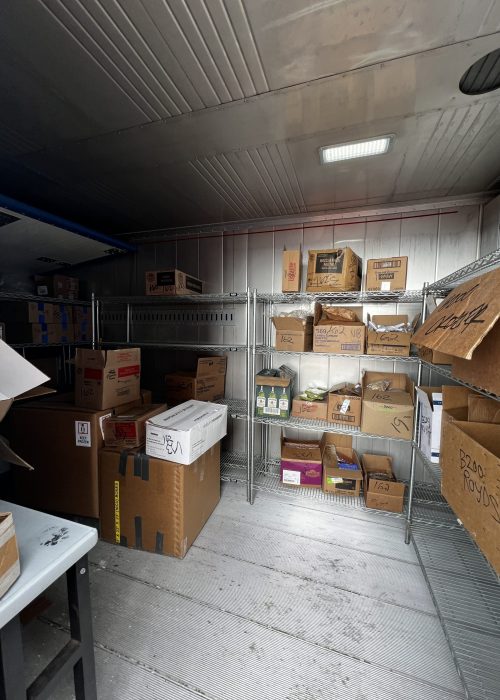
We briefly settled back into town then hustled to get our tents and sleep kits hung up to dry out (since it was so warm at the I-Hut, there was lots of melted water in the tents!), and work on the food pull. Remember when I wrote about making a meal plan and calculating how much food each person would eat for 6 weeks? Now, that food that we requested is ready for us to check and pack. There are some expired or questionable items that we ended up leaving behind but, mostly, we tried to pack the food in ways that made sense for cooking. For example, cookies in one box, granola bars in another, powdered milk all together, canned fruit in another box, etc. We packed at least 45 boxes of varying sizes and weights of food. After dinner, we got to work on the frozen food, of which we had another 10 boxes or so. With each box, the cargo team requested that we label the weight, dimensions, team name, and what we wanted the box to be called. We also wrote the contents of the box on the side of it since these boxes are our cupboards while we’re at Taylor Dome.
Everyone was exhausted after the DFS and the food pull so we went to bed to prepare for more cargo tomorrow.
Dec 10: Science cargo
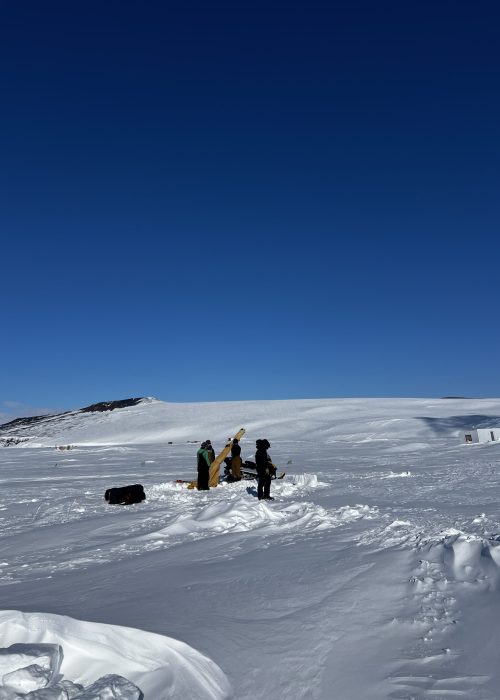
This morning, we had ski-doo training where we all familiarized ourselves with the brand new ski-doos that we’ll be using in the field! There are some quirks, which we talked through with Tony, and got some practice replacing the belt, doing some very light maintenance, and troubleshooting the machine.
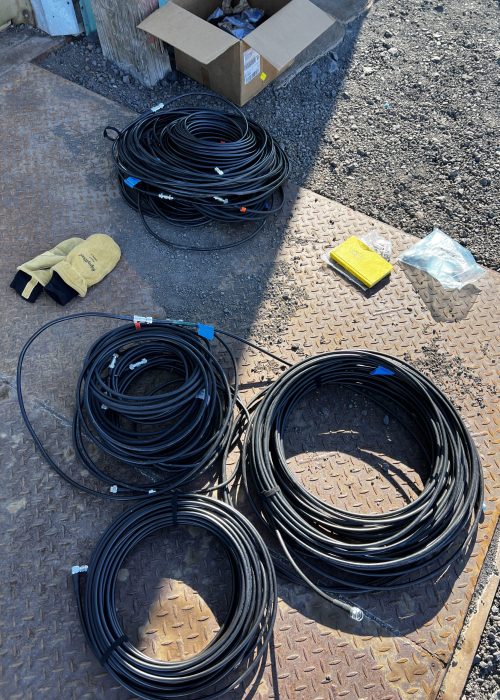
After ski-doo training, we all got to work prepping the rest of our science cargo to be tagged, weighed, and loaded. Ellen and I had some more testing to do with the radar while Ilyse and Dylen needed to wrap up work with thermistor cables. Ellen and I worked on measuring the entirety of our coax cables for the common midpoint survey, where we’ll need to stretch radar antennas as far out as we can using the cables then continuously step toward each other a pre-set distance and take a measurement. This will require lots of communication and some sophisticated hand signals since each cable is ~130 meters long, so we’ll be, at most, ~260 meters apart. That took so long that a Kiwi Hagglund passed by us and asked what we’re doing. I told them that we were measuring the length of cables and they laughed.
Ellen and I also quality checked the PulseEkko radar which we’ll be towing behind us on a ski-doo. We ran into some issues and almost froze our fingers off working in the cold while taking a test measurement. Everyone headed to our team’s cargo locker to pack up the remaining cargo that we requested. During the DFS, we took note of a broken tent, some missing sunscreen, a necessity for hand and toe warmers, and some other requests for gear that we received and had to pack up. We all got an extra sleeping mat and sleeping bag to use as a duvet since Taylor Dome will be much, much colder than our DFS weather and the weather here at McMurdo.
We all gathered for a field planning meeting with Kate, who is a field risk manager here. She led a conversation with the team about our concerns and goals for the field and how to mitigate them. It was a great meeting – Kate seemed to have solutions for everything since she’s spent lots of time down here and has taken trips to many field camps over the years to gain firsthand experience with how each one works. The Taylor Dome project is one of the few projects this year due to cuts in federal funding. This is an enormous project with very few people (and we’re already short one person) so we’re grateful to have support from many other departments and people at USAP.
After the meeting with Kate, we moved some more science cargo to the loading dock for tomorrow’s cargo appointment then split up again to continue prepping the last of our science equipment. We grabbed dinner together then headed to one of the dorm lounges to relax, play PlayStation (where I absolutely schooled Elliot at NHL 24), and come up with our own rules to Mancala.
Dec 11: When will we be done with cargo?
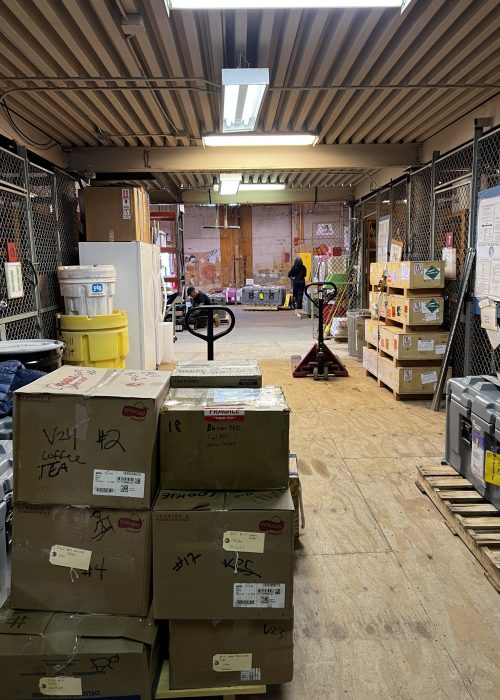
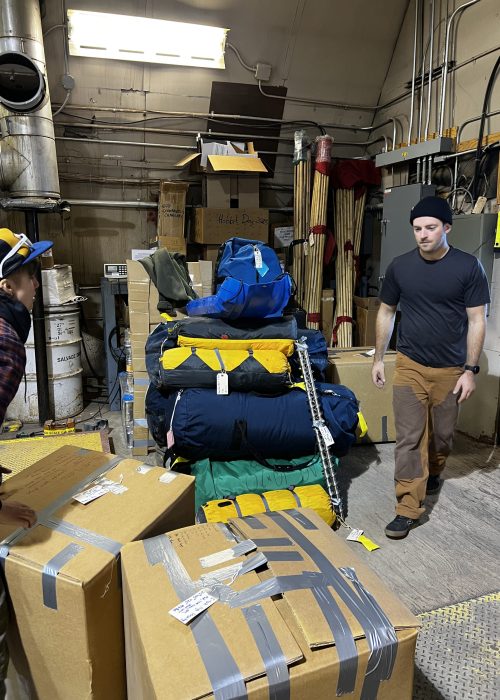
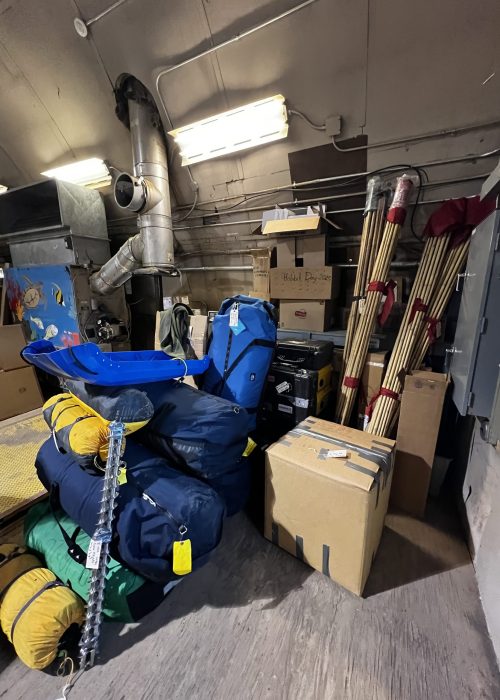
Another day, another cargo deadline! Today was truly the day that we needed to get cargo sorted, so we all scrambled to the science cargo building to label the rest of our boxes, re-tape, re-label, and re-pack some of them since many of our boxes were not up to the Science Cargo (SciCo) team’s standards.
We spent almost all day taping and hauling things and working through SciCo’s list of what we are supposed to have, what’s missing, and which box needs to go where. We hauled ~100-200 boxes of science cargo, food, camp supplies, safety equipment, comfort items, and gear.
After this stressful task, the team sat down to talk through our tasks and an order of operations. There will be three mini-teams setting up equipment, drilling cores, and taking measurements at each of our four firn observatory sites. We talked about how to orient the ice core drill, how to bring equipment out every day and who will be setting it up, how many hands we need and when, radar logistics and where Ellen and I will be in relation to the firn observatory sites, and how to get 900 pounds of batteries to four different firn observatory sites that are kilometers away from each other.
After this, Ellen and I met with Knut about some questions regarding our GNSS and the PulseEkko radar. We all felt grateful to be done with the majority of the science cargo. It’s been an incredibly hectic time here at McMurdo and we are crossing our fingers and toes that this is the last push! Hopefully, things go smoothly from here (though we do anticipate flight delays soon…)
Disclaimer
The opinions expressed are solely my own and do not express the views or opinions of the National Science Foundation, the United States Antarctic Program, or the University of Washington. This blog is for entertainment purposes only.
These are fun to read. Thanks for sharing.
One more word “ibuprofen!”